
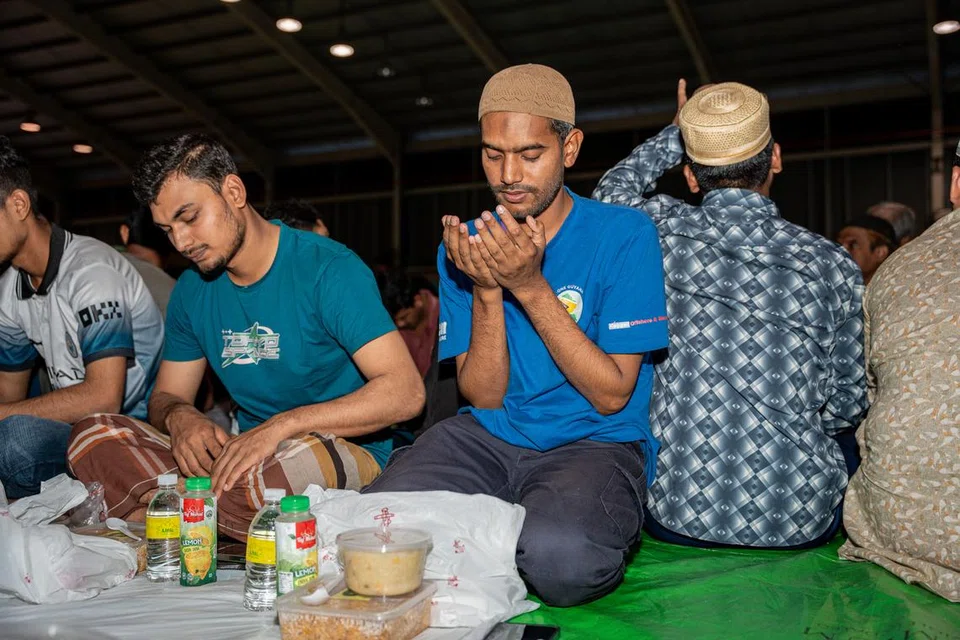
After more than 12 hours without food or drink, the meal you choose to break your fast with is really important.
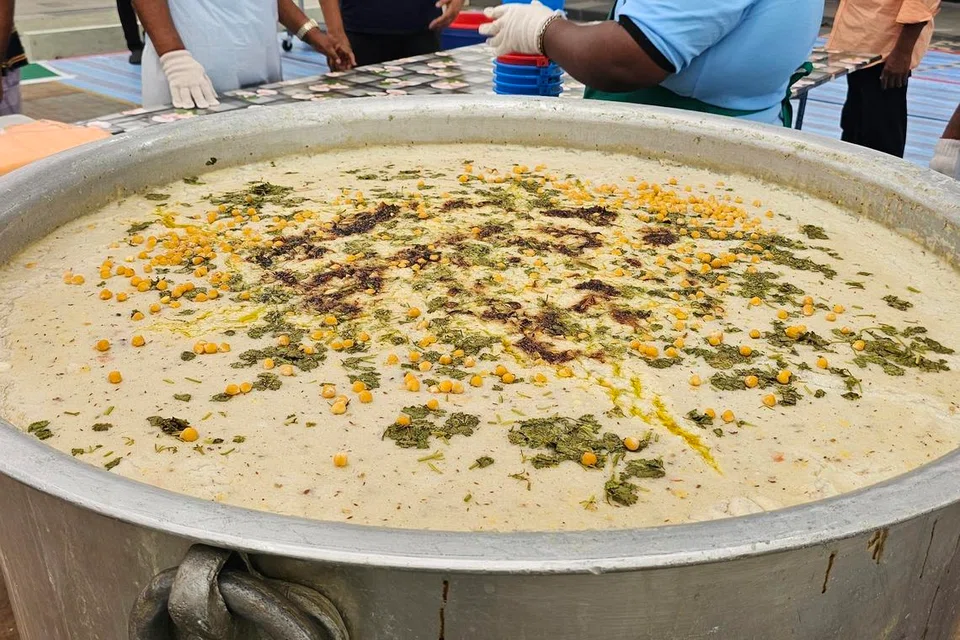
In most households, dates or burbur (a lightly spiced porridge with minced meat and diced vegetables) is the preferred choice for iftar – the evening meal with which Muslims end their daily Ramadan fast.
“When you haven’t eaten for a whole day, you cannot go straight into heavier foods as it’s a bit rough on the stomach,” said Mr Ajmal Deen, 28, the operations manager at the Al-Bahiya restaurant at Changi Road.
The burbur is only on the restaurant’s menu during the holy month of Ramadan, and is given out for free to customers as a form of thanksgiving, he added.
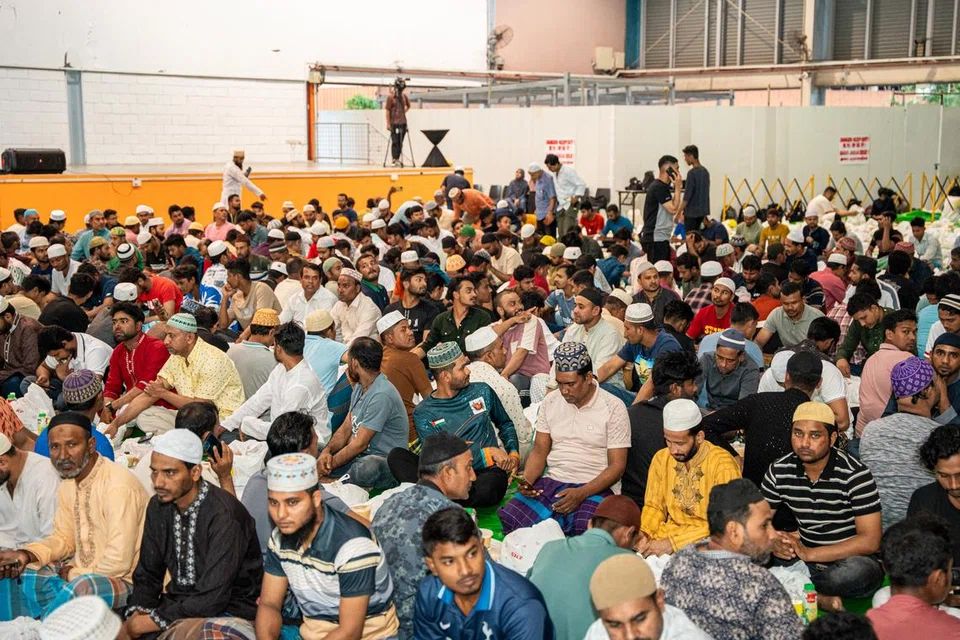
It was also one of the many dishes catered from Al-Bahiya for IMYouth’s Iftar with Migrant Brothers event on March 7. IMYouth is a youth-led registered society founded in 2021 that champions the voices and values of Indian Muslim youth in Singapore.
The group’s annual iftar event for migrant workers began in 2022 to provide them with an opportunity to break fast together after such gatherings in dormitories and mosques were suspended due to the Covid-19 pandemic, explained Ms Hafizah Beevi, 35, the vice-president of IMYouth.
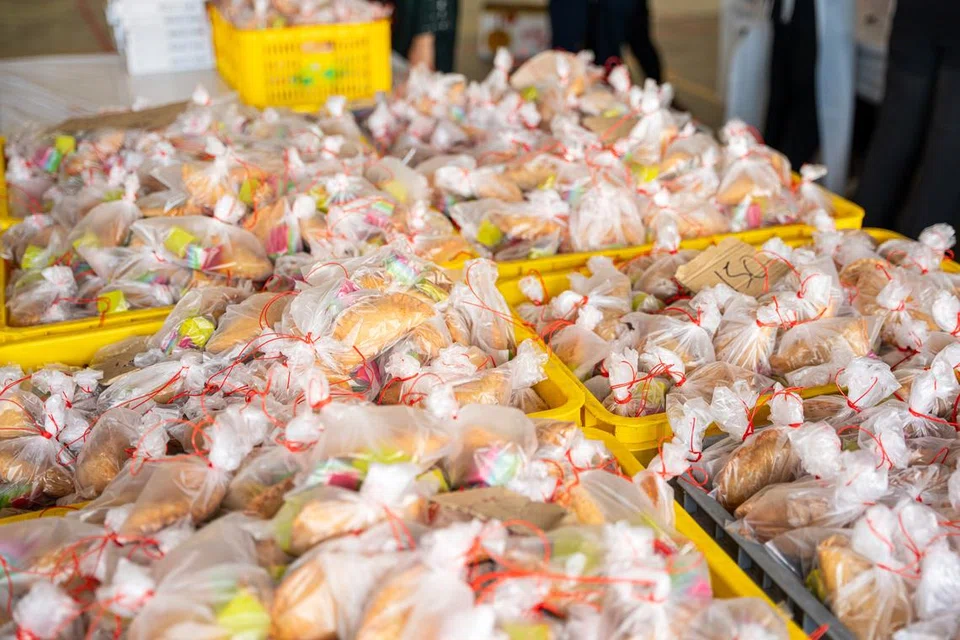
This year’s event took place at the Penjuru Recreation Centre in Jurong and served around 2,000 migrant workers. Each worker was provided with a packet of mutton biryani and a container of burbur, catered from Al-Bahiya, along with an assortment of kuehs, curry puffs, a bottled drink, and an apple for a more balanced meal.
Mr Ajmal told tabla! that it took a total of 125 kilograms (specifically, five 25kg bags) of rice to make about 2,100 portions of burbur.
A team of 18 people started preparations the night before the event by washing and chopping all the ingredients and securing all the necessary equipment, such as several large gallon pots for cooking the porridge.
The base ingredients for burbur are essentially white rice and mixed vegetables, more commonly potatoes and carrots. Beyond that, the porridge can vary widely in colour, texture, and taste depending on the recipe.
Al-Bahyia’s burbur does not include turmeric, which leaves it with an off-white colour. However, it uses minced mutton as its choice of protein, which somewhat resembles the meaty aroma of a biryani when you first take a whiff of it, said Mr Ajmal.
In other variations, the porridge can be creamier due to the use of coconut milk, or take on a yellowish hue with the addition of turmeric or biryani rempah (spice paste), infusing it with a more robust medley of flavours.
Ms Hafizah’s 77-year-old grandmother, Mdm Fatimah Bee Bee, creatively employs a touch of pre-mix mutton masala powder and pandan leaves in her version of burbur, which she finishes with ghee tempered with curry leaves, cinnamon, cardamom, and cloves for a local Indian twist.