
It’s not exactly a secret. Still, many locals and seasoned travellers were surprised to discover the existence of a “hidden” air-conditioned food court in town that dishes out affordable eats.
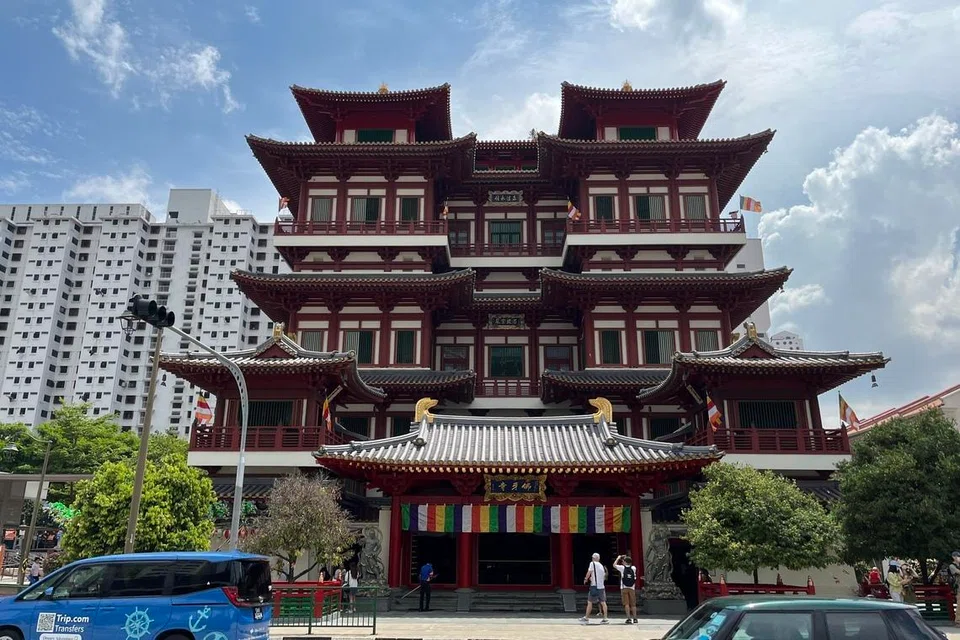
Located in the basement of the landmark Buddha Tooth Relic Temple and Museum next to Maxwell MRT station in Chinatown, the Lian Xin Vegetarian Restaurant was thrust into the limelight after several social media reels uncovered it recently.
Much of the eatery’s appeal can be attributed to its budget-friendly meals, which averaged around S$5 a plate, and a comfortable interior that serves as a sanctuary for the nearby officegoers and tourists to take respite from the sweltering heat.
The restaurant is accessible via staircases located on either side of the temple, marked by a small display stand. The layout is similar to the IKEA restaurants, where you grab a tray and head down the assembly line to select your mains and sides before paying at the counter.
When the tabla! team visited the food court on May 26, there were four stations available. The first was the “cai fan” or economic rice stall, where diners can choose a staple carb (like brown rice or beehoon) along with two or three vegetable and “meat” dishes.
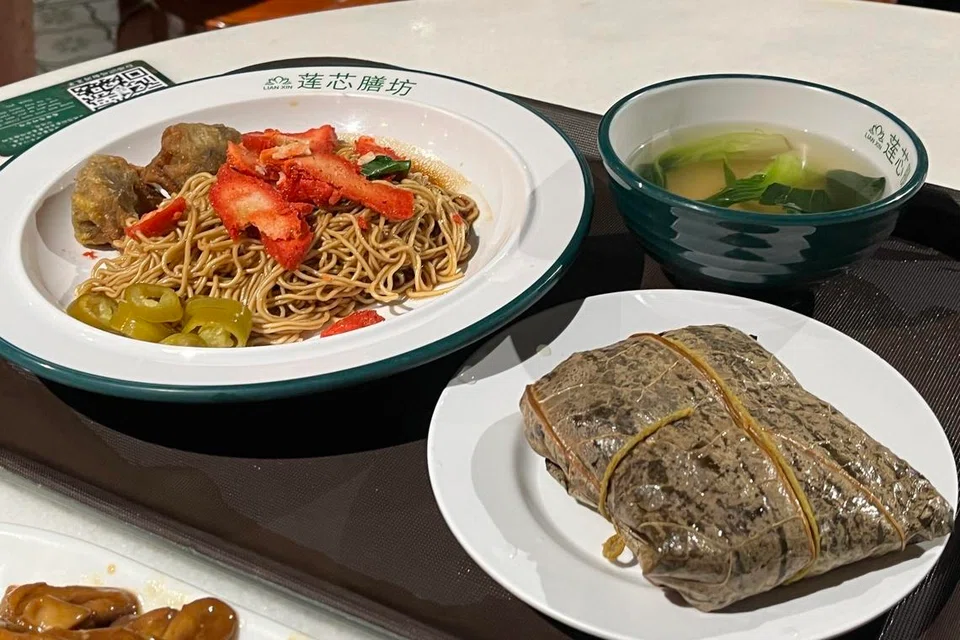
The second is the noodle stall, which offers a signature noodle dish for each day of the week. On Tuesdays, it serves wanton mee – springy egg noodles tossed in a savoury sauce, topped with char siew (barbecued pork slices) and prawn dumplings.
For those who prefer something lighter, there is a dim sum stall that sells assorted steamed baos and rice dumplings stuffed with mushrooms and chestnuts, wrapped in bamboo leaves. The fourth and last stall serves classic kopitiam drinks and Chinese-style desserts.
A notable feature of this food court is that its entire menu is Buddhist vegetarian. This means that the dishes do not contain any meat, such as eggs, and are allium-free, which refers to the exclusion of the “five pungent roots”: garlic, onions, chives, leeks, and shallots.
According to some Buddhist traditions, these five specific root vegetables are said to trigger negative emotions. Hence, monastic cuisine is usually devised around substitute ingredients such as ginger, chilli, and soy sauce to recreate that umami flavour profile.
I ordered a plate of white rice with curried vegetables, soy sauce chicken, and stir-fried long beans, all neatly arranged on a sectioned plate reminiscent of an Indian thali.
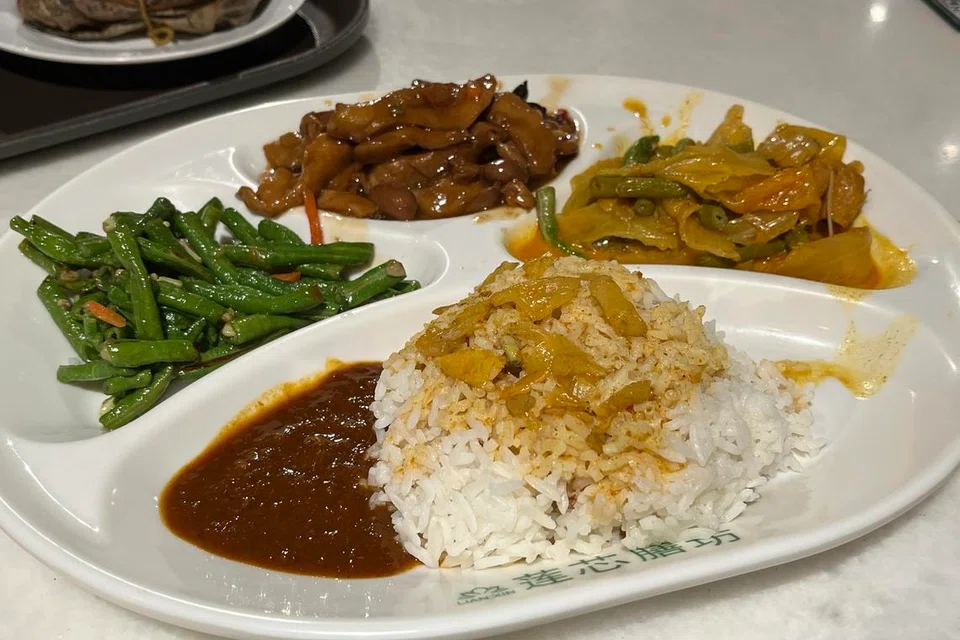
Without the sharp, punchy flavours of garlic or onion to rely on, the dishes instead highlight the inherent, natural sweetness of the vegetables. The soy-based mock meat boasted a satisfyingly realistic texture, which was enhanced by the smoky-savoury sauce.
The food court is currently open from 7am to 4.45pm daily, but it’s advisable to check ahead as the operating hours have fluctuated over the years. Admission to the temple and museum is also free, which makes it worth a visit this Vesak Day (May 31).