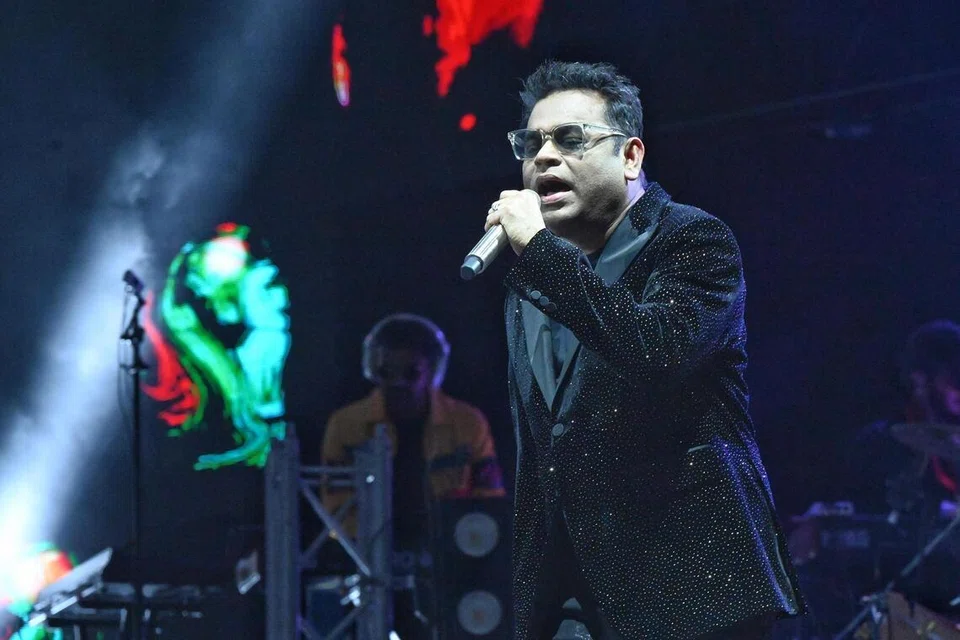
Oscar-winning composer Allah Rakha Rahman is at the centre of a heated public controversy after remarks suggesting he may have lost work in Bollywood due to “communal bias” in the Hindi film industry.
The comments triggered a fierce backlash from right-wing Hindu commentators and sparked broader discussions on religious intolerance in India’s entertainment sector, reported NDTV.
Rahman, 59, one of India’s most celebrated musicians and a recipient of global honours including Oscars, Grammys and Golden Globes, made the remarks in a BBC Asian Network interview aired last week.
He said that in recent years work offers from mainstream Bollywood had slowed, which he attributed to shifting industry power dynamics and, possibly, what he described as communal undercurrents.
“People who are not creative have the power now to decide things, and this might have been a communal thing also, but not in my face,” Rahman said in the interview. “It comes to me as Chinese whispers… they booked you, but the music company went ahead and hired their five composers.”
The remarks swiftly drew criticism from right-wing voices. Mr Vinod Bansal of the Vishwa Hindu Parishad demanded an apology, claiming Rahman was “defaming” the country despite earning his living in the Indian film industry. “We are proud of him, but for someone who has benefited from Indian cinema, the way he portrays the industry is highly objectionable,” Mr Bansal told Al Jazeera.
Online trolls and conservative commentators questioned Rahman’s patriotism and accused him of playing the “victim card”, while many industry insiders maintained a cautious silence, offering little public support.
Faced with relentless social media backlash, Rahman posted a video on Instagram to clarify his stance. He stressed that his remarks had been misunderstood and that his intent was never to hurt anyone’s sentiments.
“Music has always been my way of connecting, celebrating and honouring a culture,” Rahman said. “India is my inspiration, my teacher and my home. I understand that intentions can sometimes be misunderstood, but my purpose has always been to uplift, honour and serve through music. I have never wished to cause pain, and I hope my sincerity is felt.”
He highlighted his ongoing projects, including work on the score for Ramayana with German composer Hans Zimmer, and noted his gratitude for creative freedom in India.
Rahman’s situation has reignited discussions about religious intolerance and representation in Bollywood. “Incredible to see Rahman being moved from the good Muslim to the bad Muslim category overnight,” journalist Fatima Khan wrote on X.
Commentators like Debasish Roy Chowdhury, co-author of To Kill a Democracy: India’s Passage to Despotism, say social media outrage can shape mainstream narratives and drown out tolerance and reason.
Rahman is not typically outspoken about politics or his Muslim identity, having contributed music to films with patriotic themes, such as Roja (1992) and the album Vande Mataram (1997). But his recent comments illuminated deeper anxieties about inclusion, representation and the role of religion in professional opportunities.
Critics point to a broader trend in Hindi cinema. Films like The Kashmir Files (2022) and The Kerala Story (2023) have been accused of reinforcing Islamophobic narratives, while new releases such as Chhaava – for which Rahman composed music – have been described by the composer himself as “divisive”.
Historically, Muslim actors and musicians have been central to Bollywood’s identity. Stars such as Shah Rukh Khan, Aamir Khan and Salman Khan helped define its global image. Yet, in recent years, all three have faced backlash – from boycotts to accusations of bias – in connection with their work or statements on intolerance.
Several prominent industry figures have responded to the controversy. Veteran singer Shaan told IANS that periods without work are not necessarily linked to religion, urging focus on individual choices and market dynamics. “If there was communal bias, then our Muslim superstars of the last 30 years would not still be celebrated,” he said.
Lyricist Javed Akhtar defended Rahman’s reputation and noted that creative decision-making often lies with non-musical teams, rather than reflecting bias. Director Imtiaz Ali described Rahman as one of the most respected figures in Indian cinema and suggested the comments may have been misconstrued.