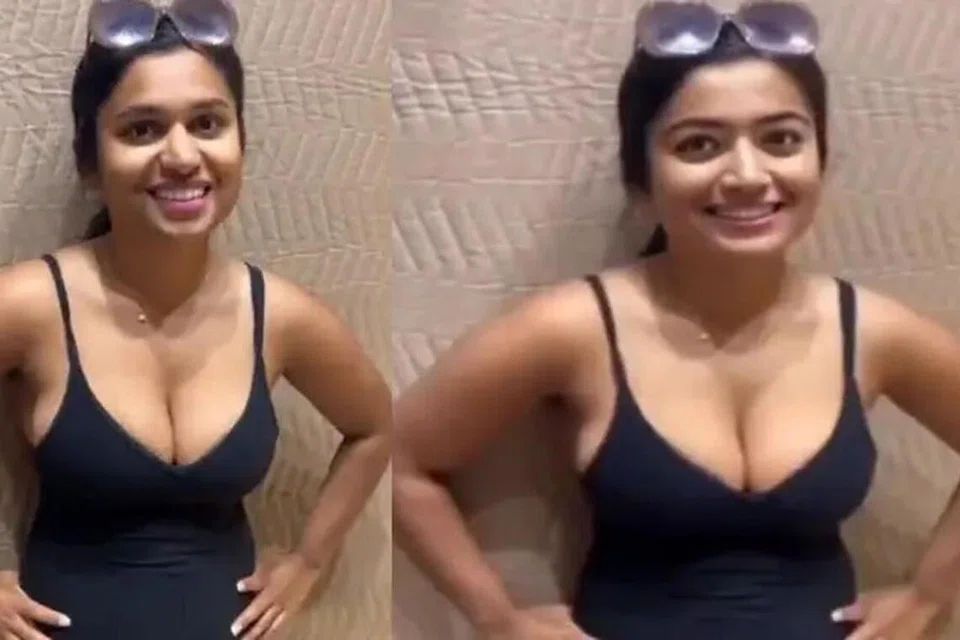

One Bollywood star is in a skin-tight lycra, another is in a revealing bikini, while a young actress is engaged in an obscene act with a man.
But none of it is real.
All three images, however, were credible enough to unleash lust, vitriol and unsavoury comments, underlining the sophistication of generative artificial intelligence and the threats it poses to actresses across India.
The photos and video were deepfake, and went viral in a vibrant social mediascape that is struggling to come to grips with technology that can create convincing copies and upend real lives.
“We need to address this as a community and with urgency before more of us are affected by such identity theft,” South Indian actress Rashmika Mandanna said in a post on X that garnered more than 6.2 million views.
She is not the only Bollywood star to be cloned and attacked on social media, with stars such as Priyanka Chopra, Katrina Kaif, Alia Bhatt, Deepika Padukone and Sunny Leone also targeted.
While digitally manipulated images and videos of women were once easy to spot, usually lurking in the dark corners of the Internet, the explosion in generative AI tools such as Midjourney, Stable Diffusion and DALL-E has made it easy and cheap to create and circulate convincing deepfakes.
More than 90 per cent of deepfake videos online are pornographic, according to tech experts, and most are of women, especially actresses.
“The tools have become so much more sophisticated over the past six months to a year, which explains why we are seeing more of this content in India,” AI expert Aarti Samani told the BBC. “Many tools are available now, which allow you to create realistic synthetic images at little or no cost.”
Recently, Mandanna, 27, had her face morphed onto an Instagram video featuring another woman in a black bodysuit. It went viral on social media, but a journalist at fact-checking platform Alt News reported that the video was a deepfake.
The lycra video, said Mandanna, was “extremely scary not only for me, but also for each one of us who today is vulnerable to so much harm because of how technology is being misused”.
A video of megastar Priyanka also went viral recently. In this case, instead of changing her face, it was her voice that was substituted in a clip which promoted a brand, while also giving investment ideas.
It is not just actresses who are affected. Indian industrialist Ratan Tata recently had a deepfake video made of him giving investment advice.
But the trend does seem to be affecting women in particular.
Google’s YouTube and Meta Platforms – which owns Facebook, Instagram and WhatsApp – have updated their policies, requiring creators and advertisers to label all AI-generated content.
But the onus is largely on victims to take action, said Ms Rumman Chowdhury, an AI expert at Harvard University. “Generative AI will regrettably supercharge online harassment and malicious content, and women are the canaries in the coal mine. They are the ones impacted first, the ones on whom the technologies are tested,” she said.
“It is an indication to the rest of the world to pay attention, because it’s coming for everyone.”
Indo-Asian News Service