
Little India is a familiar destination for many Singaporeans looking to buy everything from everyday essentials to festive goods. But fewer are aware of the rich history, long-standing businesses, and deep-rooted traditions that give the precinct its distinct character.
Changing that perception was the primary goal of the inaugural Little India Street Festival, held along Campbell Lane on Saturday, Aug 29. Jointly organised by the Indian Heritage Centre (IHC) and the Little India Shopkeepers and Heritage Association (LISHA), the event brought together locals and visitors to celebrate the enclave’s heritage, traditional trades, and evolving culture.
The festival spotlighted the heritage businesses of Campbell Lane as a pilot project, with plans to feature other streets within the Little India precinct in upcoming editions.
Ms Kiruthiga Mahendran, IHC’s General Manager, noted that Little India is extremely vibrant during festive occasions.
“We wanted that vibrant spirit to be a mainstay throughout the year. In that way, we felt organising this festival during this quieter period would be a good opportunity to bring our community together,” Ms Kiruthiga said.
A Throwback to The Past
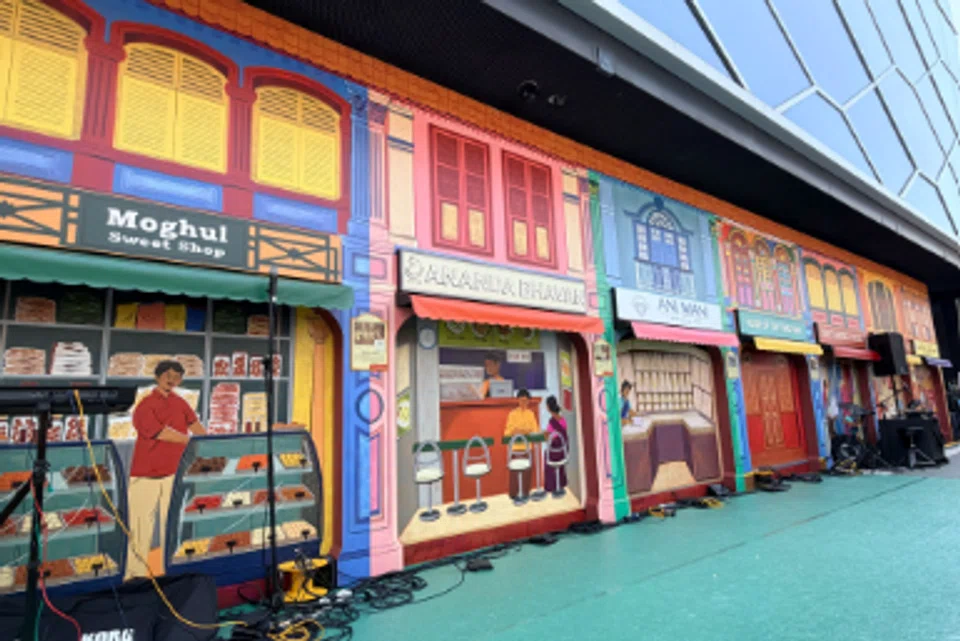
Serving as the visual centrepiece of the event, a striking temporary art installation outside the IHC recreated the iconic storefronts of Campbell Lane in the past, such as P. Govindasamy Pillai & Co, Thandapani Company, and Haniffa.
“I saw this installation, and it unlocked many memories for me, from my childhood. It is incredible to see how Little India, and specifically Campbell Lane, has changed over the past few decades,” remarked Mr J. Samuel, a 70-year-old retiree.
The public can catch this temporary art installation until mid-September.
Throughout the day, visitors engaged their senses with a variety of hands-on, free activities. From crafting traditional flower garlands and handmade crafts to block printing with traditional Indian motifs like peacocks and swans, the activities drew crowds across all age groups.
While 15-year-old Sivanesh Lingam initially dropped by with his sister to catch a glimpse of the festival’s emcee – a popular social media influencer, he walked away with a newfound appreciation for the precinct’s history.
“Upon coming here, I gained many new insights about our local heritage,” the Secondary 3 student shared. “I was surprised to learn that shops like Jothi Store & Flower Shop have been practising the art of garland tying for so many years. I learned how it’s done and what types of flowers are used.”
As part of the festival, local brands Sharva and Indus Collective jointly organised the “Discover Little India: A Kids’ Sensory Adventure” workshop.
From identifying spices to traditional block printing and tying flower garlands, around 32 young participants had a fully hands-on experience that engaged their five senses.
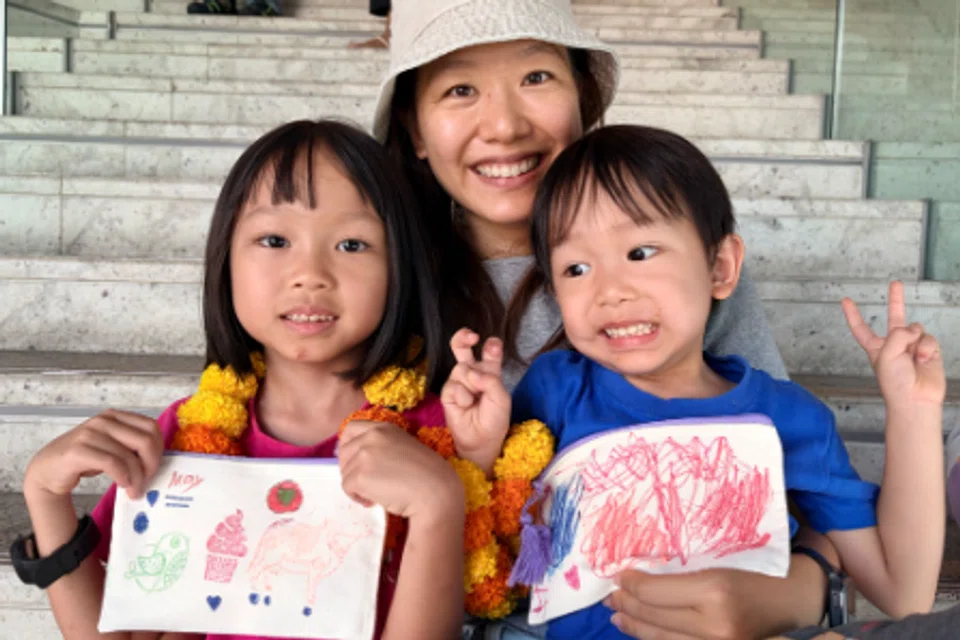
Insurance professional Ms Liu Yi-wen, 36, who had brought her children, May Chia, 6, and Max Chia, 4, appreciated the interactive setup, noting that rather than just looking at slides, the kids were able to actively participate in the activities.
Her son Max added that “with a little guidance, threading the needle through the flowers to make a garland myself was something entirely new for me.”
Nostalgic Moments and Cultural Showcase
From morning till dusk, Campbell Lane came alive with stage performances, including Kuchipudi, Oyilattam, and Garba.
Watching from the sidelines, 51-year-old Ms Sridevi, who works as a house helper, was so captivated by the vibrant stage displays that she decided to take a seat and watch the full show.
“I loved the traditional dance performances. We typically only see a few types of performances, or more modern styles of performances. It was refreshing to see less commonly explored art forms being presented on stage,” she shared.
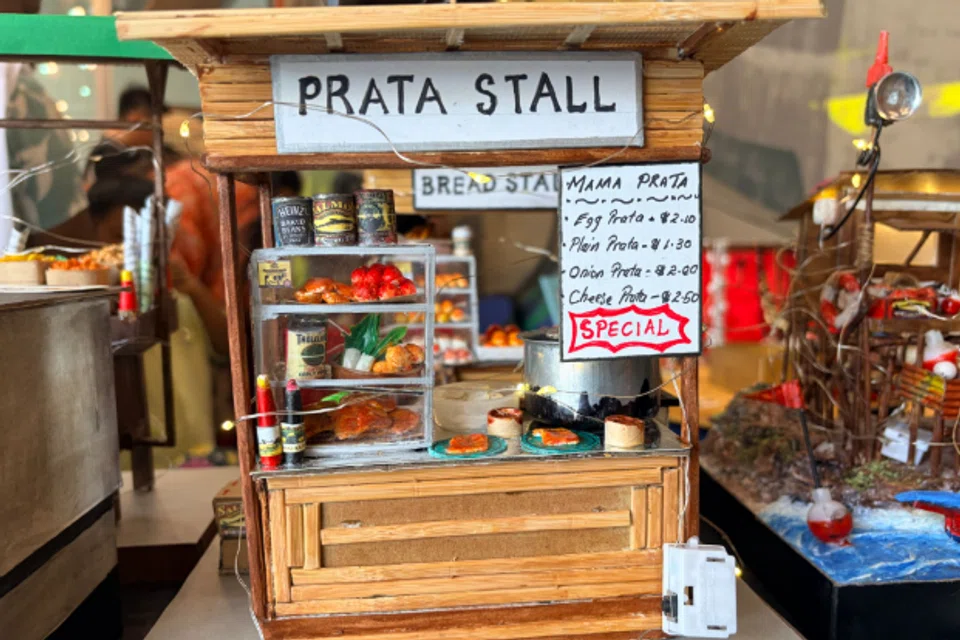
She also found herself reminiscing about the past as she took part in the activities and walked around the different booths. “The miniature models of old-school snack shops and Kachang Puteh stalls were wonderful. These snack shops no longer exist, so they give current and future generations an idea of what Little India used to look like.”
Extending the festive spirit beyond Campbell Lane, IHC collaborated with their long-standing partner, Land Transport Authority (LTA), to hand out flower garlands to commuters transferring between the Downtown Line (DTL) and the North-East Line (NEL) at Little India MRT station.
“Garlands are traditionally used to welcome people into their homes. We hoped that the garlands would serve as a physical reminder for commuters to take some time off their busy day and as an invitation for them to join in the festivities,” Ms Kiruthiga explained.
A Bridge Between Tradition and Modernity
Central to the festival was the Heritage Bazaar, curated with the assistance of local platform TekkaDotSG. The market brought together long-standing trades alongside contemporary Indian-centric home businesses.
“Our goal was to highlight the historic businesses of Little India while showing how modern Singaporean entrepreneurs in those same fields have evolved, adapting and catering to modern times,” said Mr Kumaravelu Palanivelu, 44, founder of TekkaDotSG.
One such entrepreneur was Ms Sathiya Priya, 33, founder of Calithea. Having started this cosmetic brand specifically tailored for Indian skin tones five years ago, she expressed that the event offered invaluable exposure to the community.
“It allowed us to draw parallels between the Little India of yesterday and today,” Ms Priya remarked. “Beyond looking back, it inspired us to think about what the future holds for young Singaporeans.”
Reflecting Singapore’s multicultural fabric, the market also featured stalls serving traditional delicacies blending Indian, Malay, and Peranakan influences, such as Pulut Inti and Pulut Hitam.
Emphasising that tradition is far from static, Little India Shop Owners and Heritage Association (LISHA) chairman Mr Regunarth Siva noted that the festival serves as a bridge between Little India’s history and its future.
“Heritage doesn’t belong only to the past; it continues to evolve and remains part of Singapore’s identity today,” Mr Regunarth noted. “We hope visitors leave with a deeper appreciation of Little India and continue supporting the businesses and people who give the precinct its unique character.”