
The Singapore Kairalee Kala Nilayam (SKKN) celebrated its 70th anniversary with a compelling showcase of Malayalam theatre, staging two ambitious productions – Pandavapuram and Daivathinte Goalkeeper – over three evenings from March 27 to 29 at the Goodman Arts Centre.
The twin productions reflected both the literary depth and evolving theatrical ambition of Singapore’s Malayalee community, offering audiences contrasting yet equally immersive experiences.
Reimagining literature: Pandavapuram on stage
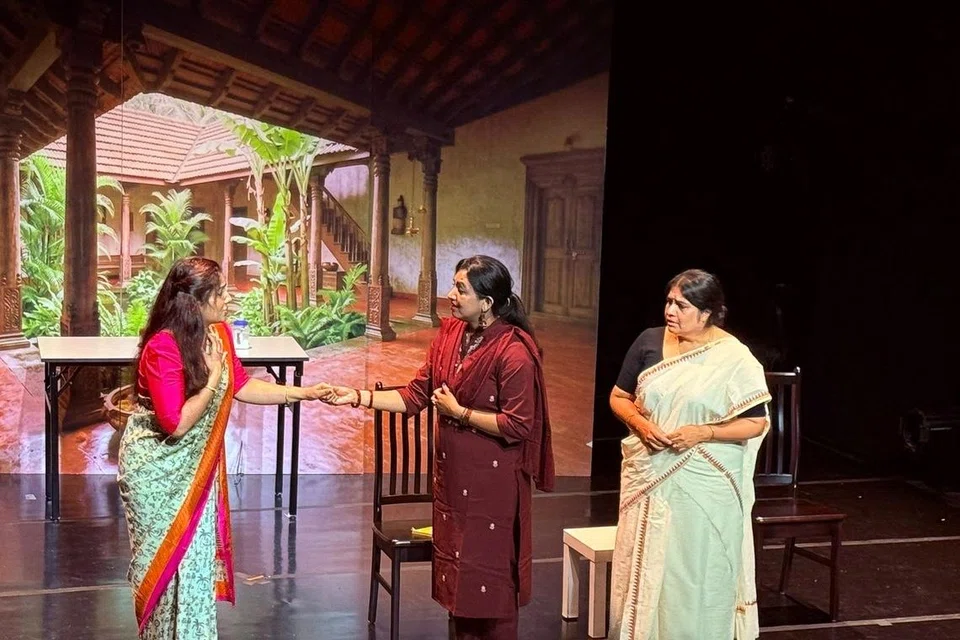
The adaptation of Pandavapuram, based on the acclaimed novel by Sethu, stood out as a bold artistic undertaking. Long considered difficult to translate to stage due to its layered narrative and elements of magical realism, the production – adapted and directed by D. Sudheeran – rose to the challenge with remarkable confidence.
Sudheeran’s extensive experience in Malayalam theatre was evident in the measured pacing and visual storytelling. Rather than simplify the novel’s complexity, the staging embraced its ambiguity, using movement, lighting and choreography to convey the protagonist’s inner world.
At the centre was Haripriya Harish Kumar, whose performance anchored the production with emotional authenticity. Her portrayal balanced vulnerability and intensity, drawing the audience into the character’s psychological landscape. Veteran actor Anand Rajan, as the lover, added gravitas with a restrained yet commanding presence.
A notable creative layer came from Abhijith Venugopal, who not only performed but also choreographed the production’s movement sequences. His work lent the play a fluid, almost dreamlike quality that aligned well with its magical realist tone.
The ensemble – including Sunitha Nair, Gayathry Muralee, Keerthivas Patteri and Prajeesh – functioned cohesively, while Muralee Krishnan’s dual role as associate director and performer in another concurrent production underscored the depth of commitment behind the staging.
Technically, the production was polished. Lighting and sound design worked in quiet harmony, enhancing the mood without overwhelming the narrative. By the final evening, it was clear that Pandavapuram had achieved something rare – transforming a complex literary work into a compelling theatrical experience without diluting its essence.
High-octane theatre: Daivathinte Goalkeeper
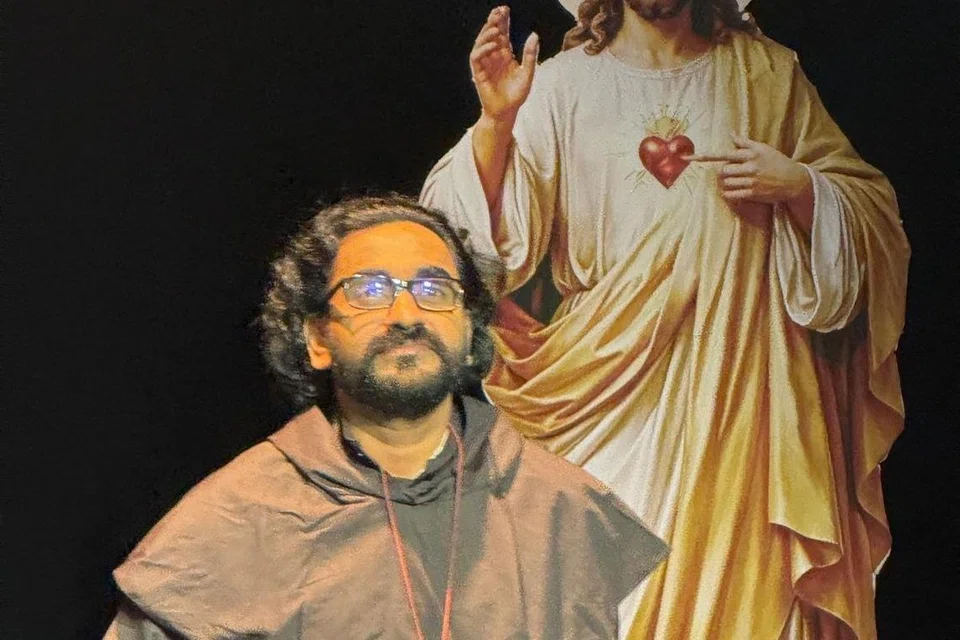
If Pandavapuram was introspective, Daivathinte Goalkeeper delivered raw energy and dramatic intensity. Written and directed by Ajithkumar Venugopal Menon, and inspired by N S Madhavan’s celebrated short story Higuita, the play unfolded as a gripping exploration of faith, courage and moral responsibility.
Staged in a black box setting, the production used space effectively to create intimacy and tension. The narrative – centred on Father Gabriel, a priest shaped by his past as a goalkeeper – drew a powerful metaphor between sport and moral action.
Muralee’s portrayal of Father Gabriel was the backbone of the production. His transformation from composed priest to decisive, action-driven figure was handled with conviction, culminating in a climactic sequence that left audiences visibly moved.
Shanish K P brought quiet menace to the role of Jose, while Malavika Saji’s Lucy added emotional depth. Supporting performances by Renju M George, Shibolin Gangadharan, Vishnu Monat, and veteran Sheeba Stephen contributed to a well-rounded ensemble.
What elevated the production was its technical ambition. The interplay of lighting by G S Balaji and Divya, combined with precise sound design, built a slow-burning tension that erupted in a cinematic finale. The inclusion of live stunt choreography – rarely attempted in local theatre – added a visceral dimension, executed with consistency across all three nights.
A milestone celebration
Together, the two productions highlighted the range of contemporary Malayalam theatre in Singapore – from literary adaptation to socially driven drama.
More importantly, they reaffirmed SKKN’s role, since its founding in 1956, as a key cultural anchor for the Malayalee community. As it marks seven decades, the organisation demonstrated that community theatre, when driven by passion and discipline, can achieve both artistic excellence and emotional resonance.