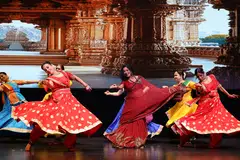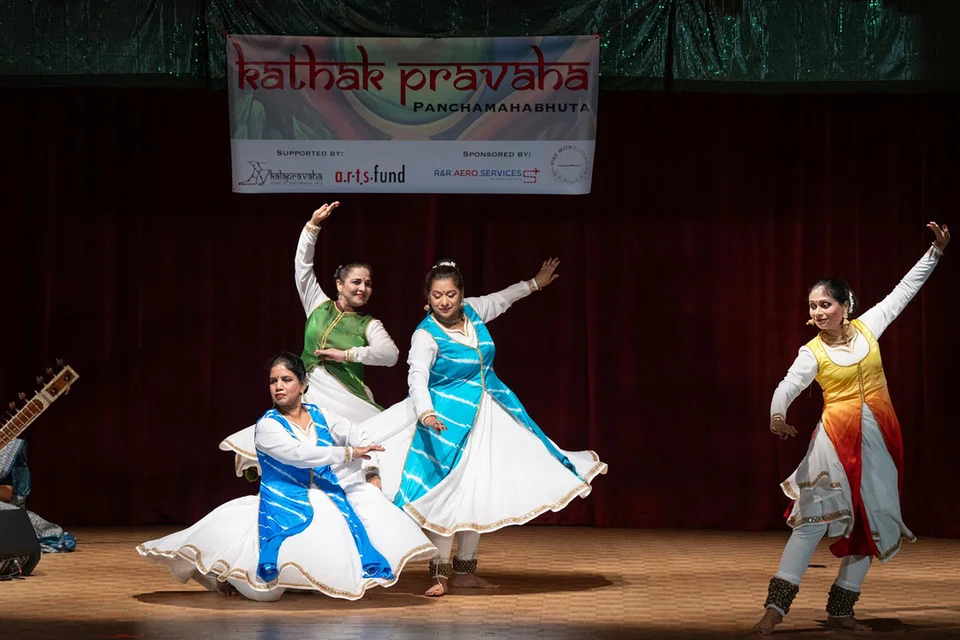
The sixth edition of the Kathak Pravaha series, Shashtha Sarga, melds devotion, rhythm and classical storytelling in a tribute to Lord Kartikeya – also known as Murugan.
Shashtha means sixth, while sarga refers to a chapter or canto,” explained Ms Kumudha Panneerchelvam, 43, Managing Director of Kalapravaha – Home of Performing Arts and producer of Kathak Pravaha.
“We wanted the sixth edition to feel like a new chapter in the journey of the series while exploring the significance of the number six through Lord Kartikeya.”
Rather than presenting a direct adaptation of a single scripture or literary work, Shashtha Sarga is an original thematic production inspired by the stories, symbolism and devotional traditions surrounding Murugan. The performance draws on qualities often tethered to him, such as courage, wisdom, grace and devotion, as well as enduring symbols such as the vel, the peacock and the recurring significance of the number six.
According to Ms Kumudha, Murugan was a natural choice for the production’s central theme.
“As this is the sixth production in the Kathak Pravaha series, we wanted a theme that had a meaningful relationship with the number six. Murugan is closely associated with six through his six-faced form – Arumugam – and the six sacred abodes linked to his worship,” she said.
“It also gave us the opportunity to explore a theme deeply rooted in Tamil devotional culture through Kathak, creating a meeting point between different Indian artistic traditions while respecting the identity of both.”
The production has been in development for several months, beginning with research and conceptualisation before moving into choreography, music selection and rehearsals.
A feature of this year’s production is its live music, which has required dancers, choreographers and musicians to work closely together so that movement and music develop as one cohesive performance.
For choreographer and Kalapravaha founder Bhupali Deshpande-Kulkarni, 44, interpreting a Tamil bhajan through the language of Kathak made for a rewarding challenge.
“Kathak is a North Indian classical dance form, while the bhajan is rooted in Tamil devotional traditions associated with Murugan,” she said, hence it was important for her to preserve the essence and Tamil identity of the composition while expressing it through Kathak’s movement vocabulary.
She added that the creative team was determined to avoid simply placing two traditions side by side. Beyond the choreography and technical precision, the creative team hopes audiences leave with a renewed appreciation for the versatility of classical dance.
“We hope the production offers a new way of experiencing Lord Kartikeya’s story,” Ms Kulkarni said. “I also hope audiences see that classical dance is not static. It can remain rooted in tradition while continuing to explore new themes, cultural connections and ways of storytelling. Above all, we hope they experience the emotion behind the work.”