
Does retirement mean retiring from life? And when children grow up and move away, must parents spend their later years waiting for them to return?
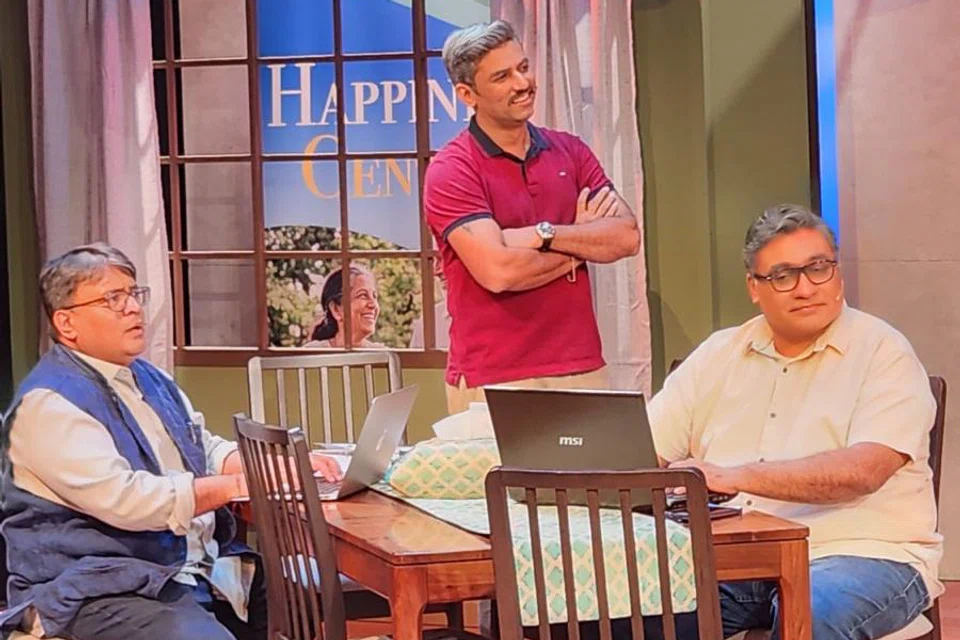
These potentially uncomfortable questions were handled with warmth, humour and considerable emotional intelligence in Sanjya Chhaya, staged at the Esplanade Theatre Studio on Sept 18 and 19.
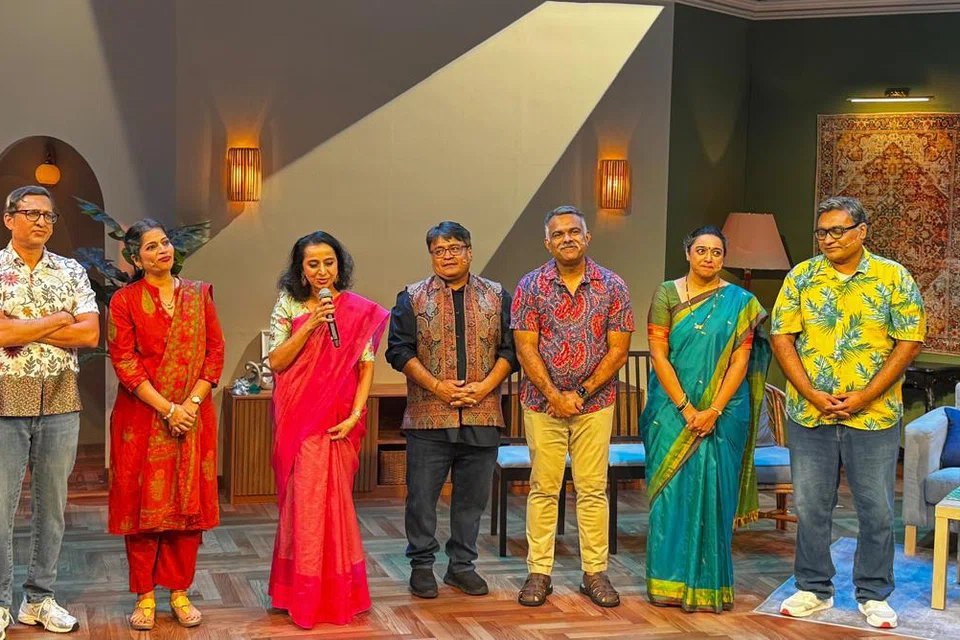
Directed by Shalaka Ranadive, the Hindi adaptation of Prashant Dalvi’s popular Marathi play was co-produced by Esplanade – Theatres on the Bay and Shalaka’s WeCanDoIt Productions. Significantly, it was the first Hindi play presented under Esplanade’s Raga series.
And judging by the full houses, laughter and enthusiastic response, Hindi theatre clearly has an audience in Singapore.
At the centre are Sanjya and Chhaya, a Mumbai couple in their 60s whose grown-up children have lives of their own.
But these are not parents sitting around complaining that their children don’t call often enough.
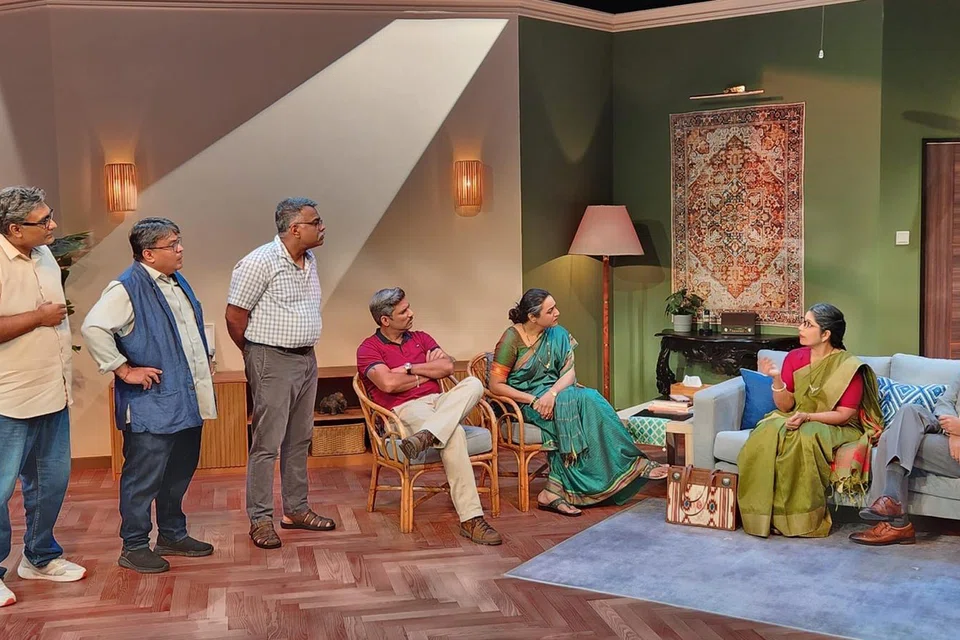
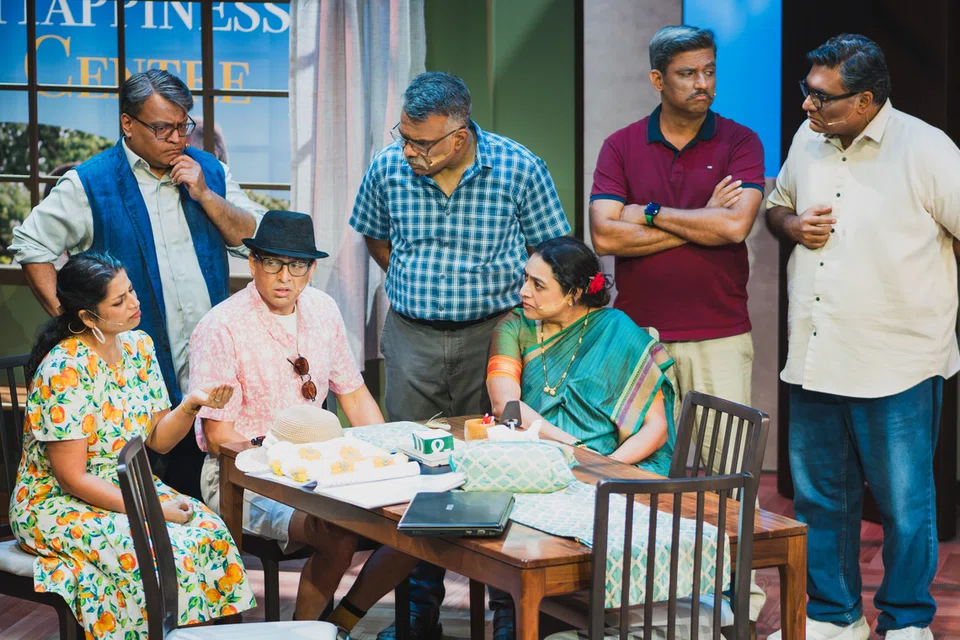
Instead, they build lives beyond parenthood, creating a “Happiness Centre” to help others and finding purpose at an age when society often expects people to quietly slow down.
That premise could easily have turned preachy. It didn’t.
The production’s biggest strength was its humour. The witty exchanges felt natural rather than inserted simply to produce laughs, while the chemistry among the actors allowed some fairly serious questions about ageing, loneliness and family responsibility to emerge without weighing down the evening.
The cast, including Bipin Balakrishnan, Rachita Arke, Gautam Marathe and Aditya Mazumdar in pivotal roles, handled the shifts between comedy and emotion convincingly. The production was also helped by crisp sound, lighting and an effective set that kept the storytelling uncluttered.
Shalaka’s connection with the material is deeply personal.
An empty nester with two grown-up daughters, she understands the moment when children become independent, and parents suddenly have to rediscover lives beyond raising them.
“I feel we need to remind ourselves that retirement is retirement from work, not from the pursuit of leading a fulfilling life,” she said.
For her, retirement can instead become an opportunity to revisit interests put aside during careers and child-rearing, or even discover an entirely new purpose.
That message has particular resonance in Singapore.
Many families here have children studying, working or settling overseas. Technology may keep them connected, but geographical distance inevitably changes relationships.
Shalaka said the play recognises that the traditional expectation that children must remain responsible for ageing parents is also evolving.
“There is no right or wrong answer,” she said, arguing that families increasingly have to redefine relationships and responsibilities to accommodate contemporary realities.
Importantly, Sanjya Chhaya does not suggest that independence means emotional detachment.
One of its most affecting moments comes when Chhaya speaks to her sons, while Sanjya’s reflections about finding purpose in life struck an obvious chord with the audience. Poetic couplets capturing life’s bittersweet moments also drew applause.
Shalaka said six months of preparation went into the production, including workshops and experimentation. Her objective was simple: Allow audiences to laugh, but send them home with something to think about.
It succeeded.
For Shalaka, who has spent nearly 15 years acting, directing and producing theatre in Singapore, the sold-out production was also a validation of her long-held belief that there is a receptive audience for locally produced Hindi theatre.