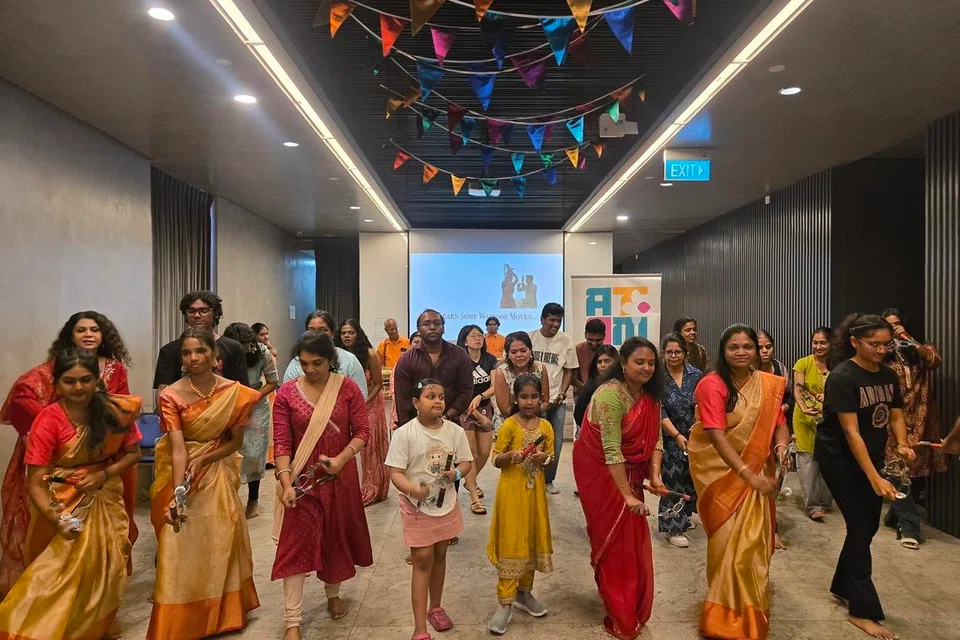
In a remarkable feat of cultural preservation, Anandha Traditional Arts and Music (ATAM) brought Salangai Kittiyattam, a rare folk art form that is virtually undocumented on the internet, to Singapore.
Hailing from Tamil Nadu, the art form features rhythmic clanks of wooden sticks, jingles of metal chains, and dance steps that were historically used to keep the warriors physically fit.
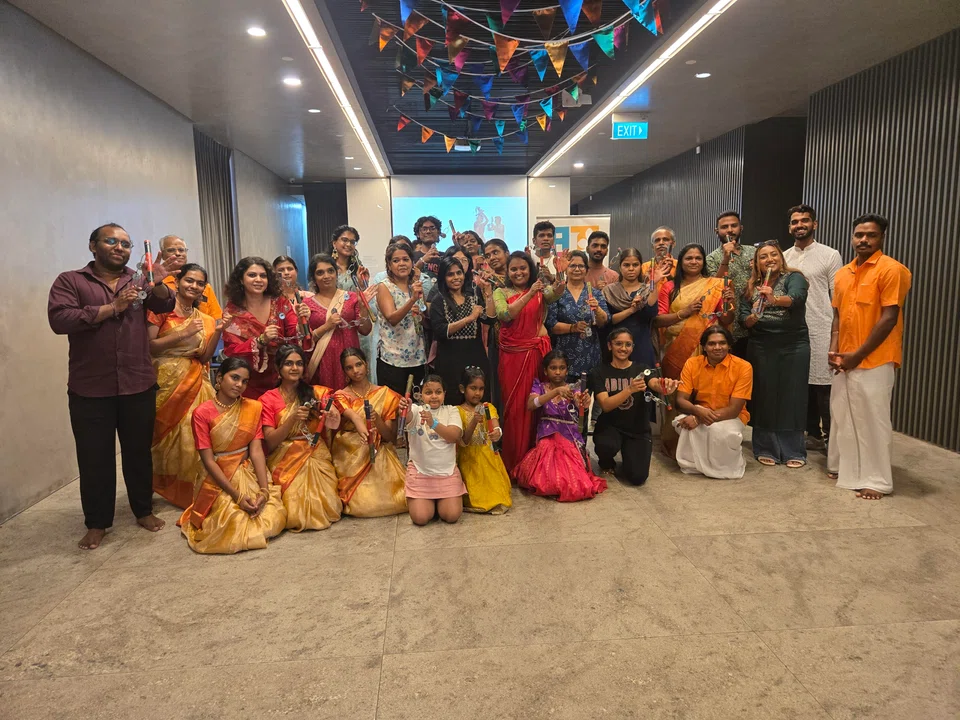
As part of its Nam Marabu traditional artform workshop series, ATAM brought Mr Gopi Arumugam, a Salangai Kittiyattam artiste, to facilitate the workshop. Participants of all ages and races enjoyed the workshop, which was held at the Indian Heritage Centre (IHC) on Sunday, Feb 15.
The art form is practiced religiously by the people of Kannanthangudi Village in Thanjavur district. Mr Arumugam, a 32-year-old artiste from the village who has learnt the craft since the age of five, travelled to Singapore to share his heritage. He, along with a team of local musicians, filled the IHC hall with laughter and joy.
For the people of Kannanthangudi, Salangai Kittiyattam is not merely a performance but a sacred communal rite. “Every single person from our village knows this art form, and we all perform this together at the Malayeri Amman Temple Festival that happens in May every year,” said Mr Arumugam.
In his village, the entire population undergoes a month of rigorous training every year to perform during the festival. While the artform has largely disappeared from other regions, this village has successfully preserved five distinct styles of it.
“I am extremely proud to say that we have preserved this through generations,” said Mr Arumugam, who shared his joy of spreading this art form to Singapore.
“Even though many have settled here for generations, the interest Singaporean Tamils show towards traditional elements is extraordinary,” he noted. “I believe that while learning such rooted art forms they feel a sense of closeness to our language and culture.”
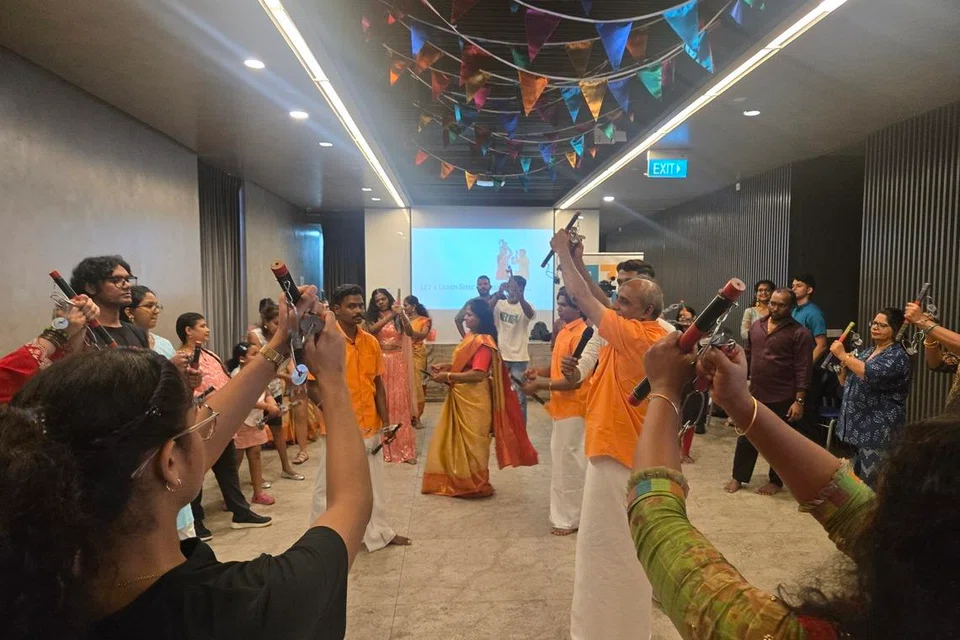
He also said that seeing non-Tamil Indians and participants of various ethnicities join the event was a uniquely moving experience.
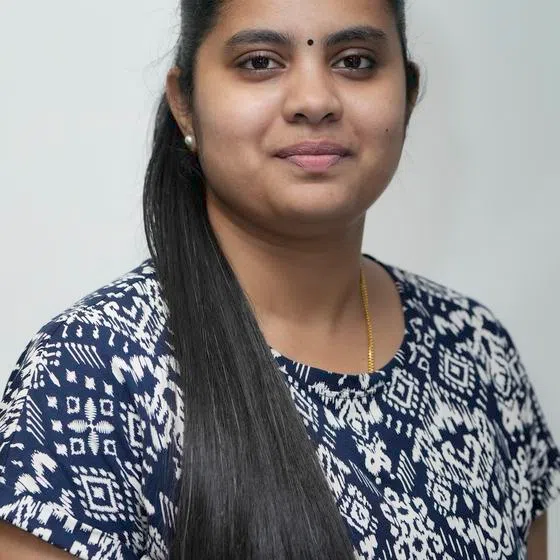
Ms Vishnu Vardni, CEO of ATAM, highlighted the necessity of such physical workshops in a digital age. She pointed out that Salangai Kittiyattam is so rare that it “cannot be learnt through internet searches”, making such workshops invaluable.
“Amid the busy environment of Singapore, platforms that connect tradition with lifestyle have become rare,” she said. “This is a community art form. The joy derived from creating as a community, rather than as an individual, is special.”
She also said meticulous planning and execution were involved in bringing this artform to Singapore and mentioned that she had immense pleasure in doing so.
The workshop attracted a diverse crowd. For many parents, the event was an opportunity to ground their children in their ancestral roots.
Ms Suprabha Marudhan, who attended with her daughter Hemamirdha, praised the artiste’s patience in teaching across age groups.
Ms Nandhini Rathinakumar, 39, who brought her five-year-old daughter Vrisha Hamsini, noted: “The collective dance offered a rare chance for my daughter to socialise and connect with others.”
RELATED STORIES
28 Aug 2025 20:20