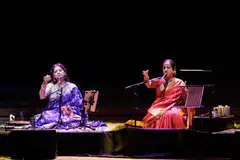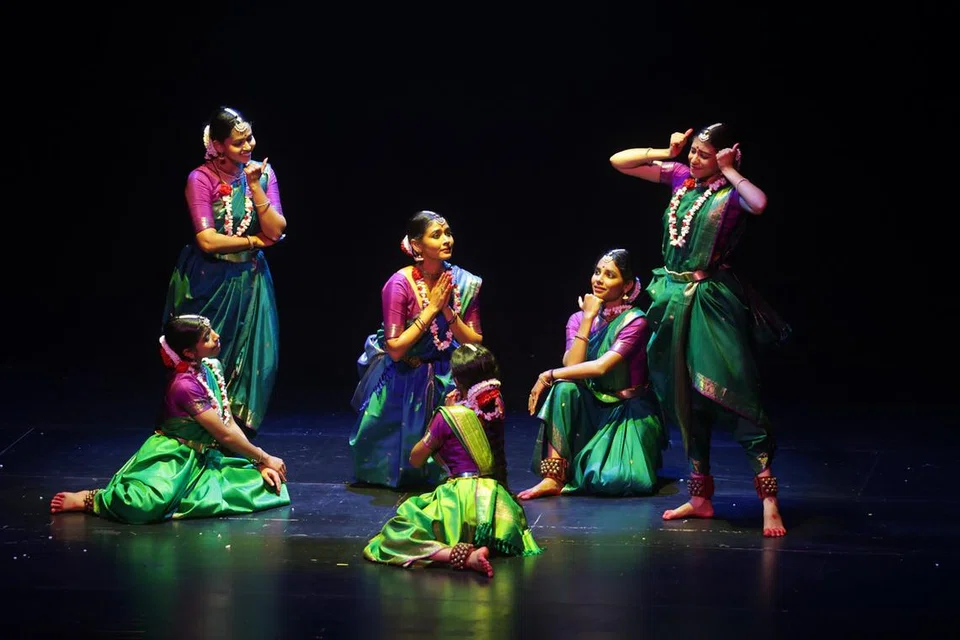
A deeply meditative exploration of devotion, movement and inner seeking unfolded in Singapore as anumArga – Seeking a Path was staged on May 2 and 3 at the Singtel Waterfront Theatre.
Presented by SIFAS Productions in collaboration with Project Samskriti, the production marked the first Singapore showcase of the work and was among the highlights of the SIFAS Festival of Arts 2026.
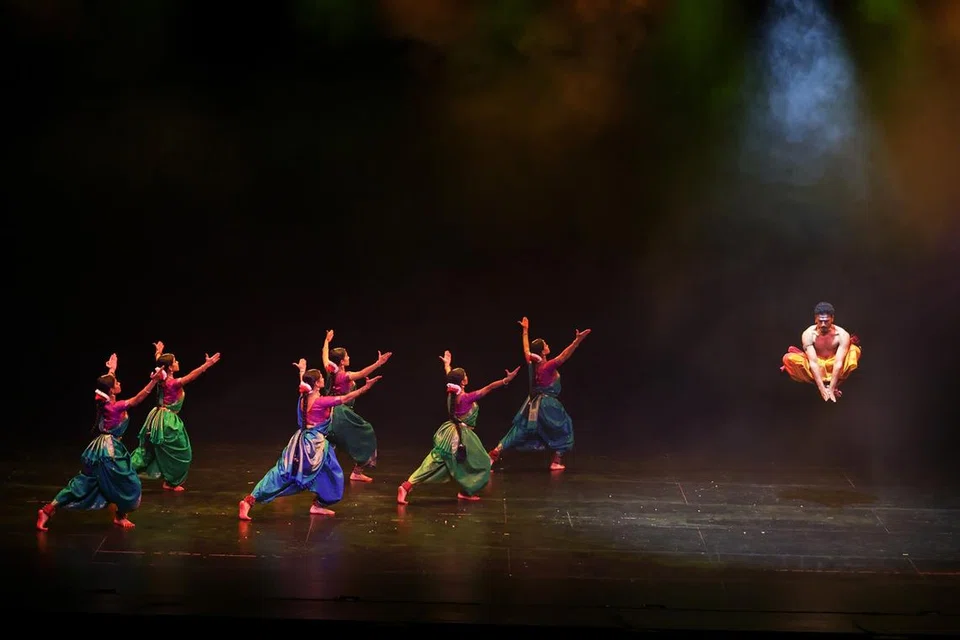
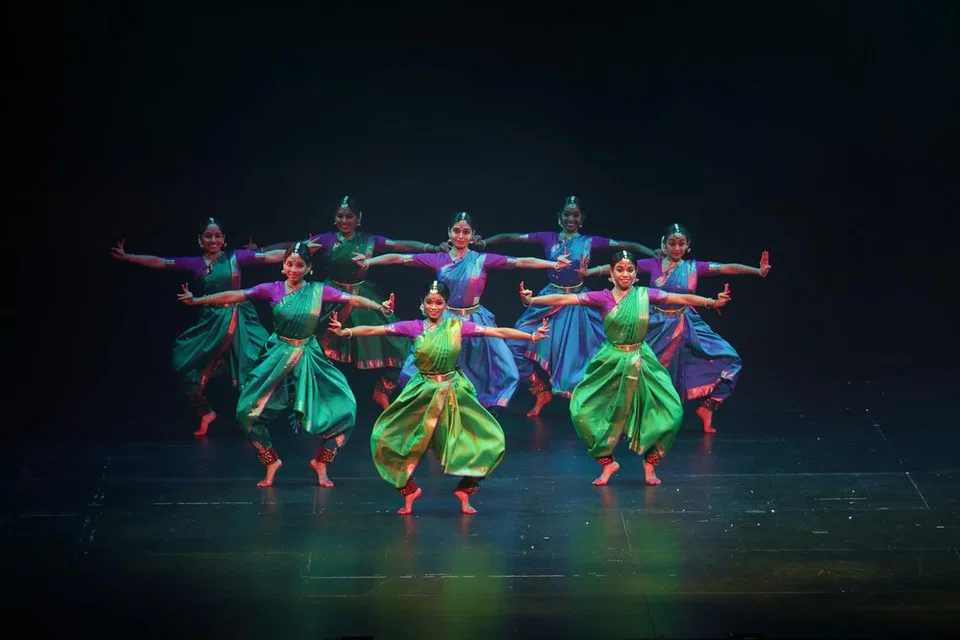
At the heart of the production was bharatanatyam dancer and choreographer Radhe Jaggi, who led an ensemble from Project Samskriti alongside dancers from SIFAS Productions. The result was a powerful confluence of bharatanatyam, kalaripayattu, poetry, mythology and spiritual inquiry.
For Radhe, who is the Indian spiritual guru Sadhguru’s daughter, dance is not merely a performance. It is an extension of her sadhana.
“Dance is definitely an extension of my seeking,” she said. “Indian classical arts allow for complexity and nuance. The moment you feel you have understood something, there is always more to explore.”
anumArga, meaning “seeking a path”, examines different routes to bhakti, or devotion. Rather than presenting devotion as a single emotional state, the production explored it through love, longing, arrogance, austerity, battle, and surrender.
The seven-part work moved through stories drawn from Indian epics and spiritual traditions. It opened with the gopis of Vrindavan, who seek Krishna with complete love even before seeing him. It then moved to Ravana, portrayed not simply as king or warrior, but as a fierce devotee whose arrogance and devotion exist side by side.
Another striking segment, Kirata, depicted Arjuna’s encounter with Lord Shiva in the form of a hunter, using the physical energy of Kalaripayattu. Parvati Tapasya presented Parvati not merely as Shiva’s consort, but as a young seeker whose austerity bends even the divine.
The concluding Shoonya explored creation, dissolution, and the possibility of returning to emptiness.
For Singapore audiences, the blend of bharatanatyam’s geometry with kalaripayattu’s martial intensity gave the production a distinctive visual force. Project Samskriti brought six dancers and two martial artists, while five SIFAS dancers joined them, giving local performers a meaningful platform in an international classical production.
Radhe said this collaborative approach reflects the larger spirit of Project Samskriti, an initiative envisioned by Sadhguru to make Indian classical arts more accessible and alive.
At the Sadhguru Gurukulam Samskriti school near Coimbatore in Tamil Nadu, children enter between the ages of seven and nine and train in bharatanatyam, kalaripayattu, music and yoga, alongside academic subjects. As they grow older, they specialise in chosen art forms.
Radhe sees this as more than artistic training. “Everybody who learns dance does not have to become a dancer. Everybody who learns music does not have to become a singer. You can learn it just because it is beautiful,” she said.
Being Sadhguru’s daughter has inevitably shaped her inner and artistic world. But Radhe speaks of it not as inheritance, but as responsibility and privilege.
“I have had the fortune of growing up in the ashram surrounded by some of the most incredible, intelligent, capable and committed people,” she said. “If I can offer some aspect of that to the people I meet, it is a privilege.”
Her life is also closely tied to music through her husband, Carnatic vocalist Sandeep Narayan. At home, she said, music and dance are constant presences. “Between Sandeep and I, there is always music and dance happening,” she said. “How can you not thrive in an environment like that?”
That creative environment is central to her vision. She wants classical arts to move beyond being seen as niche or difficult. “In the past, dance and music were not restricted to a small group of people,” she said. “They were performed in temples where everyone had access. I want to bring that back.”
The Singapore performances were attended by strong audiences and concluded with warm applause. Guest of Honour and MP Darryl David attended the May 2 show, while SIFAS patron Sat Pal Khattar graced the May 3 performance.
For Radhe, the journey ahead is clear: more dance, more teaching, more creation.
“I hope the students mature into beautiful choreographers and dancers,” she said. “One day, I want to be just a dancer in their company.”