
V.K. SANTOSH KUMAR
Four acts, four different theatrical experiences and one common thread of mystery.
That was the intriguing proposition behind Mystical Myths – Season 4, which concluded its three-day run at the Drama Centre Black Box, National Library Building, on Oct 10.
Conceptualised and produced by festival director Monisha Charan under Izaara Creative Productions, the festival brought together original short plays, improvisational comedy and live music, all accessible through a single ticket.
The Oct 8–10 showcase demonstrated how contrasting theatrical genres could coexist within a common theme, offering audiences a varied evening of entertainment while celebrating Singapore’s multicultural artistic community.
For Monisha, who has been producing and directing theatre since 2009, the festival represents a longstanding ambition.
“Having produced and directed theatre since 2009, I realised no English festival brought all cultures together on a single stage,” she said.
That prompted her to establish Mystical Myths in 2019 as a multi-ethnic English-language theatre festival.
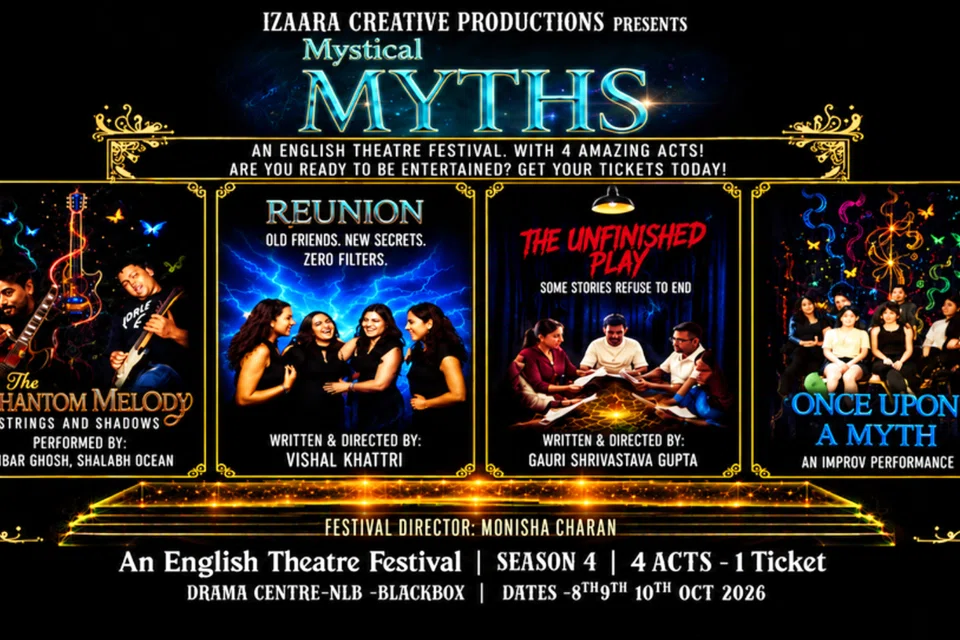
The fourth season featured two 30-minute plays, an interactive improvisation segment and a musical finale.
The first play, Re-Union, written and directed by Vishal Khatri, explored the complicated nature of friendship.
Four former schoolmates reunite after more than two decades, expecting an evening of nostalgia. Instead, their encounter uncovers uncomfortable truths, buried emotions and supernatural intrigue.
Combining drama, classical dance and an unexpected twist, the production examined how memories and unresolved relationships can return to haunt people.
The cast included Saurabh Sardana, Lagnajit Patnaik, Kaustabh Dalvi, Abhinav Singh, Siddhi Charan, Sheetal Sharma, Bani Shetty, Deepali Agrawal and Jawahar Kanjilal.
The second production, The Unfinished Play, offered an inventive theatrical premise.
Written and directed by Gauri Shrivastava Gupta, it unfolded during an apparently ordinary rehearsal that gradually turned sinister.
As the actors struggled with familiar lines and unresolved tensions, an unseen force appeared to manipulate the proceedings.
The play-within-a-play format provided an opportunity to explore the anxieties, rivalries and fragile relationships that sometimes exist behind the scenes.
Gauri, who has written theatre scripts for 25 years, drew upon her extensive experience of rehearsals and theatre-making, adding a supernatural dimension to familiar backstage situations.
Its cast comprised Nidhi Chopra Khanna, Hema Kripalani, Kapil Dalal, Ankit Agrawal, Sandeep Singh and Swapnil Lakhe.
The production’s appeal lay in its unusual premise: A rehearsal in which the characters gradually lose control of the story they are supposed to perform.
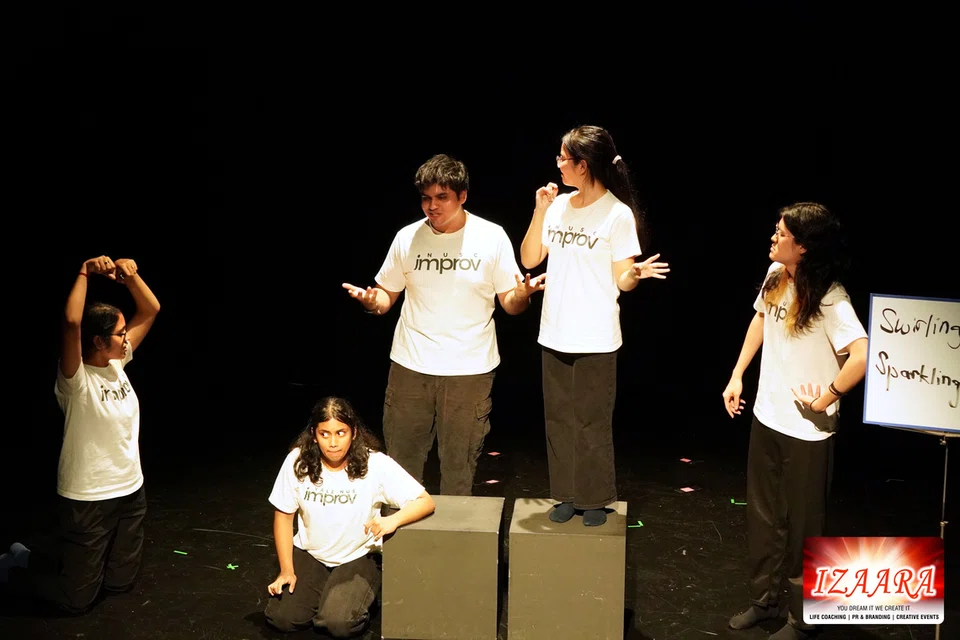
Providing a lighter contrast was Once Upon a Myth, an improvisational performance by NUS Improv.
Conceived by Monisha, the segment invited audience members to suggest words that performers transformed into spontaneous stories.
Using a Chinese proverb as its thematic foundation, the improvisation brought unpredictability and humour into the evening.
With Viraj, Kafka, Pei Ye, Xin Ye, Ivana and Mangai performing, each presentation became a different experience shaped partly by the audience.
The final act, The Phantom Melodies, featured Ambar Ghosh and Shalabh Ocean performing a medley of English and Hindi songs.
The musical interlude provided a gentler conclusion while maintaining the festival’s atmosphere of mystery and fantasy.
Monisha explained that the objective was to present “four acts, all varying from each other yet intertwined by a mystical thread”.
The format’s strength was its diversity, although bringing together scripted drama, spontaneous comedy and music inevitably demanded careful transitions and coordination.
For the organisers, maintaining cultural authenticity was equally important.
Monisha acknowledged that adapting stories from different traditions into English could sometimes diminish their original nuances, requiring sensitivity in presentation.
The festival also faced financial challenges.
Operating without arts council funding, Izaara depends entirely on ticket revenue while managing venue rentals, technical requirements and a sizeable artistic team.
Nevertheless, Monisha said audience feedback had been encouraging, with positive responses during post-show interactions and through social media.
Beyond the individual performances, Mystical Myths demonstrated the value of providing a common platform for established and emerging artistes from different communities.
“The lines blur between races and cultures, and the story is the final hero,” Monisha said.
With a fifth season already being considered, she hopes eventually to take the festival overseas.
santosh@sph.com.sg