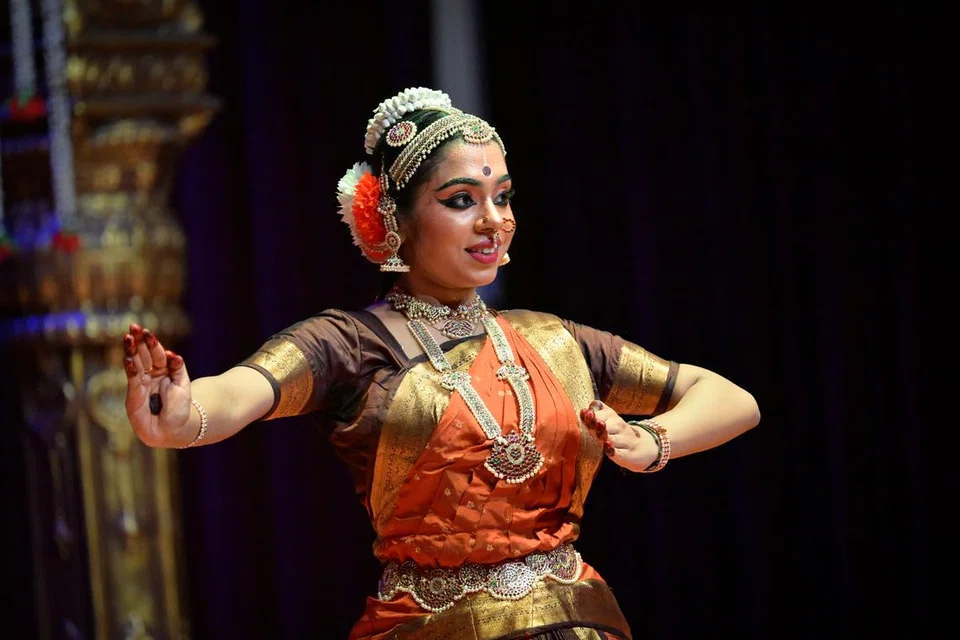


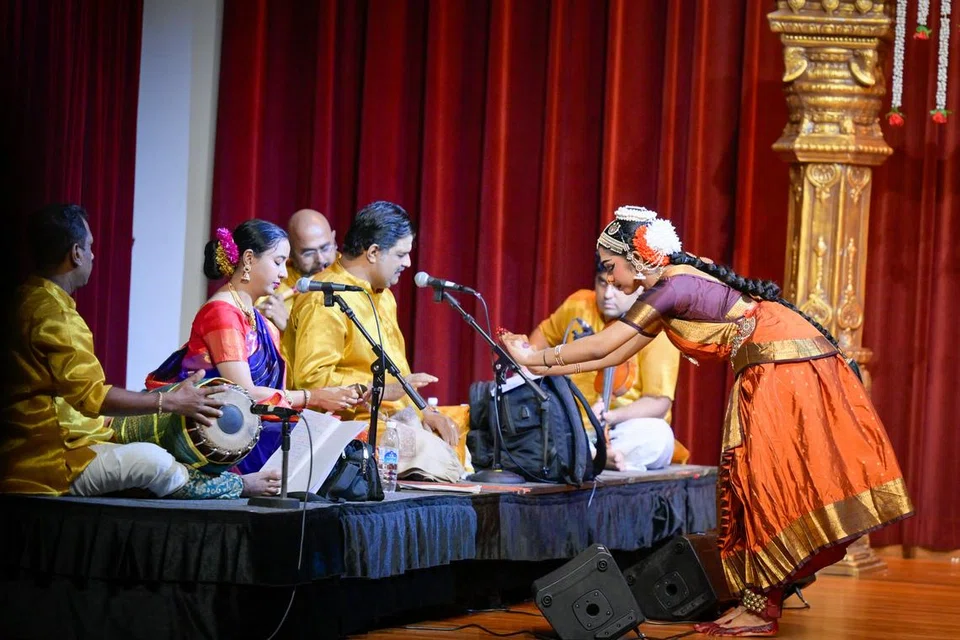
A traditional Bharatanatyam arangetram (debut solo performance) typically follows a standardised, centuries-old repertoire of classical songs. But 22-year-old Shruthika Kumar went beyond executing a conventional debut; she transformed her milestone performance into a personal, creatively ambitious love letter to the Tamil language – interweaving ancient Sangam-era literary masterpieces.
During the initial planning stages, Shruthika’s guru (teacher), Abiramy Kalaiselvan, Head of Departments & Art Director of Art and Artist School of Fine Arts (ANASFA), proposed infusing an elevated layer of Tamil language and culture into the repertoire.
“Bharatanatyam is more than dance; it brings language, literature, and devotion to life. As a Tamil teacher herself, Shruthika carries a genuine love for the Tamil language, and we wanted her arangetram to reflect that authenticity,” Mrs Abiramy shared.
For Ms Shruthika, this was an opportunity she could not miss. The decision led to a gruelling one-year journey of preparation, during which the Nanyang Technological University-National Institute of Education (NTU-NIE) undergraduate had to juggle a variety of commitments.
Her culturally rich solo debut at the Sri Srinivasa Perumal Temple’s PGP Hall on May 24 followed the prestigious and visually precise Kalakshetra style.
The performance opened beautifully with a Jana Varaveppu (public welcome), a rare and deliberate choice not typically seen in standard arangetrams, selected to embody a core value of Tamil culture: radical hospitality.
Ancient Tamil literary treasures staged in the performance include the Thirukkural (couplets on ethics and virtue), Ettuthogai (The Eight Anthologies of Sangam literature), and Pathupaatu (The Ten Idylls).
Ms Shruthika brought the historical weight and emotional depth of these classical texts to life effortlessly, using fluid abhinaya (facial expressions), gestures, and footwork to interpret the texts.
To avoid repetitive storytelling, she used clever visual metaphors, for instance, holding up eight fingers to denote the eight texts in Ettuthogai and mimicking the flipping of pages when referencing Olaichuvadigal (ancient palm-leaf manuscripts).
To push the linguistic theme even further, her performance of the major, complex segments of the night, including the centrepiece Varnam, the Padam, and the Keerthanam, featured Tamil compositions exploring deep Tamil mythology.
“I wanted to share the beauty of Tamil through my dance and embed a sense of pride and passion for Tamil among all those who came,” Ms Shruthika said.
This literary appreciation extended to her token of appreciation – a Tamil poem penned by herself in line with the performance’s overarching theme, “Bharatham is devotion” – presented to the Guest of Honour, Minister of State for Culture, Community and Youth, Dinesh Vasu Dash, who commended Shruthika’s dedication and discipline in learning the art form.
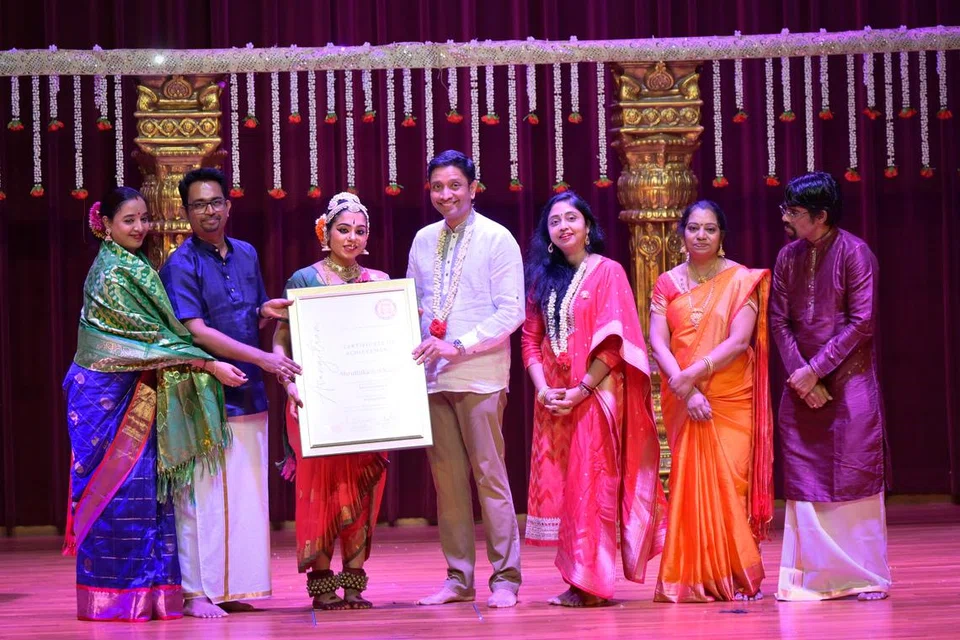
“The arangetram is one of the highest honours for not only the dancer, but also the guru and for the art form itself. I encourage all who have come for this event to continue supporting this art form and our performers,” said Mr Dinesh.
The milestone coincided with the completion of her four-year Bachelor of Arts in Tamil Studies and Education. This July, she will begin her career as a secondary school Tamil teacher, where she hopes to pass on Tamil culture through traditional dance forms like Bharatanatyam and Karakattam (the folk art of balancing pots on the head).
“This arangetram has given me a fresh perspective that I can seamlessly integrate Tamil literature into classical dance,” she noted.
Through the intense ups and downs, it was Ms Shruthika’s deep passion for Tamil that kept her moving on her toes, quite literally. The emotional weight she carried was poured into writing Tamil poetry, a creative outlet that soon became her sanctuary.
“I even wrote poems about the random thoughts running through my head during a simple bus ride,” quipped Ms Shruthika. “But I am so glad that my arangetram turned out in such a unique way, as a raw reflection of who I am as a person and my love for Tamil.”
Mrs Abiramy noted the “remarkable journey” that Shruthika has been through.
“She has grown in endurance, resilience, confidence and inner peace. As a guru, witnessing that is deeply rewarding,” she said.