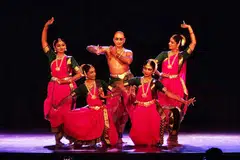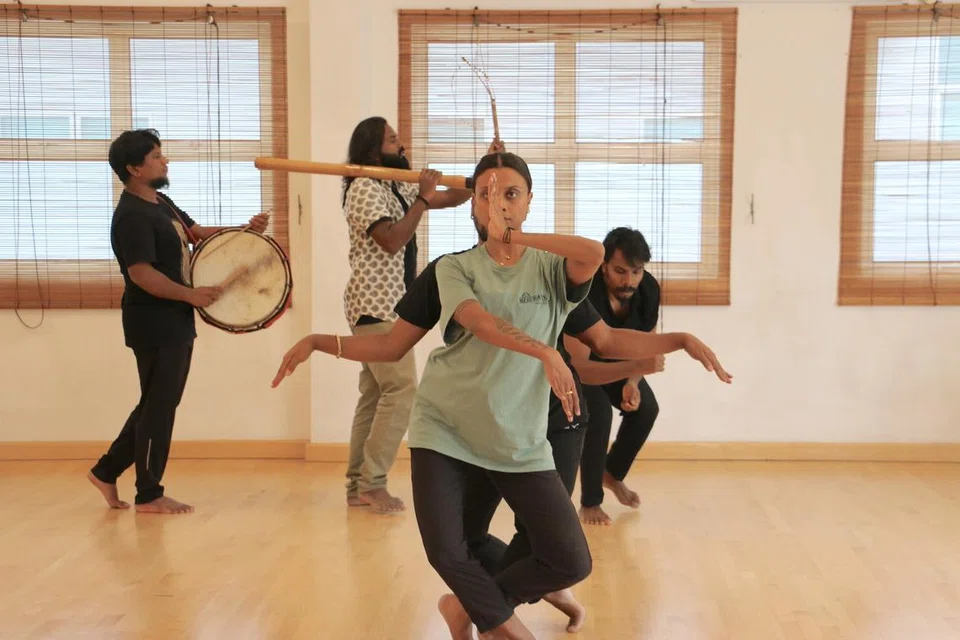
The limits between the written word and physical expression dissolved in the latest performance by Chowk Productions, which brought to life the evocative world of acclaimed author Perumal Murugan from Tamil Nadu.
This ambitious project adapts Mr Murugan’s celebrated and poignant novel, Madhorubhagan, into a multi-disciplinary dance-drama titled ‘One Part Woman’.
During the post show dialogue session, Perumal Murugan explained that the novel remains relevant today because its central themes explore universal human experiences that resonate across all time periods.
Specifically, he highlighted that the struggle with infertility and the desire for children is a significant and ongoing issue within Indian and global society.
He noted that modern readers often connect deeply with the story, even telling him that it feels like he has written about their own personal lives.
By weaving together the classical precision of Odissi dance, the raw energy of folk traditions, and the resonance of live music, the production reimagines the collapse of social norms and the fragile nature of personal identity.
At its core, the performance chronicles the emotional odyssey of Kali and Ponna, a devoted but childless couple living in rural Tamil Nadu.
Their journey is one of profound isolation as they navigate the biting sting of social marginalisation and the shifting moral landscape of a local temple festival.
For the artists involved, the process of bringing these characters to the stage has been one of deep reflection and transformation.
Odissi dancer Meera Gurumurthy, 41, describes each session as “a fresh act of imagination, noting that the troupe uses movement and music to physically manifest the way a community slowly alienates a couple.”
This sentiment is echoed by choreographer Raka Maitra, 56, who views the unfolding movements in the story as a series of living paintings and sculptures.
Ms Maitra believes that “for a story of this calibre, the fusion of Odissi with folk roots was essential to capturing the story’s inherent drama and historical grounding.”
The transition from a multi-layered novel to a 90-minute stage production presented significant structural challenges.
Director Lakshmanan K.P, 35, reflects on the daunting task of condensing Mr Murugan’s dense narrative, noting that it remains a marvel to see characters who once lived only in the imagination of readers suddenly breathing and walking on stage.
This physical presence adds a new dimension to the couple’s tragedy, making their silent suffering palpable to the live audience.
Adding to this emotional depth is the perspective of collaborator and actor Mr Saran Jith, 37, who portrayed the changing dynamics between the protagonists.
He observes that while Kali and Ponna are a perfect match, the relentless societal pressure to procreate slowly erodes their intimacy.
Haunting Soundscapes
Watching the show as part of the audience Vaishnavi Subramanian, 22, said that she found it challenging to connect with the interpretive style, but as the performance unfolded, became deeply absorbed in its haunting and uniquely developed soundscape.
“It was a powerful departure from the traditional theatre I am used to, leaving me with a lasting, positive impression that transcended the dance and acting alone,” she added.
“It’s different from the usual kind of theatre you’ve seen in Singapore,” said Ms Anika Sugantharaj, 20. “Mostly, the soundscape and uniqueness stuck with audiences because it’s very haunting in nature.”
Sanfo Bimal Thomas, 22, noted: “One thing I learned is not to assume, because I came under the presumption that it would be more dialogue-based. However, there were a lot of sounds involved, which shows that they were trying to merge the deity involvement in the daily lives of these people.”