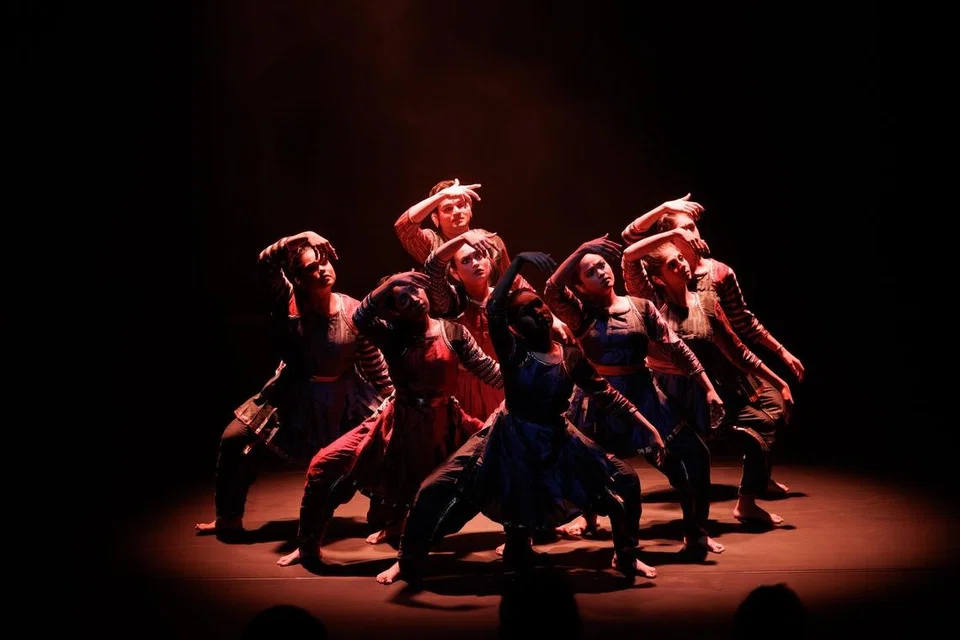

In a world increasingly dominated by screens, notifications and digital exhaustion, Apsaras Arts’ upcoming production Agápe – The Human Connection arrives with a quietly powerful message – reconnect with yourself, with nature and with humanity.
Set to premiere at the Esplanade – Theatres on the Bay on Aug 21 and 22 as the opening event of Apsaras Arts’ Golden Jubilee celebrations, Agápe is not a conventional Bharatanatyam production. Nor is it merely another East-meets-West artistic collaboration.
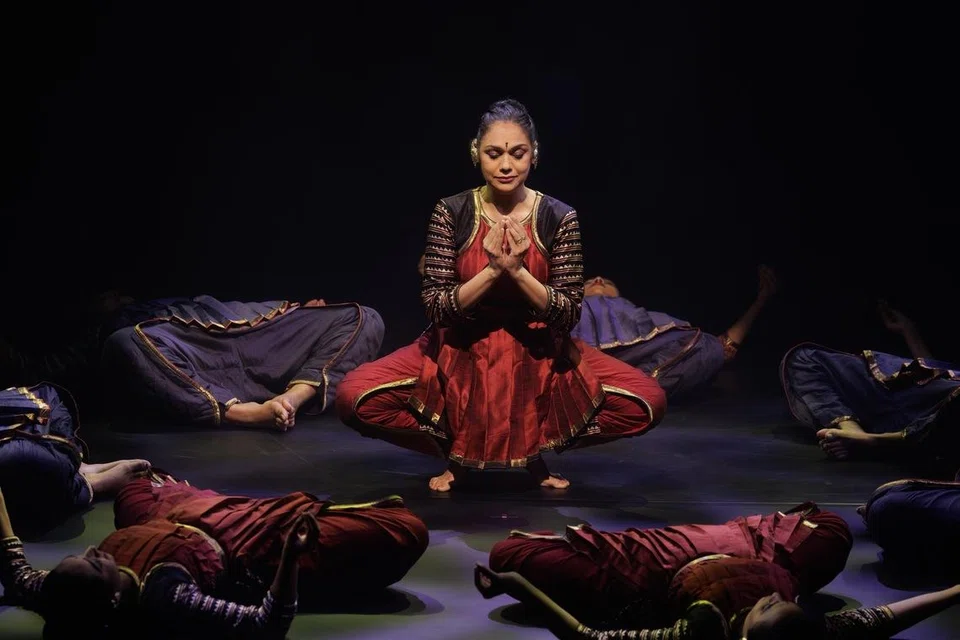
Instead, it is an ambitious multidisciplinary work that blends Bharatanatyam-inspired movement, contemporary choreography, orchestral music, philosophy and visual storytelling into what its creators describe as an artistic response to modern-day emotional disconnection.
Directed by Cultural Medallion recipient Aravinth Kumarasamy, the production explores the ancient Greek concept of “agápe” – the highest form of unconditional love and human connection.
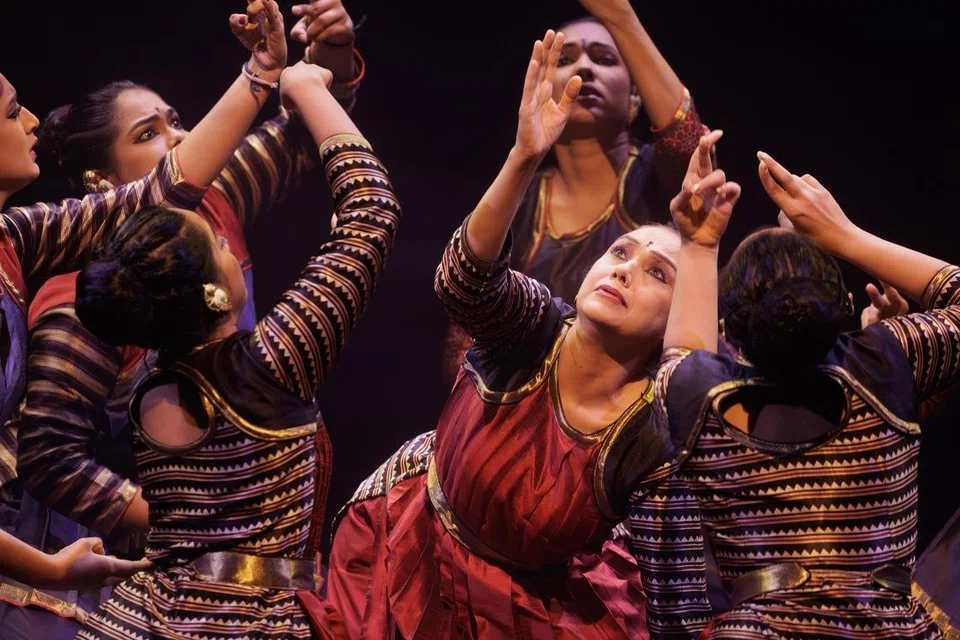
At a recent preview, Aravinth explained that the production was inspired by a growing sense of isolation in contemporary society.
“We are not trying to judge society because we ourselves feel disconnected – from one another, from nature and even from ourselves,” he said. “This is an artist’s response to that condition.”
That emotional journey forms the core structure of the four-act production.
Act One explores loneliness, anxiety, self-obsession and emotional breakdown. Aravinth described it as the struggle of being disconnected in a hyperconnected world. The central metaphor is the lotus flower emerging painfully from muddy waters before blooming into light.
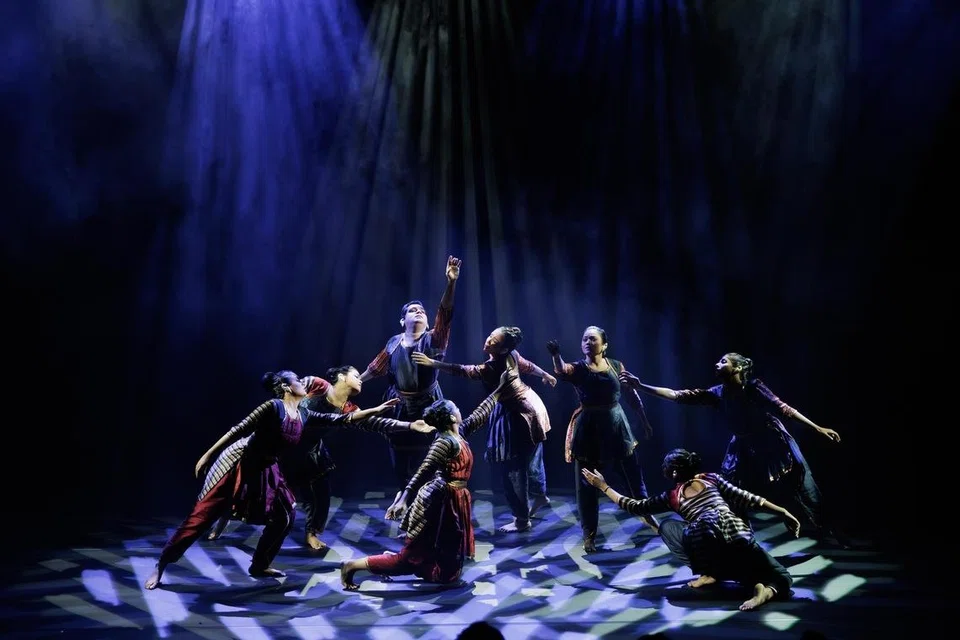
Act Two shifts toward reconnecting with nature and the universe. During the preview at the Esplanade Recital Studio, Aravinth made an observation that resonated strongly with the selected audience.
“Many young people today have seen the moon only on screens but rarely look up at the actual night sky anymore,” he said. “Maybe it’s time we looked up again.”
The production later moves into themes of human relationships and collective connection before culminating in a broader meditation on humanity itself.
What makes Agápe especially distinctive is its artistic language.
Though rooted in Bharatanatyam, the choreography often feels strikingly contemporary. The movements are more fluid, abstract and emotionally internalised than audiences might expect from traditional classical Indian dance performances.
Guest choreographer Rama Vaidyanathan acknowledged that the production intentionally stretches the boundaries of Bharatanatyam vocabulary.
“What excited me was the opportunity to broaden the canvas of Bharatanatyam and explore movement vocabulary that could tell these modern stories,” she said.
Yet she stressed that the work still remains fundamentally Bharatanatyam in spirit.
“However contemporary the movement may look, the body is still a Bharatanatyam-trained body,” she explained. “Within ourselves, it is still Bharatanatyam.”
Aravinth described the production as “Bharatanatyam redefined” rather than abandoned.
The music too departs from convention.
Unlike traditional Bharatanatyam performances, which rely heavily on lyrical compositions, Agápe is almost entirely instrumental, with only brief Sanskrit refrains appearing occasionally as thematic anchors.
The score combines Indian ragas with sweeping symphonic arrangements performed in collaboration with the Singapore Symphony Orchestra under conductor Joshua Tan.
Importantly, the creators insist this is not a superficial fusion project.
“It’s not about taking symphony music and putting Bharatanatyam on top of it,” Aravinth explained. “This is music specifically created for dance.”
Joshua admitted he was initially cautious about the collaboration.
“It is very difficult to put these genres together without sounding contrived,” he said. “But what impressed me was how organically the Indian musical structures and orchestral textures were woven together.”
The choreography itself was developed through collaborative retreats at the Adishakti Theatre in Puducherry, India, where the creative team immersed themselves in nature and forest therapy sessions – experiences that strongly shaped the production’s emotional and visual landscape.
The minimalist costume design by principal dancer Mohanapriyan Thavarajah also reflects that philosophy.
Inspired by tribal art traditions and natural motifs, the costumes intentionally avoid the ornate heaviness usually associated with Bharatanatyam attire.
“We wanted the movement and emotions to connect directly with audiences,” he said.
Lighting designer Wong Chee Wai similarly approaches lighting as another layer of storytelling, using unconventional colours and visual symbolism tied to nature and emotional states.
Beyond its scale and artistic ambition, what ultimately makes Agápe, which will be presented on Aug 21 and 22 at the Esplanade Theatre, compelling is the sincerity behind it.
This is not art trying to appear intellectual or experimental for its own sake. It is art trying to heal.
And in a fast-moving city where many people rush from meetings to MRT stations to mobile screens without pause, Agápe may quietly ask one of the most important questions of all:
When was the last time we truly connected – with another person, with nature, or even with ourselves?