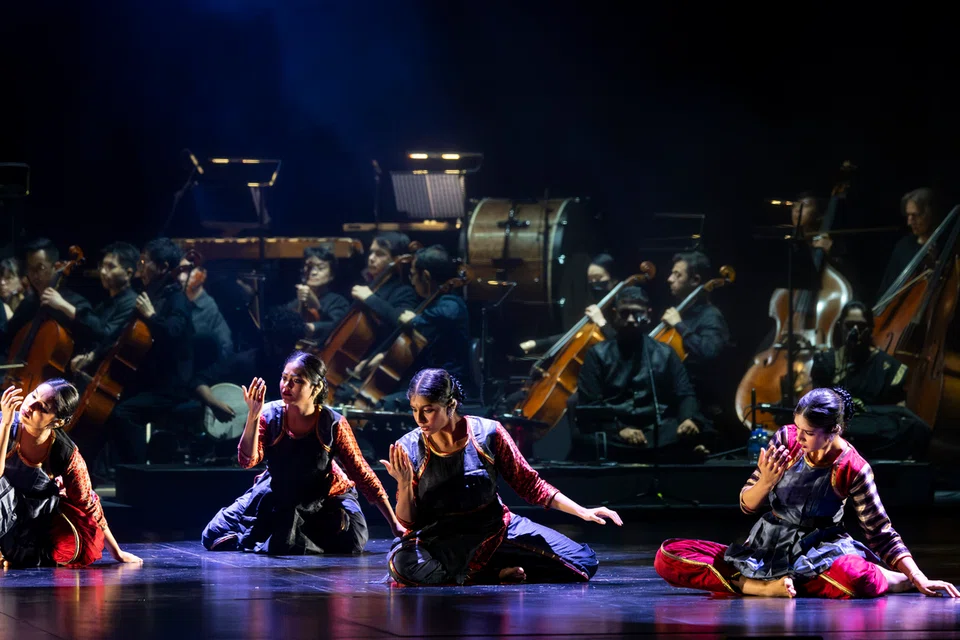

In an era increasingly dominated by smartphone screens, where human interaction is often reduced to digital notifications and virtual touchpoints, can art help reconnect us with our deep-rooted sense of universal kinship?
‘Agápe – The Human Connection’ – a cross-genre dance and music production recently explored this question on the stage of the Esplanade Theatre.
Greek for ‘universal love’ or ‘the highest form of humanity,’ the concept of Agápe served as the core of this dance and music drama. Staged on August 21 and 22, the performance marked the start of Apsaras Arts’ 50th-anniversary Golden Jubilee celebrations.
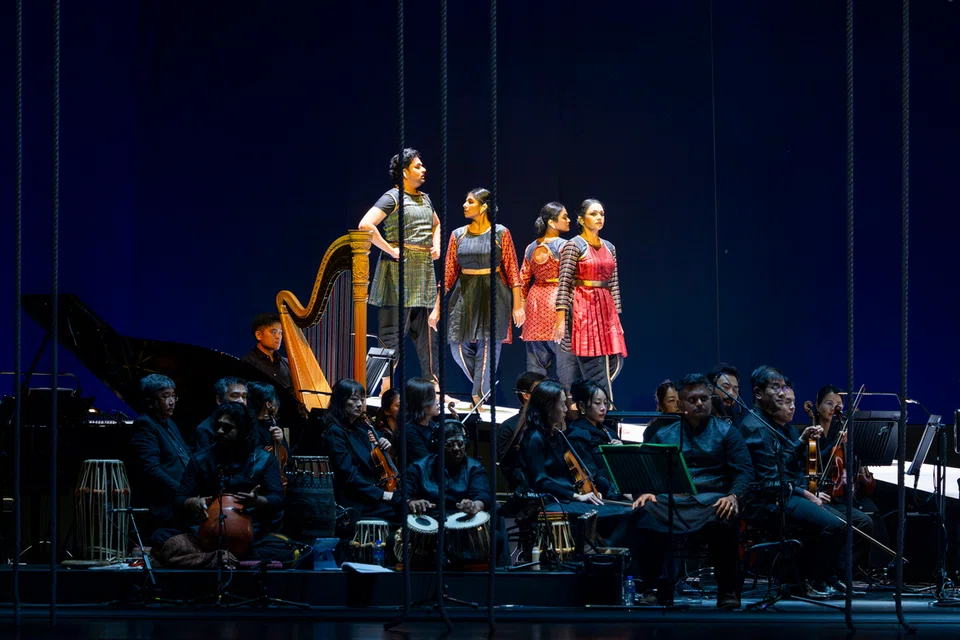
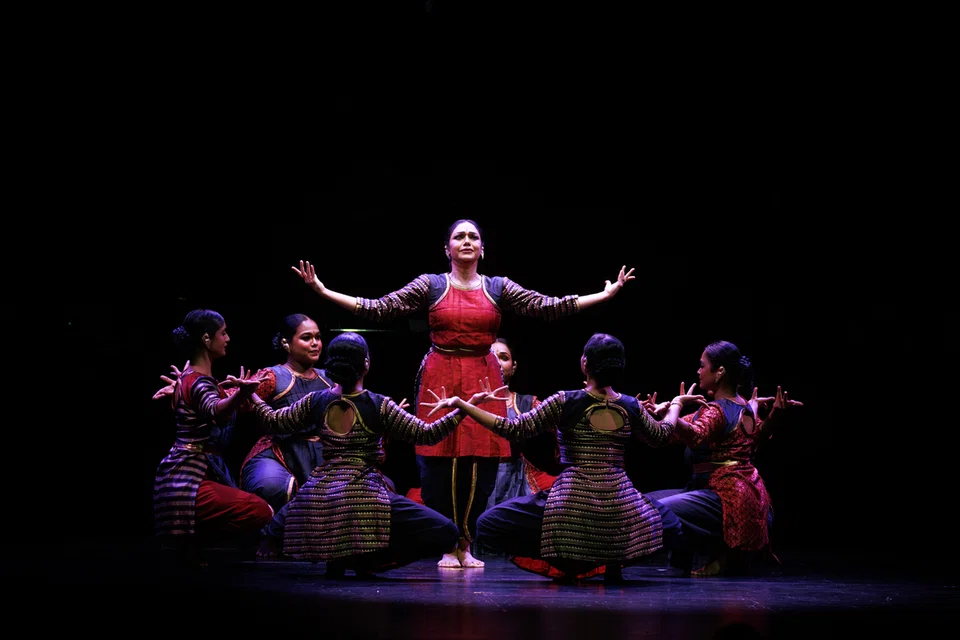
In a display of artistic synergy, 65 musicians from the Singapore Symphony Orchestra, leading Indian classical instrumentalists, Carnatic vocalists, and 10 dancers converged to present a seamless 75-minute spectacle.
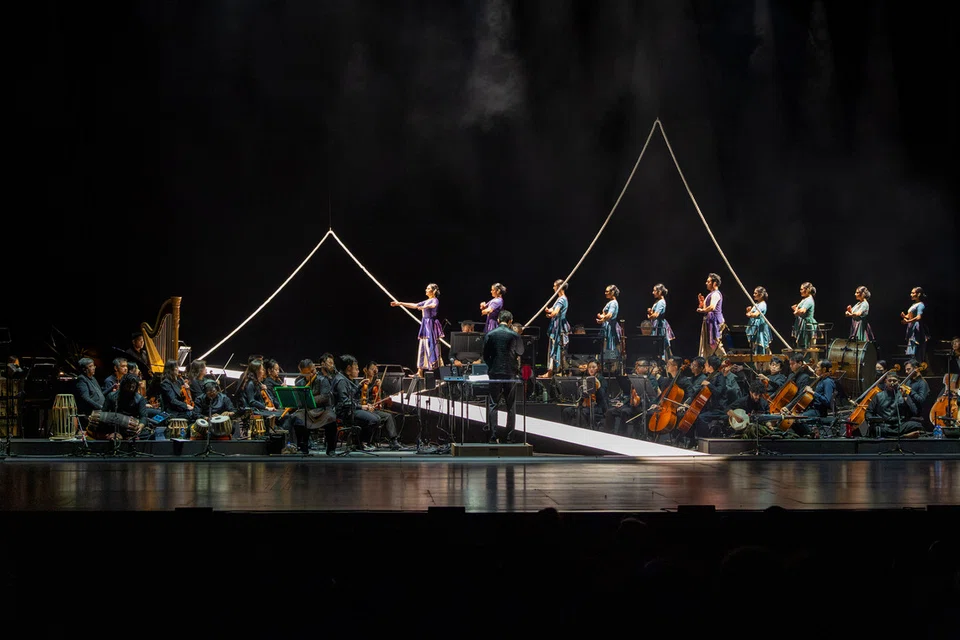
Breaking traditional stage conventions where the orchestra remains hidden in the pit, all artists performed together on a single stage – a visual and physical manifestation of human connection. The premiere was graced by President Tharman Shanmugaratnam as the Guest of Honour, accompanied by his wife, Mrs Jane Ittogi.
A Journey of Human Kinship Across Four Acts
Under the artistic direction of Apsaras Arts’ Artists Director and Cultural Medallion recipient Aravinth Kumarasamy, the production captured the multifaceted nature of human relationships across four distinct acts, utilising state-of-the-art lighting, costume design, music, and movement.
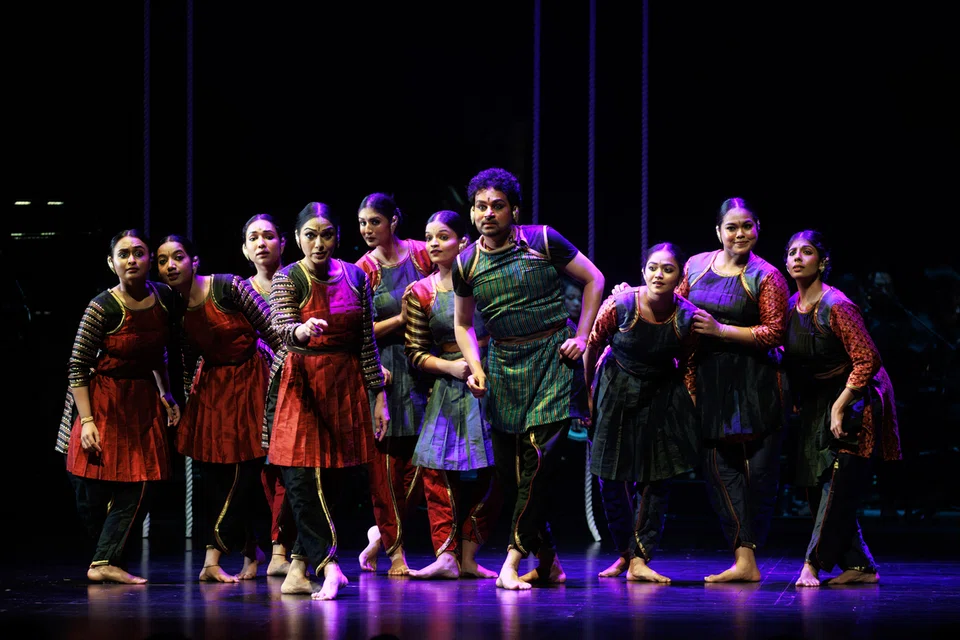
Rooted in rich philosophical and literary traditions, the musical and movement scores drew inspiration from the Yajur Veda, the Bhagavad Gita, the ancient Tamil text Narunthogai (Vetri Verka), the poetry of Kabir Das, and the songs of Mahakavi Bharathiyar and the Atharva Veda.
Speaking at the end of the event, President Tharman noted that we are all bound together by “rivers of culture” that cross physical boundaries and continue to connect human civilisations.
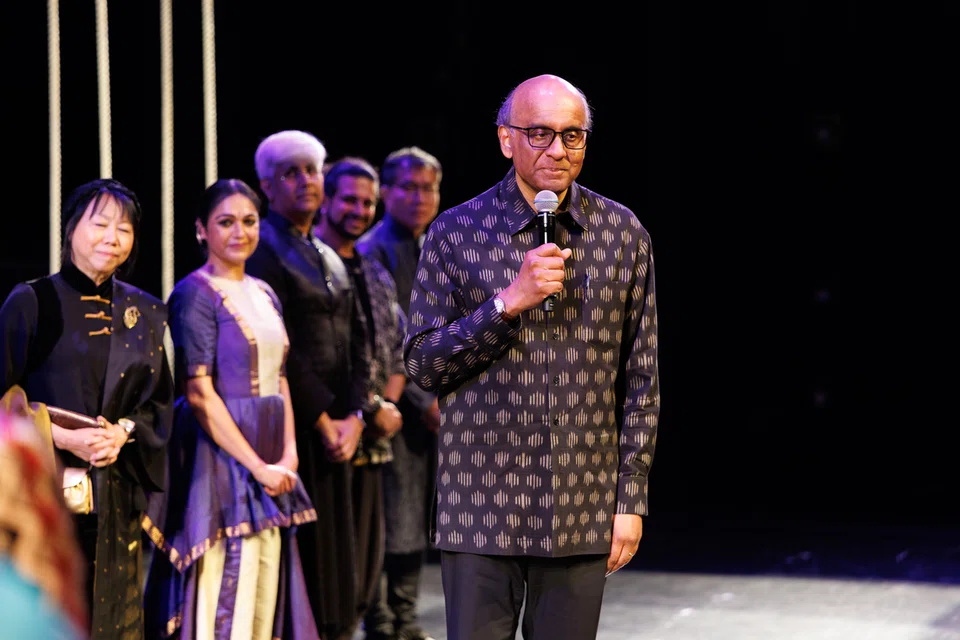
“Those rivers of culture will be more than the connection between the nation states of today,” he said. Praising the exquisite integration of Western classical music and Indian classical art forms, he highlighted the collaboration as a beautiful reflection of Singapore’s unique cultural identity, adding that the energy of the performance left the audience feeling alive.
For Delhi-based Bharatanatyam dancer and guest choreographer Rama Vaidyanathan, 59, who also performed live on stage, the experience was transformative. “Participating in this production was both a great learning experience and a deeply humbling one,” she said.
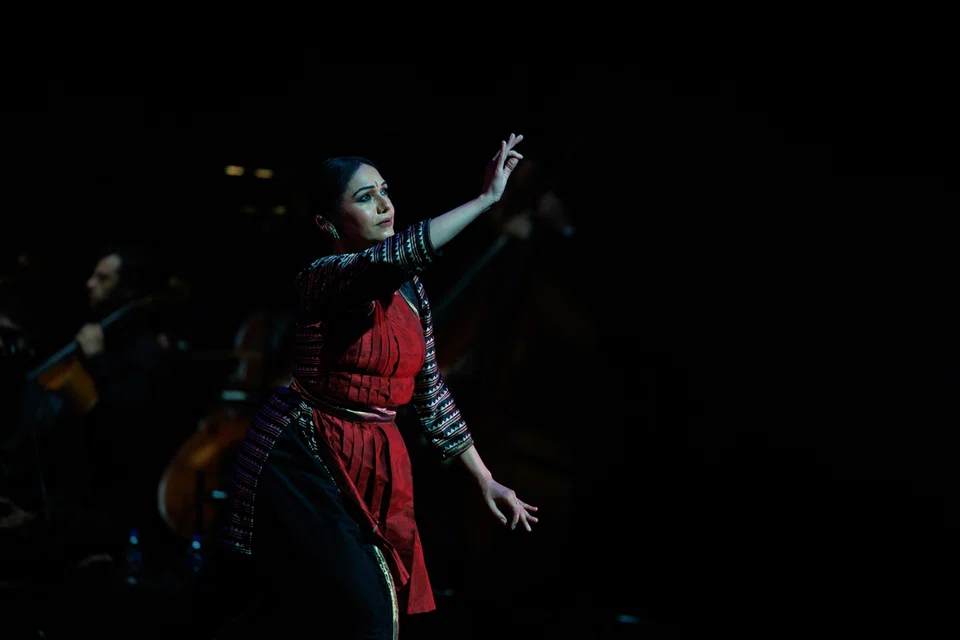
Working closely with Western classical musicians demanded flexibility and mutual respect, she said. “We had to make many compromises and adjustments during rehearsals. There is no use in being stiff and stuck only to our own traditions. Moving beyond our rigid boundaries to journey with other art forms is the true strength of a collaborative work.”
The production offered a meaningful reflection of Singapore’s multicultural identity by bringing together Western classical and Indian classical music, said Chief Executive Officer of SINDA and Board Member of Apsaras, Anbarasu Rajendran.
Reflecting on the company’s 50-year journey from its humble beginnings to the international stage, he expressed hope that it would continue to develop Singapore’s distinctive cultural voice in the years ahead.
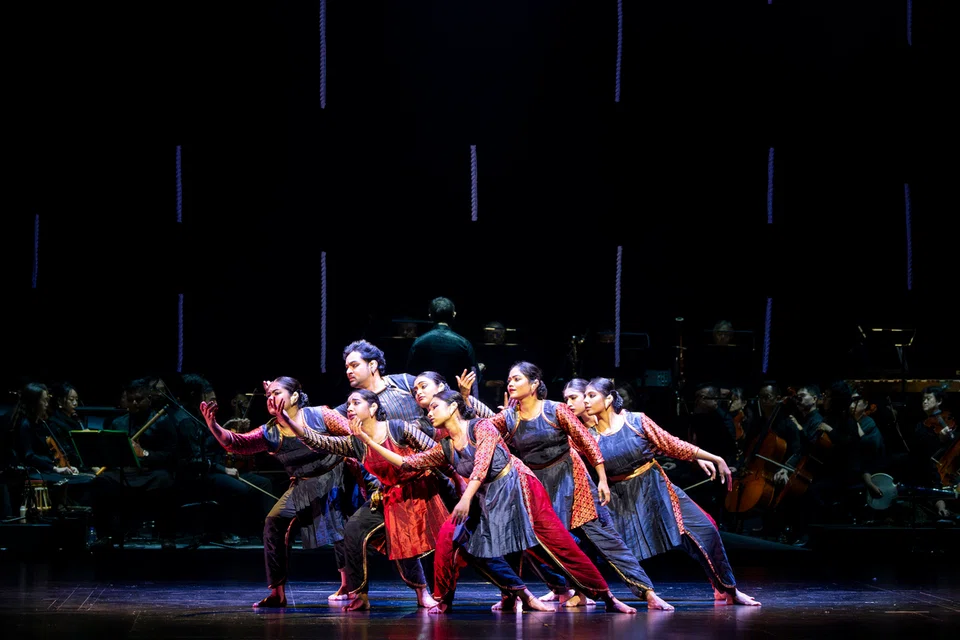
Classical dancer Nikita Menon, who is a company dancer with Apsaras, was similarly struck by the performance, describing the interplay between the Western orchestra and the expressive movements of Bharatanatyam as deeply moving. She also praised the seamless blending of Carnatic melodies with Western classical instrumentation.
Proud of Apsaras Arts’ five-decade legacy, she said she looked forward to seeing how the company would continue to explore new artistic possibilities in the years to come.