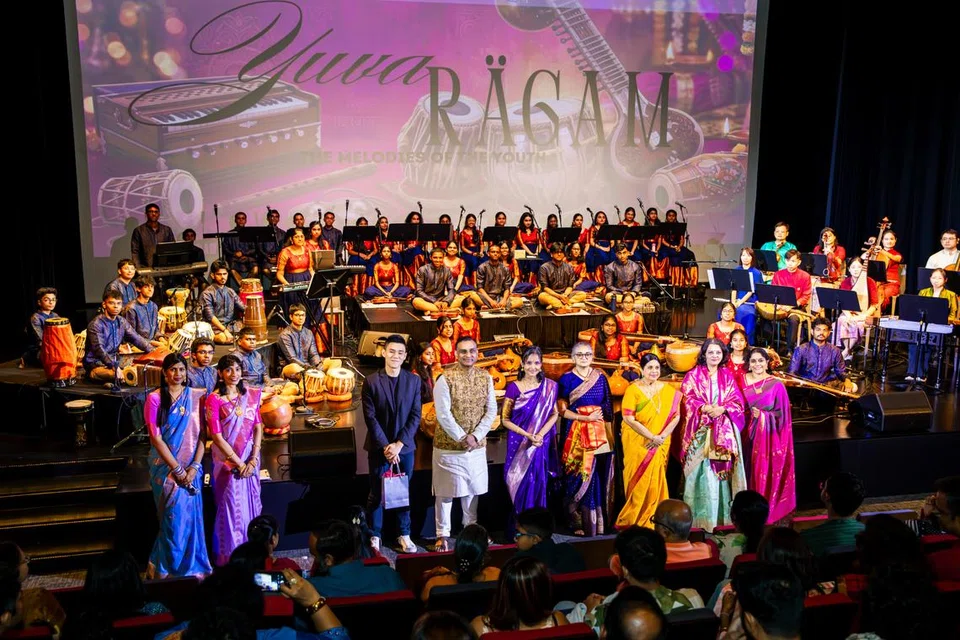
A new generation of Indian classical musicians took a confident step into the spotlight as the Singapore Indian Youth Orchestra and Choir (SIYOC) presented its landmark concert Yuva Ragam – The Melodies of Youth on March 21 at the Festive Arts Theatre.
Marking four years since its founding in 2022, the gala evening was both a celebration of artistic growth and a statement of intent – that Singapore’s young musicians are ready to shape the future of Indian classical music.
At the heart of the production was veteran conductor Lalitha Vaidyanathan, who served as creative director. A towering figure behind the SIOC for four decades, she curated a programme that seamlessly blended pedagogy with performance. Alongside her, resident conductor Vickneswari Vadivazhagan led several segments, guiding the young ensemble with precision and warmth.
The evening’s defining moment came with the world premiere of Tryst of the Twin Ragas, composed by young violinist Aditya Devaraj. The ambitious orchestral work explored the interplay between two Carnatic ragas – Charukesi and Gowrimanohari – using the technique of grahabedam to transition seamlessly between tonal centres.
Mentored by Singapore-based composer Lazar Thurakkal, Aditya’s composition unfolded with remarkable maturity, opening with a delicate, percussion-free exploration before building into a vibrant musical dialogue. A dynamic percussion interlude by young artistes Anirudh and Siddharth added rhythmic intensity, earning enthusiastic applause.
The audience response was immediate and heartfelt, recognising not just technical achievement but the courage of young musicians presenting original work on a major stage.
The concert opened with Navadevatas, a devotional composition by Sudha Raghuraman, offering a multi-lingual tribute to nine deities. This was followed by Nalinam, a light, spring-inspired piece by Mr Lazar that showcased the ensemble’s tonal balance and expressive range.
One of the most intellectually engaging segments was a bold Mozart-Vivaldi-Thyagaraja mashup arranged by Vaidyanathan. The piece bridged Western classical and Carnatic traditions, marking SIYOC’s first foray into European repertoire and highlighting its growing versatility.
Equally demanding was Sapta Tala Ragamalika by Mohan Vaidya, which wove together seven rhythmic cycles and ragas, testing the ensemble’s command of complex structures. In contrast, Vellai Thamarai, composed by Rajkumar Bharathi, provided a serene choral tribute to Goddess Saraswati.
The evening closed with a powerful Garudadhwani Thillana by M. Balamuralikrishna, leaving the audience immersed in rhythmic brilliance and devotional energy.
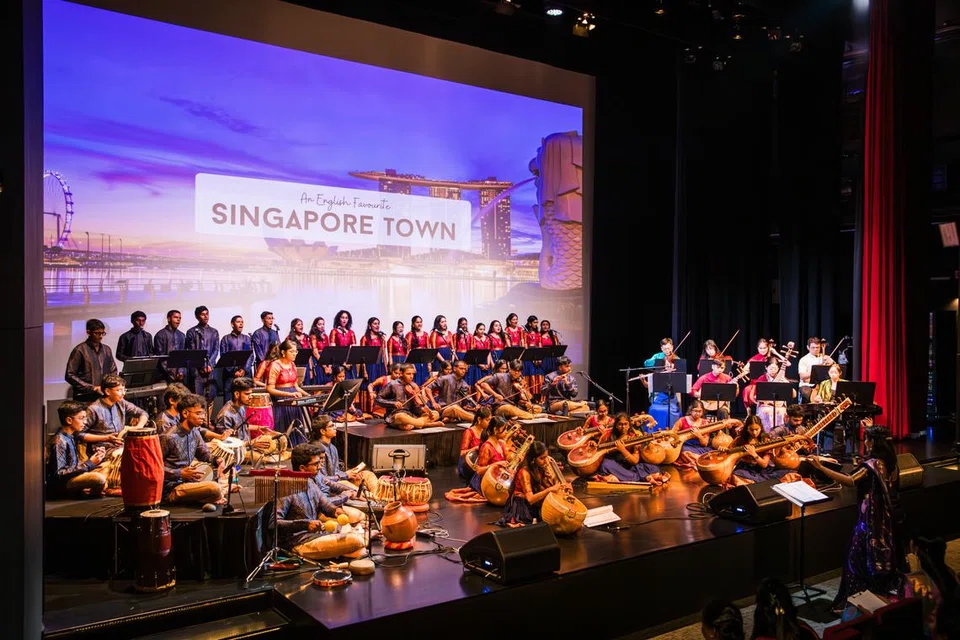
A standout crowd favourite was the Singapore Medley – a “rojak” of Malay, Chinese, Indian, and English songs – reflecting the nation’s multicultural identity. The inclusion of a multi-ethnic guest ensemble added further depth, symbolising the harmony that defines Singapore’s cultural landscape.
Featuring performers aged 12 to 23, the concert demanded mastery across genres – from Carnatic classical and Western orchestration to contemporary and multilingual repertoire. That the young musicians navigated this breadth with confidence underscored the strength of SIYOC’s training.
Beyond the music, Yuva Rägam represented a milestone. It affirmed that the next generation is not merely preserving tradition but actively reinterpreting and expanding it.