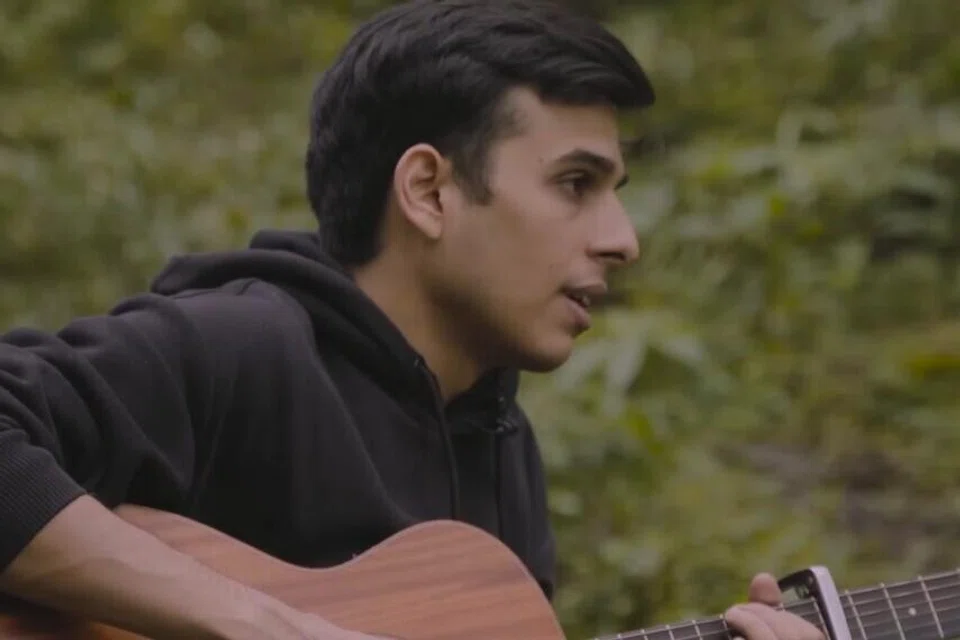
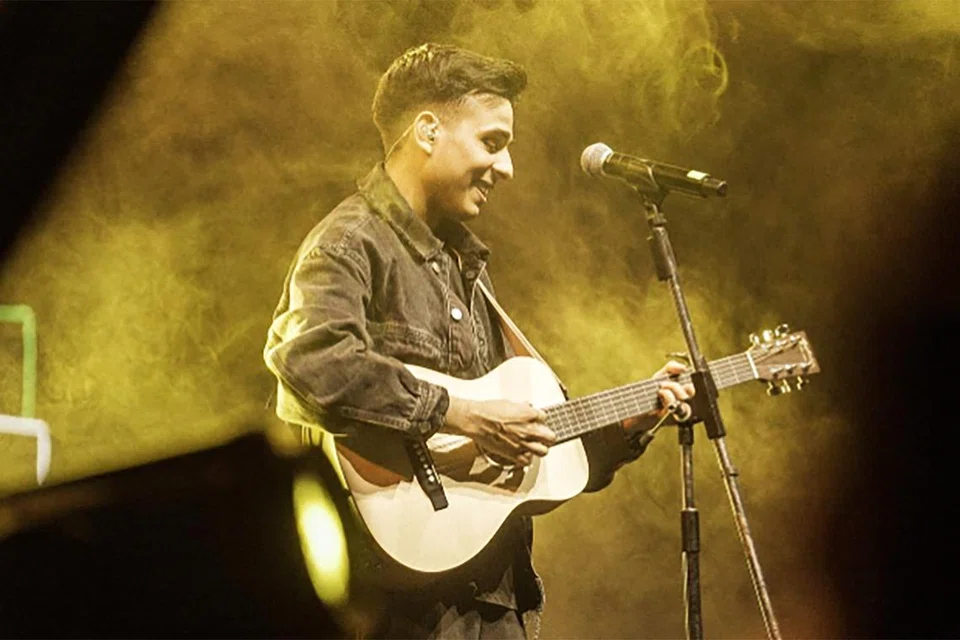

He has the numbers, the sold-out shows, the millions of listeners who soundtrack their lives to his songs. As Anuv Jain awaits the next slate of international performances of his Dastakhat tour, he is trying to maintain a grounding ritual – spending a few hours each day writing songs.
Most of what he writes is drawn from his own life, which he believes helps explain why his songs so often end up soundtracking significant memories – a bride at her wedding, a broken heart, or a late-night drive.
While most artists sieve material for their art from personal experience, not everyone has been a recipient of success the way Anuv has. He told tabla! that there was no roadmap at his disposal to help him reach his current status. Instead, his success is a product of intuition.
“I’ve always felt that I want to keep things very simple and real. I was not born into this business, and I guess I live a basic life that anyone can relate to,” he said.
The 31-year-old’s claim to fame was Baarishein, an acoustic track he uploaded to YouTube. The song became a massive streaming hit without any label backing or promotional push, garnering nearly 500 million streams on Spotify. He originally recorded the song on his then Nokia phone – just his voice accompanied by a guitar.
This early success established the template of his career so far – largely driven by word of mouth.
During the pandemic, he committed to music full-time and released songs like Alag Aasmaan and Gul, which helped establish him at the forefront of India’s indie music scene. Later came Husn, his biggest hit and the most-streamed indie track in India in 2024, which also became a staple across short-form video platforms.
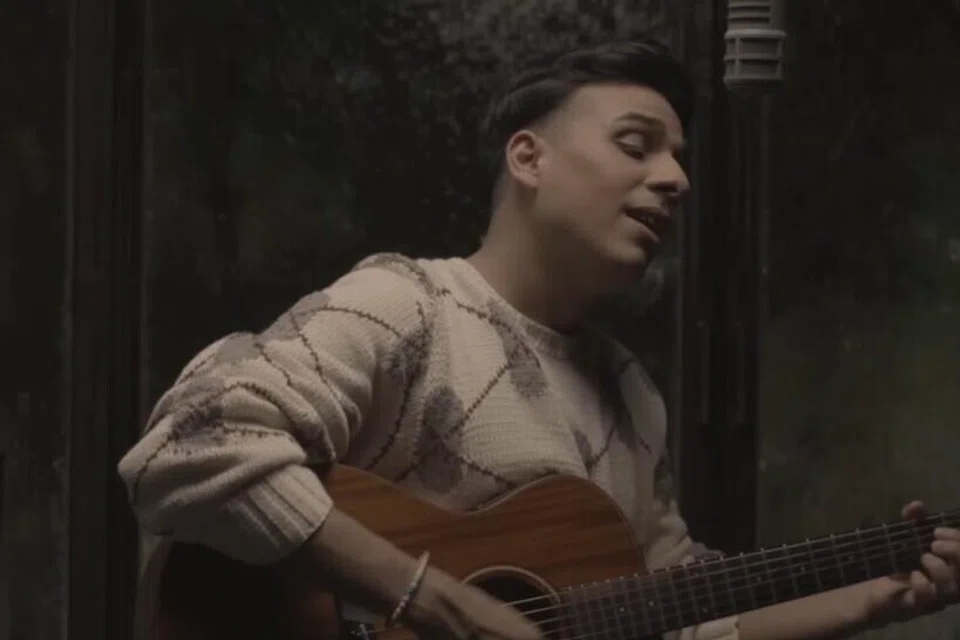
“When I started out, I had no idea what I was going to be doing. Honestly, it all started off as an experiment, and that experiment that has stretched for six years now,” he said.
As virality on platforms like TikTok and Instagram increasingly shapes how music spreads, Anuv reflected that his career has remained relatively detached from trends. “My music has always been accepted and loved by people. I was doing this before (these platforms) were there. And now that they are, I’m obviously leveraging them,” he said.
The payoff, he said, is most visible on tour – in the faces behind the millions of streams. “I have seen 6 year olds and 60 year olds at my shows. I’ve seen parents bringing their children instead of the other way around!” he exclaimed. For him, that wide age range feels like validation that his music can travel across generations.
One such example of his crossover appeal was Afsos, featuring Punjabi rapper AP Dhillon. Despite the apparent contrast between their musical worlds – the flair of Punjabi pop versus Anuv’s stripped-back acoustic sound – the collaboration came together more naturally than expected. His manager encouraged him to pursue it, and it ultimately paid off. “I have been listening to his music for six years, collaborating with him (AP Dhillon) was such a dream. We’ve also since gone on vacations together and become good friends!” he shared.
As his music expanded beyond its early audience, it also brought a sharper, more public form of scrutiny, particularly after “Husn” became his first number one. “The biggest moments of my life were also the most upsetting. On one hand, I had a number one single, and at the same time I was getting hammered online,” he noted.
While the volume of criticism did not change, his relationship to it did. He has learned to contextualise the noise without internalising it. “There is a very big population on the internet that is just there to talk smack. You can’t really help it. I just want to make as much music as I can, and the day I start feeling that the music is not working, I’ll do something else,” he said.
When the conversation shifted to artificial intelligence (AI), Anuv said he is unfazed by its growing prominence. “Obviously there’s going to be a lot of infiltration of AI in music, but when people listen to music, they want to know who’s behind it. And they’ve always wanted to know the stories behind it,” he said, adding that the caveat comes in terms of finances. “One shouldn’t be able to monetise AI content. Real humans need that money to make more art.”
Set to perform here on July 28 at the Capitol Theatre as part of his Dastakhat tour, Anuv is looking forward to visiting Singapore after 25 years. When asked what he looks forward to doing during his time here, he had an answer locked and loaded – eat at Din Tai Fung.