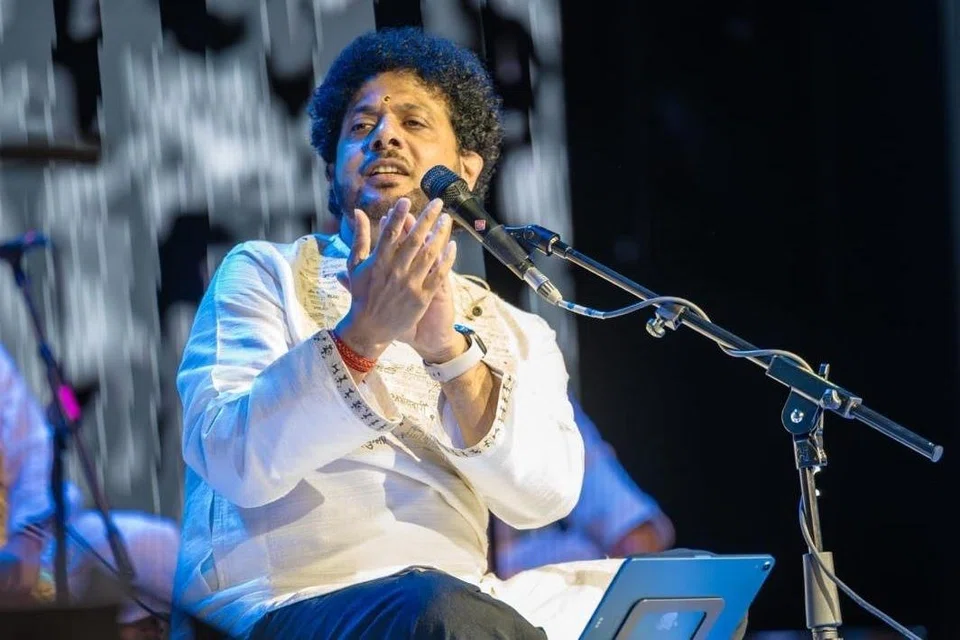
India’s National Award-winning vocalist Mahesh Kale left the audience mesmerised during his much-awaited Singapore debut concert Abhangwari, transforming an evening of music into what many described as a deeply spiritual and emotional experience.
Held at the Quantum Arena, One World International School, on May 23, the concert drew a packed audience of nearly 1,200 people from across Singapore’s diverse Indian community and beyond. Over nearly four hours, the audience remained immersed in a musical journey that blended Hindustani classical traditions, devotional abhangs, bhajans and Marathi stage compositions.
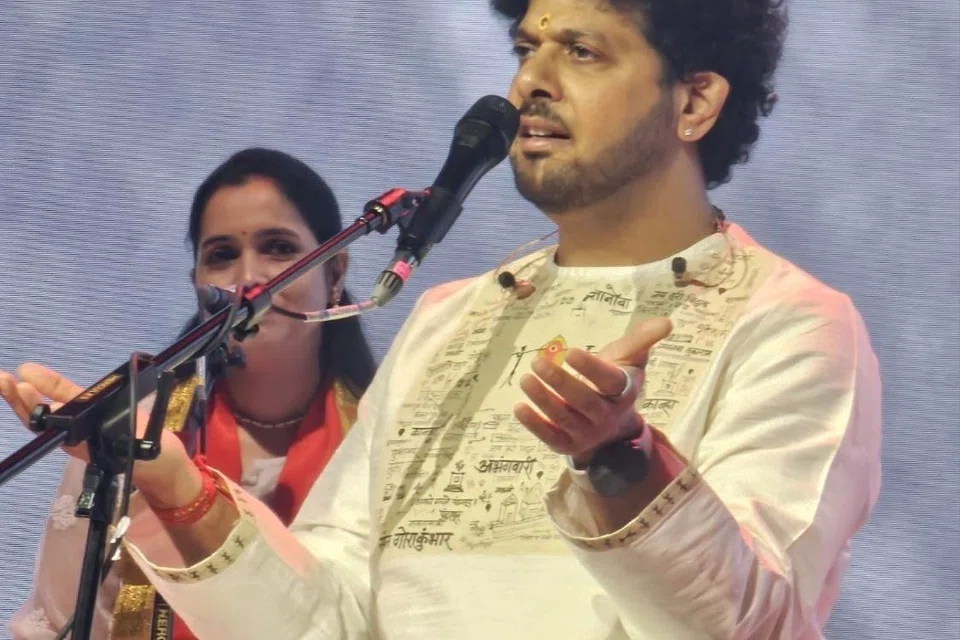
What stood out throughout the evening was the diversity of the crowd. Maharashtrians, Gujaratis, Punjabis, South Indians, classical music enthusiasts, bhajan followers and younger members of the society sat together, clapping, singing and responding collectively to the performance, regardless of language barriers.
From the opening note, Mahesh showcased the remarkable range and depth that have established him as one of contemporary India’s most respected classical vocalists.
Trained under the legendary Pandit Jitendra Abhisheki, he moved effortlessly between intricate classical passages rooted in the Agra and Jaipur-Atrauli gharana traditions and deeply meditative abhangs dedicated to Lord Vithoba.
The repertoire spanned soulful Marathi devotional music, compositions exploring the formless divine, hymns dedicated to Lord Rama and Lord Ganesha, Marathi theatrical classics and spiritual songs that resonated across linguistic and cultural boundaries.
Those who experienced the session said what made the performance especially compelling was Mahesh’s ability to bridge the rigour of classical music with emotional accessibility.
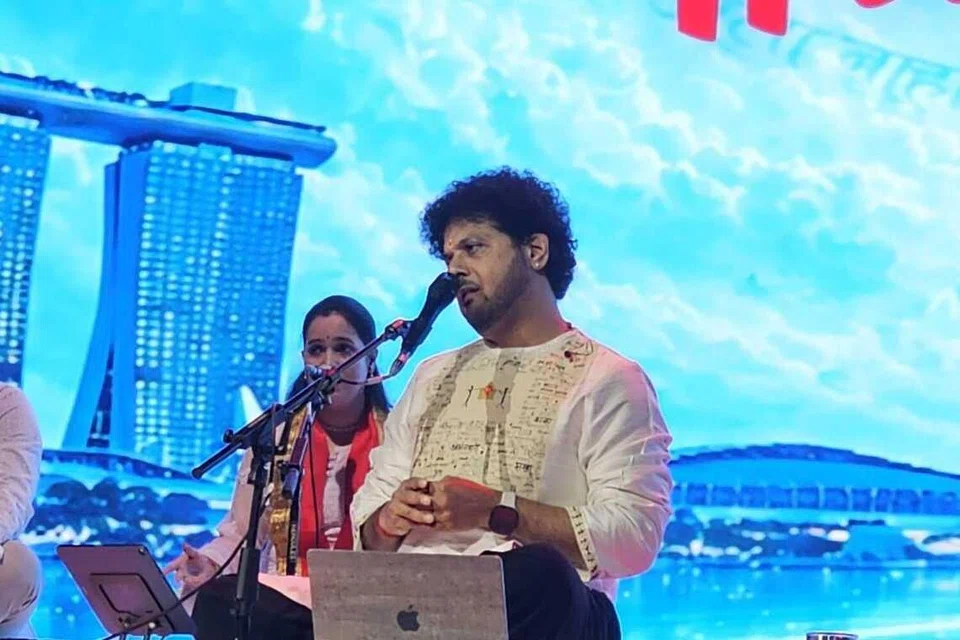
Unlike performers who overwhelm audiences with technical virtuosity, Mahesh consistently placed emotion and devotion at the centre of his music. Even during the most complex improvisations and taans, the emotional core of the compositions remained intact, allowing even those unfamiliar with Marathi or Hindustani classical traditions to connect deeply with the performance.
At several points during the concert, the atmosphere inside the auditorium turned celebratory. Some among the audience stood up dancing during the energetic devotional segments, while others sat quietly with closed eyes in reflection. The evening often felt less like a formal concert and more like a collective spiritual gathering.
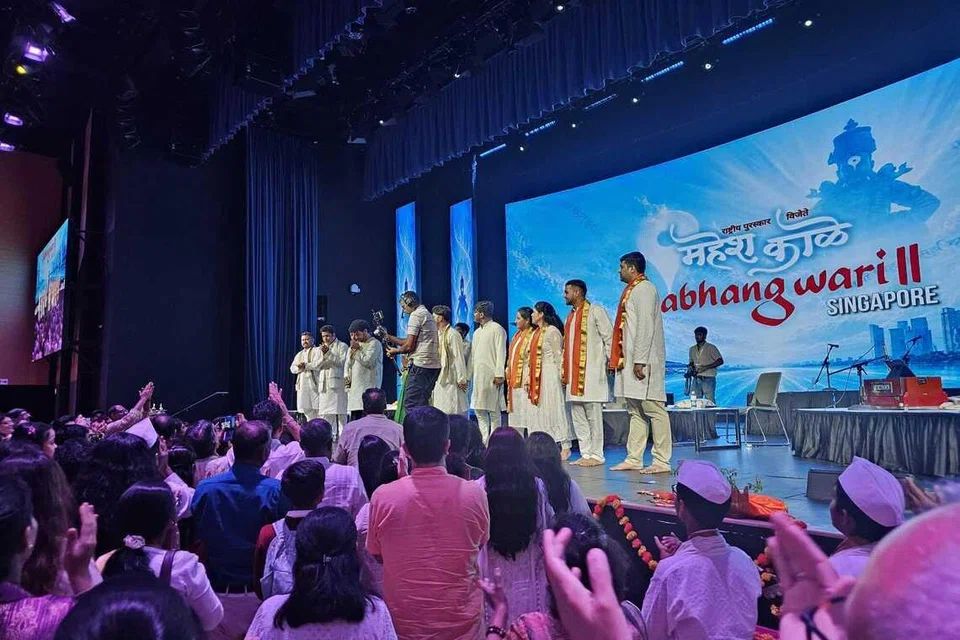
The accompanying live ensemble also drew praise for its disciplined yet dynamic performance, with musicians responding intuitively to Kale’s improvisations and helping create moments of soaring musical intensity.
The success of the concert, organised by De Ideaz, also highlighted Singapore’s growing appetite for high-quality Indian classical and devotional performances presented with authenticity while remaining accessible to modern audiences.
Ms Sarita Alurkar, Global Head of Marketing at Global Schools Group, described the concert as “an unforgettable experience” that brought alive the spirit of the Pandharpur Wari pilgrimage in Maharashtra, where millions of devotees journey annually to the Vithoba Temple.
“While his musical mastery as a disciple of Pandit Jitendra Abhisheki was evident, what stood out most was his extraordinary connection with the audience,” she said. “From the very beginning, he transformed the crowd from passive listeners into active participants in the music.”
Mr S. Venkita Padmanabhan, vice-president of the Singapore Indian Fine Arts Society, said the concert was “deeply moving” and noted that language never became a barrier during the performance.
“The music spoke directly to the heart and soul,” he said. “For nearly four hours, the audience remained fully immersed, singing, clapping and absorbing every moment.”
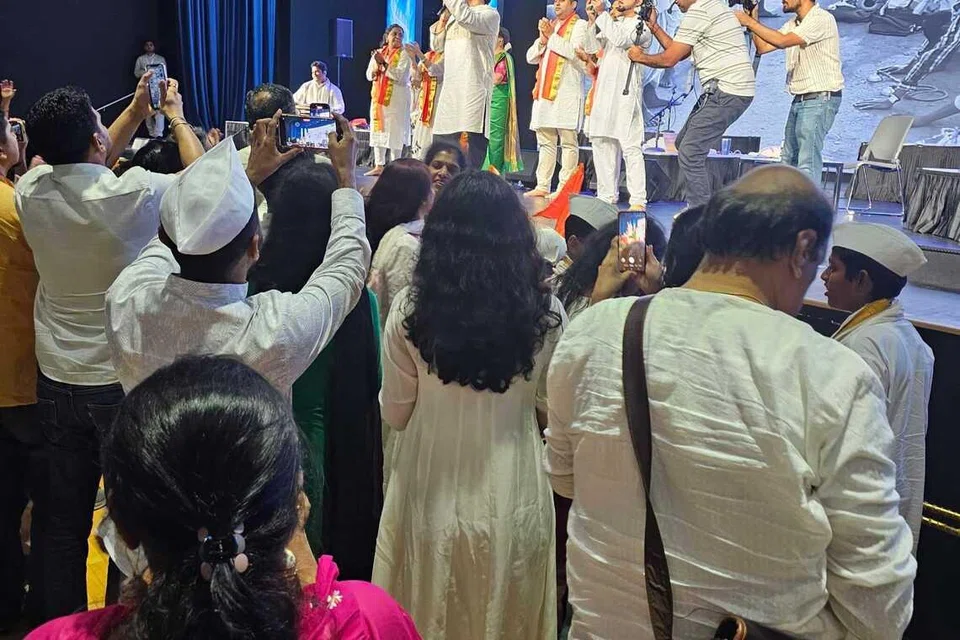
Marketing strategist Eva Singh said she initially wondered whether she would enjoy the concert despite not understanding Marathi.
“By the end of the evening, I was singing along, laughing, clapping, and completely swept into the energy of it all,” she said. “Walked in as an outsider to the language, walked out feeling deeply connected to it.”
Mr Ajey Kulkarni, president of Maharashtra Mandal Singapore, described the concert as “mesmerising and deeply divine”.
He said one of Mahesh’s messages during an abhang — encouraging audiences to remain grateful for life’s blessings — resonated strongly with many in attendance.
“The way he narrated the Wari journey with such emotion and authenticity made the entire evening uplifting, peaceful and truly memorable,” he said.
In an era dominated by short attention spans and algorithm-driven entertainment, many audience members felt that spending four hours immersed in live devotional and classical music was itself a rare and meaningful experience.
By the end of the evening, the standing ovation felt inevitable.
santosh@sph.com.sg