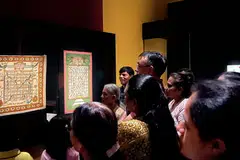

Asian Civilisations Museum’s (ACM) newest collection, Crosscurrents: Masterpieces of Mughal, Safavid, and Ottoman Art from the Musee du Louvre, features over 100 pieces of Islamic art from the iconic Parisian museum, as well as some pieces from ACM’s own collection.
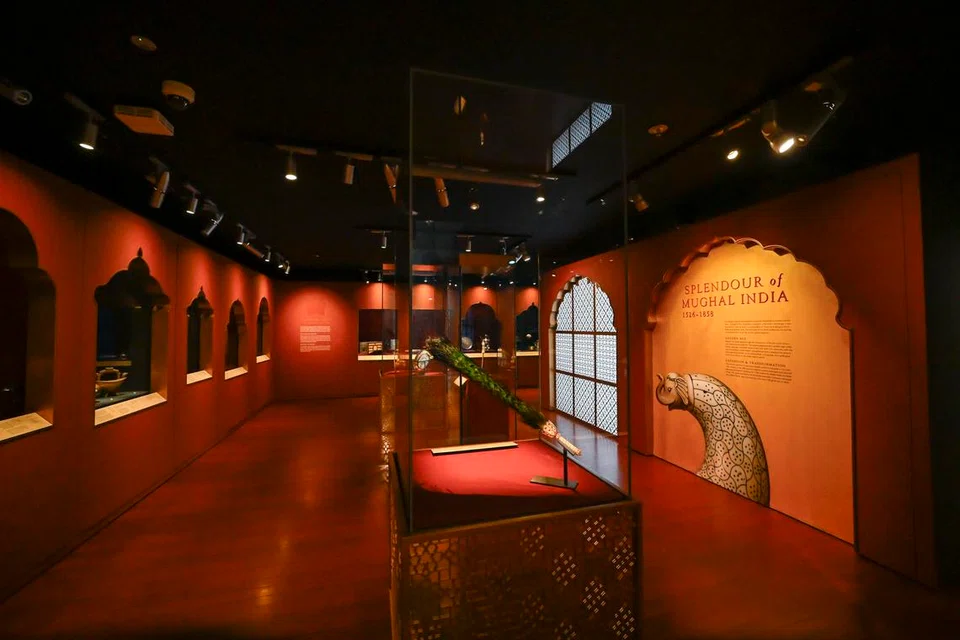
Stepping past a relic of a jaali, or webbed window, and a projection of miniature paintings from Iran and Mughal India, visitors will be surrounded by various artefacts and pieces from
the Mughal era in Splendour of Mughal India, featuring pieces from the empire spanning 1526 to 1857.
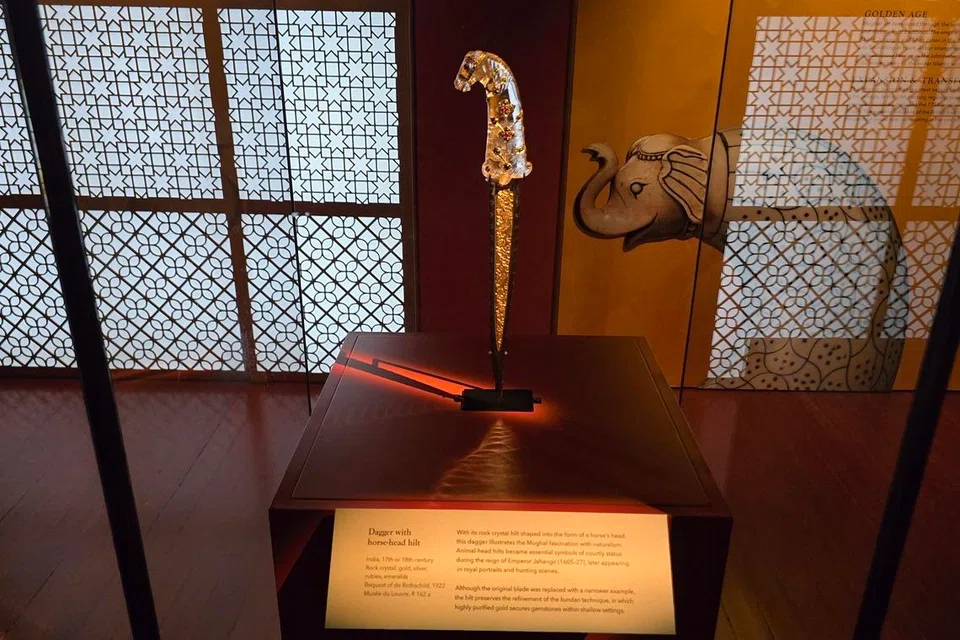
Two of the standout pieces from the collection are the dagger with a horse head hilt, decorated with gold and precious stones, from the 17th to 18th century India, as well as the mother-of-pearl Ewer, similar to a pitcher, and Basin set from the 16th to 17th century.
Even though the exhibition was planned before any major conflict, Dr Souraya Noujaim, the director of Islamic Arts at Musee du Louvre and co-curator of the Crosscurrents collection, said that this collection has come at a crucial time. “I think this exhibit just shows that art and culture are the key to connecting people,” said Dr Noujaim.
On the topic of the scrapping of Mughal history chapters in Indian school textbooks, Dr Noujaim urges the importance of these masterpieces being on display. “The dynasty is a stronghold in Modern history, and Mughal art is in the heart of the Louvre collection,” she said.
Besides the Mughal pieces, there are also several pieces from the Safavid Dynasty of Iran and the Ottoman Empire of Turkey, as well as some examples from Indonesia and other Southeast Asian countries to show how the various empires influenced Islamic art in the region.
Crosscurrents: Masterpieces of Mughal, Safavid, and Ottoman Art from the Musee du Louvre is free for Singaporeans and Permanent Residents and will be on display till Jan 24, 2027.