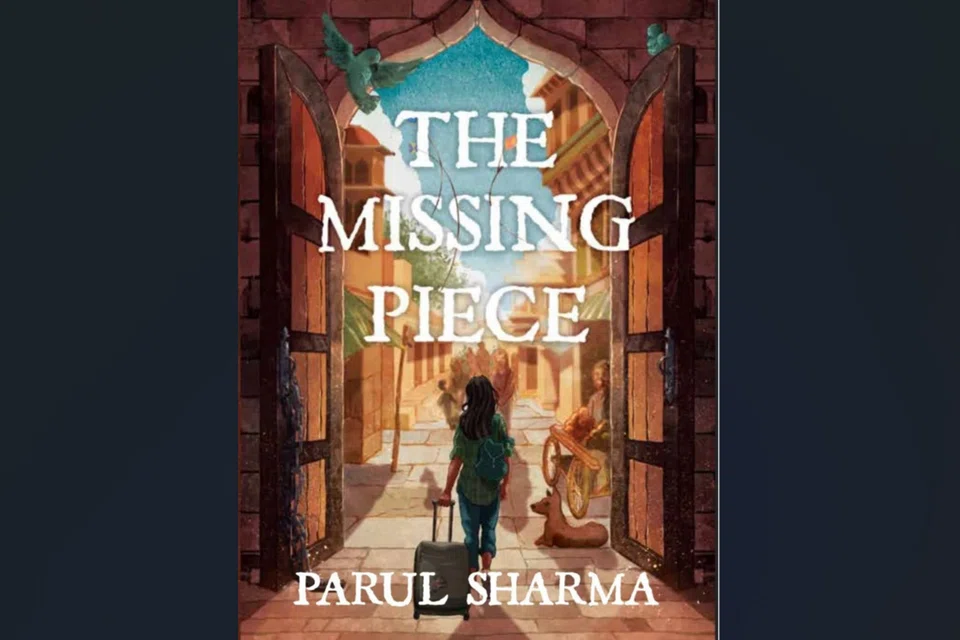

Alone on a flight to a little town in a country – previously only imagined by her through bedtime stories. Such was the fate of the protagonist, Sukanya, depicted in Parul Sharma’s latest book, The Missing Piece.
The book follows the story of the young Sukanya, who goes to her father’s hometown in Uttar Pradesh (UP), a place that he and his wife eloped from over two decades prior, making their lives in England.
For years, the stories of what India was like plagued her, dealing with her own identity as a diasporic child. So when the opportunity to go to this land of her dreams arises, Sukanya takes it immediately.
Once she lands, she finds herself caught up in the town’s dramas, such as forbidden lovers and a rowdy student activist.
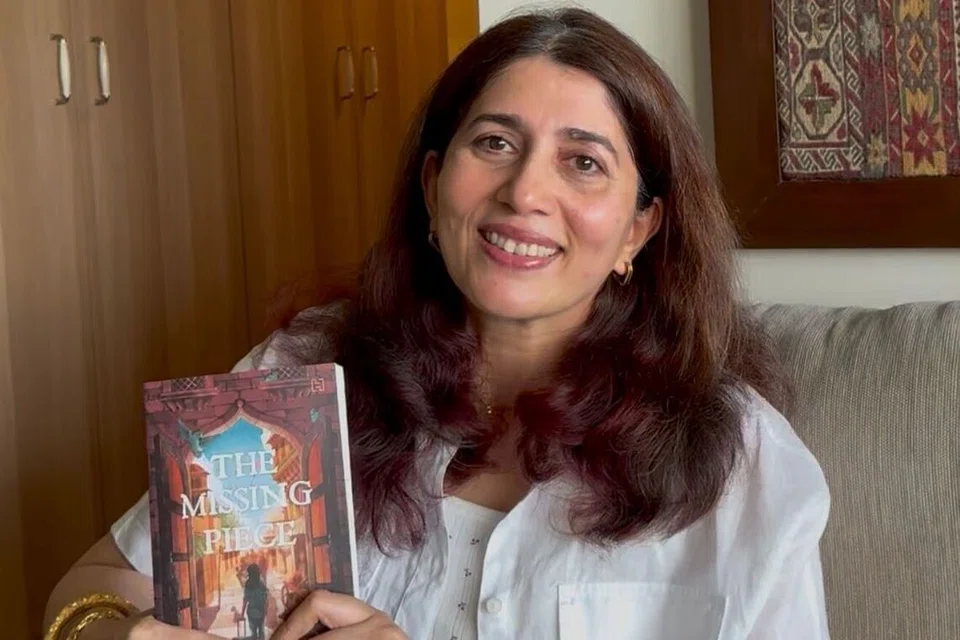
Ms Parul, 49, has been writing novels since 2009 and chose to become a full-time writer three years ago, after working mostly in market research roles, which coincided with her move to Singapore.
The Missing Piece has been 15 years in the making, with bits and pieces written around the world, finding its final home here, where she finished the first draft.
The chapters are short but move readers along with vivid action of small-town dramatics and descriptions of India that never feel stereotypical.
Some authors may focus on a culture shock in which a character feels discomfort on their first visit, but here we get someone who unabashedly loves a country she has never set foot in. Even with some of the societal ills, it doesn’t make her reduce the town to an uncivilised place.
And it stands to reason, as Ms Parul grew up in the little neighbourhoods or mohallas of UP, herself.
One of the unexpected highlights of the book is the way romance is written for its three main couples.
Sukanya’s parents, Shiladitya and Aparajitha, start their romance with a woman-led pursuit, and one of the most entertaining love-at-sixth-sight moments during a debate competition.
But these kick-your-feet-up, giddy meet-cutes sprinkled across didn’t just stem from Ms Parul’s love for this kind of writing.
“When you have a conflict that is as insurmountable as caste, then you need a love that is greater than that,” she told tabla!. “If not, why would it take on something as immense as being estranged from your families for the rest of your lives.”
Sukanya’s parents’ banishment was a result of caste discrimination, a topic that ends up haunting another couple in the book, which Sukanya has to live through.
“I don’t think you could write a story set in a small town in UP without dealing with this, it would feel like running away from something that so closely defines what that place is all about,” Ms Parul noted.
The book can be difficult to navigate if you are not familiar with some of the cultural words or with the language.
“It was a conscious decision between my editors and me; we even discussed having a glossary. However, we realised that we wanted to completely immerse readers in the world, and having definitions takes away from that,” said Ms Parul.
Besides that, the book also has a few gaps which would have been insightful to read about, whether it is Sukanya’s inner monologue during her flight to India, or the heartbreaking phone call she has to make to her parents towards the end.
Even with those gaps, however, the book prevails with how realistic the progressions of the characters are.
Will diasporic individuals find the missing piece of their identity in this novel? It depends on what you’re after.
“We’re trying to go after a broader emotion, which is that of homesickness, possibly for a home that has not even been visited, which has not even been seen. It’s a home which is entirely imagined,” she said.
“To crave for that, to hunger for that, is something that is significantly more difficult to write, but I think it connects with the reader at a deeper level, so it’s finally worth it,” she added.
You can find The Missing Piece on e-book platforms such as Kindle.