

It is a touchy subject, affecting many Indians living in Singapore, especially those who had to leave British India after it was partitioned into India and Pakistan in August 1947.
Millions of Sikhs, Hindus, Muslims and Sindhis were uprooted from their homes as violence raged. They endured untold suffering and pain as many of their kin were killed and had to relocate elsewhere, including Singapore, much against their will.
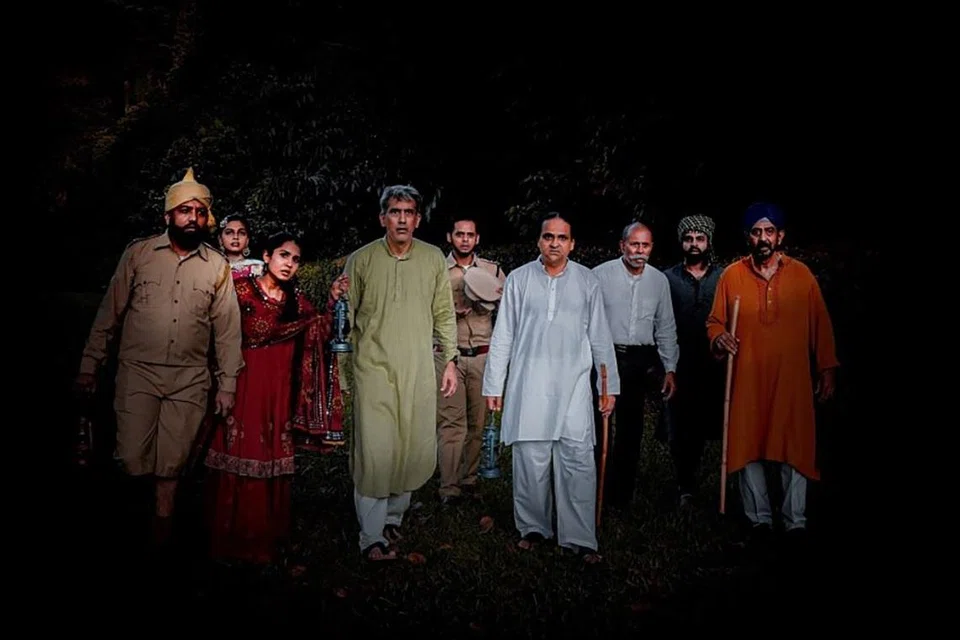
One fictional woman who witnessed that turbulent time – Sakina Begum – serves as the narrator for the HuM Theatre play Train to Pakistan, which was staged at the recent Kalaa Utsavam - Indian Festival of Arts 2024.
The elderly matriarch, living in Singapore, daringly faces her past as she shares her horrifying account with her granddaughter. She tells the story of her village, Mano Majra in Punjab, which was almost ripped apart overnight by the communal divide.
People from different religions and castes had been living together in peace and harmony. Then suddenly, they had to see each other in different hues, with seeds of doubt sown by political leaders, government officials and thugs driven by avarice and self-interest.
The story, Sakina indicates, is not limited to what happened in 1947. As powerfully shown towards the end of the play, it has since played out many times, most recently in Gaza and Ukraine, where locals have been upturned by unforeseen events.
Khushwant Singh’s 1956 novel Train to Pakistan is considered the perfect narrative of the tragedy that gripped Punjab in 1947. Set in the fictional border village of Mano Majra, it depicts the trauma of the people who either had to leave or could do very little against the divisive forces that ran riot.
Crunching the novel’s four impactful sections into a 105-minute play of seamless action is surely a tough task, considering there are so many characters, storylines and layers of developments.
Credit must be given to scriptwriter Subin Subiah, who captures the emotions and major incidents while keeping the pathos and tragedy intact. He also gives it a contemporary touch with the use of English dialogues, and sometimes even Singlish.
The performances across the board are exemplary. Director Daisy Irani stands out in the role of Sakina and the Sikh ruffian Jagga’s mother. Daisy, who is HuM Theatre’s artistic director, is also the play’s narrator.
Central characters Jagga and Iqbal, the communist whose pearls of wisdom fall on deaf ears, are essayed perfectly by seasoned actors Shrey Bhargava and Gautam Marathe.
The supporting cast ensure they are not overlooked either, including Aizuddin Nasser as the police sub-inspector, Subin as the pleasure-loving district magistrate, Aditya Mazumdar as the tea seller and Ashie Singh as Jagga’s Muslim lover Nooran.
Such is the quality of casting that it is not immediately apparent that each of them play two or three roles. The actors move in and out perfectly, all deftly handled by movement coach Sharda Harrison.
The sound and visual effects underscore the play’s excellent production and presentation. It is the first time that surround sound is used for an Indian play in Singapore, and the result is captivating, with Chennai-based sound designer Sai Shravan Shravanam’s special effects successfully transporting the audience back to 1947.
HuM employs a minimalist approach but the set design complements the unfolding drama, along with the works by multimedia designer Kenny Yek and the lighting by Alberta Wileo heightening every emotional twist.
The visual effects are also impressive, especially scenes of the pyre and of Jagga – at the end – climbing a bridge to cut off the rope that would have killed many atop a moving train. Those scenes brought an almost cinematic effect to the stage.
Train to Pakistan exemplifies the sheer power of storytelling. It masterfully captures the turbulent emotions of partition, blending raw human suffering with moments of unexpected tenderness.
At the heart of it lies a love story between a Sikh and a Muslim. The twist which comes at the end – Jagga giving up his life to save hundreds destined to fall prey to vengeance – stamps upon the importance of love, and that it is unquestionably the greatest thing in the world, beyond hate, respect or wealth.
Many in the audience were emotionally overwhelmed by the play, giving the performers a standing ovation.
That all eight shows were sold out is testimony to how much it is today’s story as it is history’s.