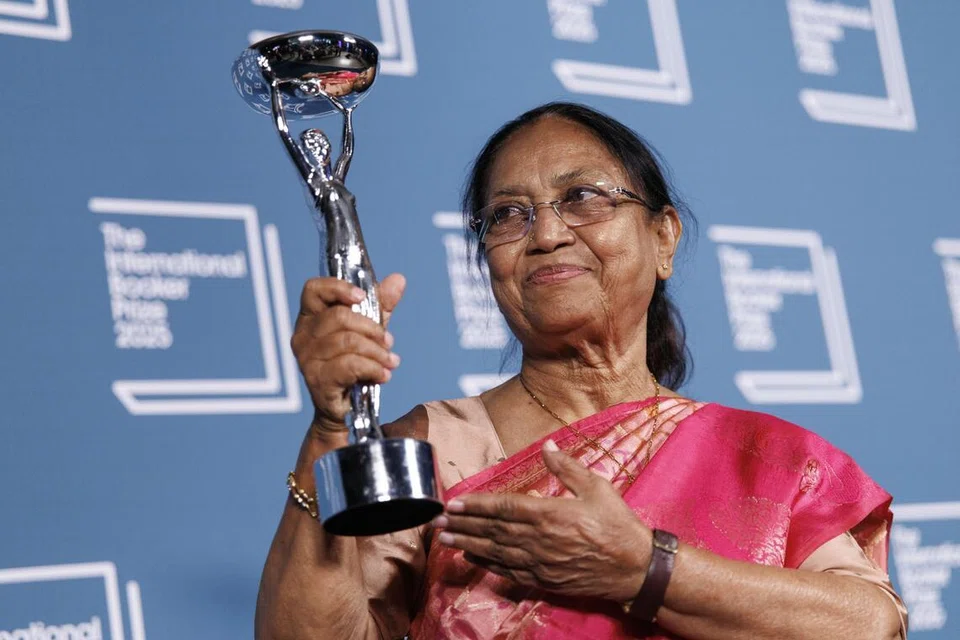

In a historic literary moment, Indian writer, lawyer and activist Banu Mushtaq has won the 2025 International Booker Prize for her short story collection Heart Lamp, becoming the first author writing in Kannada to receive the prestigious honour.
Translated into English by Ms Deepa Bhasthi, Heart Lamp is also the first-ever short story collection to win the award, which comes with a £50,000 ($86,555) prize shared equally between author and translator.
The announcement was made at a ceremony on Tuesday at Tate Modern in London.
Comprising 12 stories written between 1990 and 2023, Heart Lamp offers unflinching portrayals of Muslim women’s lives in southern India – tales of resistance, quiet defiance and resilience against the backdrop of patriarchy and religious conservatism.
Judges praised the collection for its “astonishing portraits of survival” and “textured translation that celebrates linguistic and cultural movement”, reported the BBC.
Madam Banu, 76, dedicated the win to readers, saying in her acceptance speech: “This book was born from the belief that no story is ever small. In the tapestry of human experience, every thread holds the weight of the whole.”
Ms Bhasthi, the first Indian translator to win the prize, said: “I hope this award leads to more translations from Kannada and other South Asian languages. Our stories need to be heard, across borders and cultures.”
The recognition comes at a time when regional Indian literature is gaining global acclaim. It follows Geetanjali Shree’s Tomb of Sand, which won the International Booker in 2022, translated from Hindi.
Madam Banu’s personal journey mirrors the struggles in her fiction. Raised in a conservative Muslim neighbourhood in Karnataka, she was educated in both Urdu and Kannada – eventually choosing Kannada as her literary voice.
She married for love at 26 but faced domestic restrictions, including being forced into wearing a burqa and abandoning her writing dreams.
At one point, overwhelmed by post-partum depression and despair, she nearly set herself on fire. “That moment changed everything,” she later said. “I picked up my pen again, because I had to survive.”
Since then, Madam Banu has published six short story collections, a novel, essays and poetry. Her work has earned major accolades including the Karnataka Sahitya Academy Award.
But Heart Lamp – with its focus on lives lived at the margins – has now brought her global recognition.
The win is being seen as both literary and political.
“In mainstream Indian literature, Muslim women are often reduced to symbols,” said one reviewer. “Mushtaq refuses that. Her women endure – not for headlines, but for dignity.”