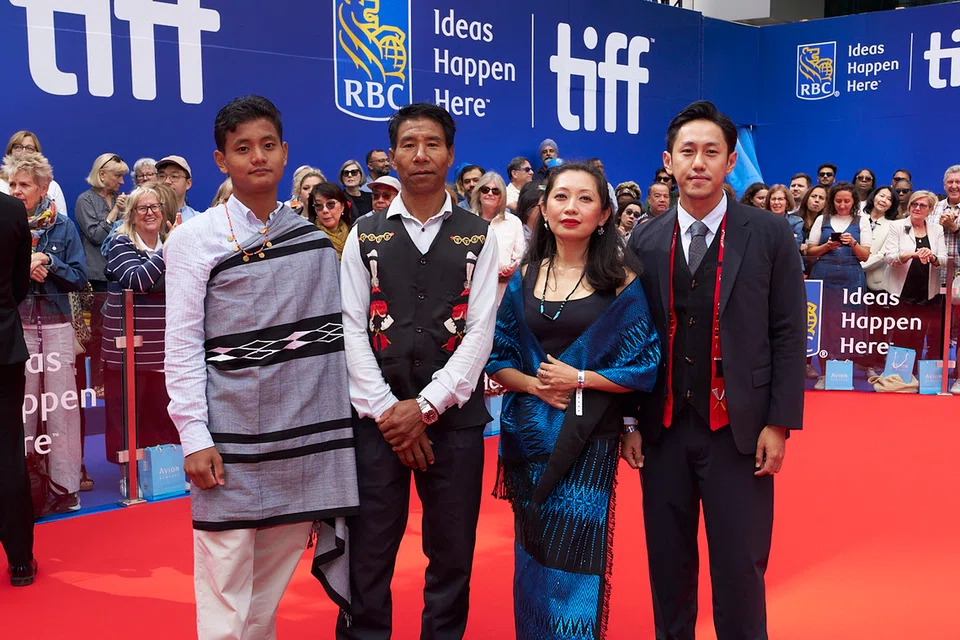

At the Toronto International Film Festival (TIFF), a group of about 40 Naga people in traditional attire were seated for Angh – the debut feature film by writer and director Theja Rio.
In the past few weeks, the film has ignited audiences and movie critics worldwide after it won the TIFF Platform Prize, making it eligible for consideration for the upcoming 2027 Academy Awards.
“The Northeast diaspora that live in Toronto, whether they come from a film background or not, they know exactly how big the festival is. And so, they never expected a film from back home to then arrive there and have such great reception.
“So, for them to just be able to witness all of that when the credits rolled, a lot of them were very emotional as well, and that really moved every single one of us,” said Mr Theja, 31.
The film is an expansion of one of Mr Theja’s short films of the same name, and follows a father and son from the Konyak tribe, one of the state’s 17 recognised tribes, in 1960s Nagaland. The father, Anghba, also the village chief, navigates his relationship with his son and the region’s changing times when an American Baptist missionary arrives in the village.
“The response has been a bigger surprise, to be honest, especially back home, you know, in Nagaland, where the whole state has been in celebration. I think I hold the world record for the most hands shaken in the last week,” said Mr Theja.
The film was produced by Ms Nancy Nisa Beso, who is also from Nagaland and has known Theja since he was a child. She has worked in the film industry around the world for several years, including on projects like National Geographic.
On the topic of Northeast stories and who gets to tell them, Ms Nancy says it’s more about the care director’s take in understanding the context of a place, rather than the identity of the person making it.
“I think what is important for me, is wherever you’re setting your story is to make your research correct, and depending on your storyline, sometimes it’s going to be from the observer’s point of view, and sometimes it’s going to be from the insight point of view.
Whatever it is, I think proper research should take place, and they should understand the sentiments of the people,” she said.
One of the major themes in the film is change, especially that brought by the history of missionaries coming to the North East, leading to large Christian populations that exist now.
This theme is something that Mr Theja deals with as an internal conflict.
“We come from a region where my whole family, everyone I know, is Christian. I am a Christian myself. At the same time, I think we’re far more culturally aware than we were back in the day. We celebrate our festivals, but we go to church. We read the Bible, but we do our folk songs. These are little balances that we do in our everyday lives,” he said.
“I don’t antagonise or villainise any side in this film. It’s something that comes very organically, because it also comes from deep within, you know, where you care about both sides. That duality lives inside you as well,” he added.
Ms Nancy says: “There’s always this instinct to protect what my parents feel and what my grandfathers feel and have carried forward. At the same time, understanding what the new future is, and then carrying that forward – it’s a daily struggle for all of us, whether what we wear or what we practice.”
Angh has yet to be screened in Singapore, and is travelling around the film festival circuits.