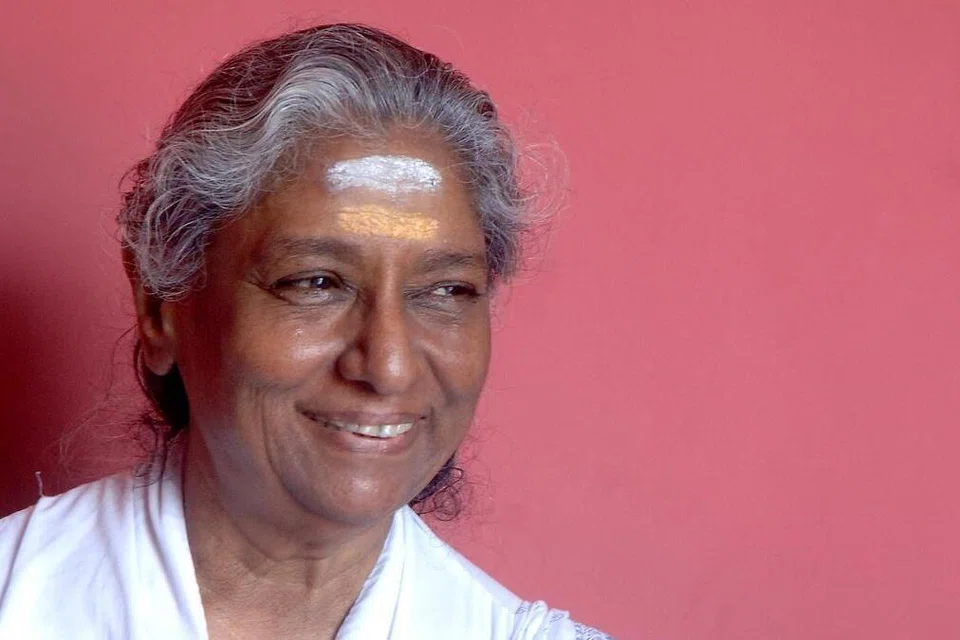
S. Janaki, the singer known across South India as Janaki Amma, died on July 11, in Mysuru in south-western India. She was 88.
Her granddaughter Apsara Vydyula confirmed the news.
According to reports, Janaki suffered a cardiac arrest while receiving intensive medical care, and doctors could not revive her despite repeated resuscitation attempts. Her family said she died peacefully, surrounded by loved ones.
Tributes poured in quickly, including from actors Kamal Haasan and Rajinikanth who both mourned her loss. Composer Anirudh Ravichander called her passing irreplaceable.
Singer Chinmayi Sripaada described watching Janaki perform live decades ago, switching her voice between a child, a woman and a man, all in a single song.
Early life and beginnings
Sistla Janaki was born on April 23, 1938. She moved to Chennai in her 20s on her uncle’s advice. There, she began working with music composer R. Sudarsanam at AVM Studios.
Her career as a playback singer started in 1957 with the Tamil film Vidhiyin Vilayattu. That same year, she sang for the Telugu film M.L.A.
She recorded songs in six languages within her first year alone – an extraordinary start for a young singer with no formal industry backing.
A career spanning seven decades
Janaki’s output over her career was staggering. She recorded more than 48,000 songs across films, albums, television and radio.
Her singing spanned 20 languages, including Telugu, Tamil, Kannada, Malayalam, Hindi, Sanskrit, Odia, Tulu, Urdu, Punjabi, Bengali and Konkani. She also recorded in some foreign languages during her career.
Her final recording was in 2017. She chose the Malayalam lullaby Amma Poovinum from the film 10 Kalpanakal as her swansong. She retired on October 28, 2017, with a farewell concert in Mysuru, closing a 60-year run as one of India’s most recorded voices.
Telugu and the language of her roots
Telugu was Janaki’s mother tongue. She began her Telugu career in 1957 with M.L.A. Songs from Bava Maradallu, Pooja Phalam and Bangaru Panjaram became widely popular.
Her success in Telugu cinema continued through the 1960s and 1970s, and stretched into the mid-1990s.
Building a legacy in Kannada
Kannada film music became the language where Janaki sang the most songs of her career. She recorded her first Kannada song in 1957.
By the early 1960s, she was already collaborating with leading composers. In the following decades, she remained the top choice for female playback singing in Kannada cinema.
Composers such as G.K. Venkatesh, the duo Rajan-Nagendra, and later, Hamsalekha regularly gave her their best compositions.
She built a long partnership with Dr. Rajkumar, one of Kannada cinema’s most celebrated actors. Their first duet together was Tumbitu Manavaa, from the film Mahishasura Mardini.
Janaki also recorded numerous duets with singers P.B. Srinivas and S.P. Balasubrahmanyam.
For her contribution to Kannada cinema, she received an honorary doctorate from the University of Mysore in 2009.
In 2014, the Karnataka government honoured her with the Rajyotsava Prashasti, the state’s second-highest civilian award.
Malayalam cinema’s adopted daughter
In Malayalam film circles, Janaki was affectionately called “dathu puthri”, meaning adopted daughter.
Her first Malayalam song was recorded in 1957 for the film Minnunnathellam Ponnalla. She studied the language carefully, working to master its accent and rhythm.
This effort made her one of the most sought-after voices in Malayalam cinema through the 1970s and into the mid-1980s.
She worked closely with composers including V. Dakshinamoorthi, M.S. Baburaj, Shyam, M.B. Sreenivasan, A.T. Ummer and Salil Chowdhury.
In 1970, the Kerala government honoured her with its Best Female Playback Singer award for the film Sthree. She went on to win 10 Kerala state awards over her career.
Songs such as Thumbi Vaa, Unarunaroo, and Thenum Vayambum remain part of Kerala’s musical memory today.
Tamil film music and later success
Janaki’s Tamil filmography includes work in Ullagam Suttrum Valiban, 16 Vayathinile, Apoorva Sagodharargal and Mudhalvan.
In the 1990s, she recorded several songs for composer A.R. Rahman early in his career. Tracks such as Ottagatha Kattiko and Mudhalvane remain popular decades later.
She won the Tamil Nadu State Film Award for Best Female Playback Singer for Margazhi Thinkal Allava from the film Sangamam, composed by Rahman.
In 1986, the Tamil Nadu government awarded her the Kalaimamani, one of the state’s highest honours for artists.
Reaching Bollywood
Composer Bappi Lahiri heard one of Janaki’s Hindi songs, recorded for a Tamil film, while visiting Prasad Studio. Impressed, he invited her to sing for his Hindi projects and introduced her to the Bollywood film industry.
She went on to record several duets with singer Kishore Kumar, extending her reach beyond South India.
Voice of many characters
Janaki’s defining skill went beyond her volume of work. She had a rare gift for shaping her voice to match a character on-screen.
She could sound like a young child, a shy bride, a village girl, an older woman or a modern city heroine, often within a single film.
And she carried emotions – from innocence to grief, from playfulness to devotion, through subtle shifts in tone. This ability earned her the title “Queen of Expression” among peers and critics.
Honours and recognition
Across her career, Janaki won 12 Nandi Awards from the Andhra Pradesh government, 10 for films and two for television work.
She received the Filmfare Lifetime Achievement Award in 1997. She also won a state award in Odisha for the film Sata Kebe Luchi Rahena, having recorded around 68 songs in Odia over the years.
Remembering Janaki Amma
S. Janaki’s death marks the end of an era in South Indian film music. Her voice shaped the soundtrack of five generations across four major South Indian languages and beyond.
Fellow artists, actors and fans have spent the hours since her passing sharing memories of a singer whose range and warmth were rarely matched.
She is survived by her family, including granddaughter Apsara Vydyula, who announced her passing. Her recordings, numbering in the tens of thousands, remain her lasting legacy. For millions of listeners across India, her songs continue to carry the same feeling she gave them decades ago.
THE STATESMAN/ASIA NEWS NETWORK