India’s movie-making prowess is most often considered Bollywood. Little known is that it also has a thriving regional film industry, which is churning out hits, as seen last year by the Oscar-winning Telugu film RRR.
Often the country’s independent filmmakers are overshadowed by mega production houses, but they are increasingly making their presence felt, thanks to the accessibility offered by streaming services.
The Cannes Film Festival, which began on Tuesday, has recognised this shift. Its 77th edition will see an Indian entry in almost every major section during the 12-day event.
Never before in history has Cannes and its sidebars found space for eight Indian, or India-themed, films. As many as six of these will be in contention for awards, reported Businessline.
Indian cinema’s previous best at Cannes was in 2013, when it sent five films to various sections. In 2012, too, India had a substantial presence with four titles.
But for many years before and since, the pickings have been dishearteningly slender.
One notable aspect of the Indian films in Cannes this year is that they are all either helmed by female directors or are women-centric, with the exception of one.
In what could herald a new era, these films, made by directors endowed with sensibilities and approaches entirely their own, have shaken off the shadow of the gangster genre.
For the first time in 30 years, an Indian film will compete for the coveted Palme d’Or, reported India Today.
Payal Kapadia’s All We Imagine As Light is up against films by cinema great Francis Ford Coppola (Megalopolis), Palme d’Or veteran David Cronenberg (The Shrouds) and Oscar nominee Yorgos Lanthimos (Kinds of Kindness), among others.
The Malayalam film follows two nurses in Mumbai who, troubled by their relationships, decide to take a road trip to a beach town where they find a space to manifest all their dreams.
Only one Indian film has won the Palme d’Or before, in 1946. Chetan Anand’s Neecha Nagar, which explored the gulf between the rich and poor, was an adaptation of Maxim Gorky’s 1902 play The Lower Depths.
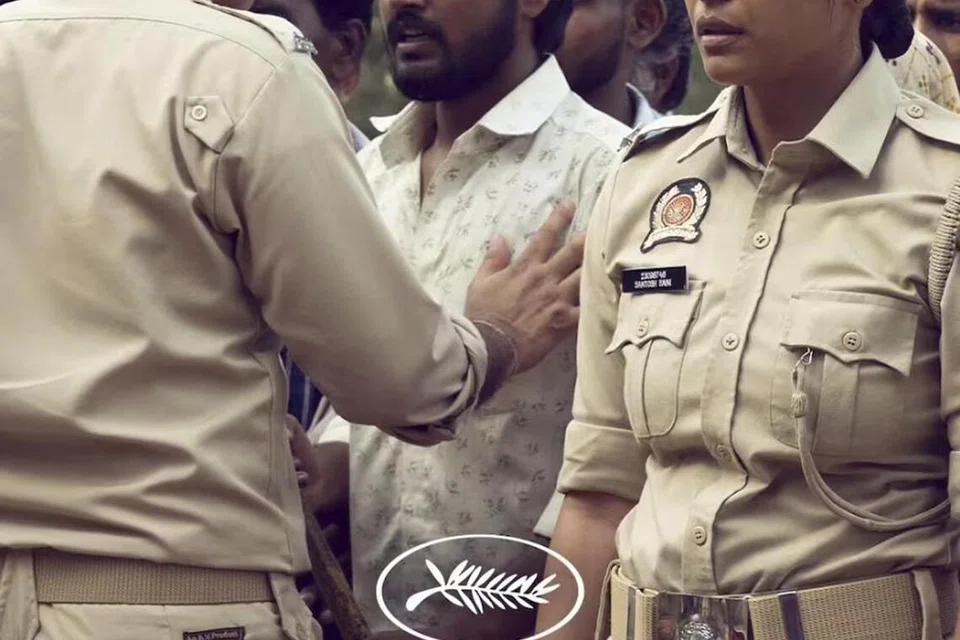
Indian-British filmmaker Sandhya Suri’s Santosh is in the running for an award in the Un Certain Regard section, reported Pinkvilla.
Another entry is The Shameless, an Indian story told by Bulgarian director Konstantin Bojanov, featuring a mix of Indian and Nepali actors.
The story follows two women whose bond develops into a forbidden romance, sending them on a journey of trying to escape their circumstances.
Chidananda S Naik’s Sunflowers Were the First Ones to Know… is in the La Cinef competition for film school entries.
Mysuru-based Naik is a qualified doctor. After graduating from medical college, he practised for some time before enrolling in a one-year course in the television wing of the Film and Television Institute of India (FTII). Sunflowers was Naik’s final television film at the institute.
La Cinef has Indian filmmaker Mansi Maheshwari representing the UK. The Meerut-born animation director is in the line-up with Bunnyhood, a self-reflexive graduation film made at the National Film and Television School (NFTS) in London. Maheshwari is a 2024 NFTS graduate.
Karan Kandhari’s Sister Midnight, an India-British noir drama starring acclaimed actress Radhika Apte, is in the Directors’ Fortnight selection. The film will vie for the inaugural Quinzaine des Cineastes People’s Choice Award.
There’s also Maisam Ali’s In Retreat, screening at L’Acid, a space dedicated to independent cinema.
Set in the picturesque Ladakh, it tells the story of a middle-aged man trying to return home to a mountain town for his brother’s funeral.
“I didn’t know the director was young, because when you see the film, it’s incredibly deep, really mature,” Pamela Varela, one of L’Acid’s programmers told the New York Times.
Then there is the Hindi film Kooki, which narrates the trauma of a 16-year-old rape survivor who feels let down by the judicial system. Directed by Pranab J. Deka, the movie – from Assam – also gives an insight into the culture of the region.
Rounding off India’s presence in Cannes this year is a 4K restored version of Shyam Benegal’s 1976 crowdfunded film Manthan.
Thierry Fremaux, the artistic director of Cannes, noted the new generations of filmmakers in India when he announced the line-up in April.
These movies offer what critic Namrata Joshi calls “a young, probing and provoking gaze at Indian reality”.
When the festival winds down on May 25, the media contingent from the world’s largest film-producing nation might, fingers crossed, have plenty to write home about.