
Singaporean short films Coast to Coast and What Remains At Dawn will be making their world premiere at the 35th Singapore International Film Festival (SGIFF).
The films, which surround Indian-origin profiles, are programmed under the Singapore Panorama section of the festival, which is presenting 16 short films by local filmmakers.
Screenings for the films have sold out. tabla! spoke with the creators behind the two films to share more about their process and journey to SGIFF.
Coast to Coast
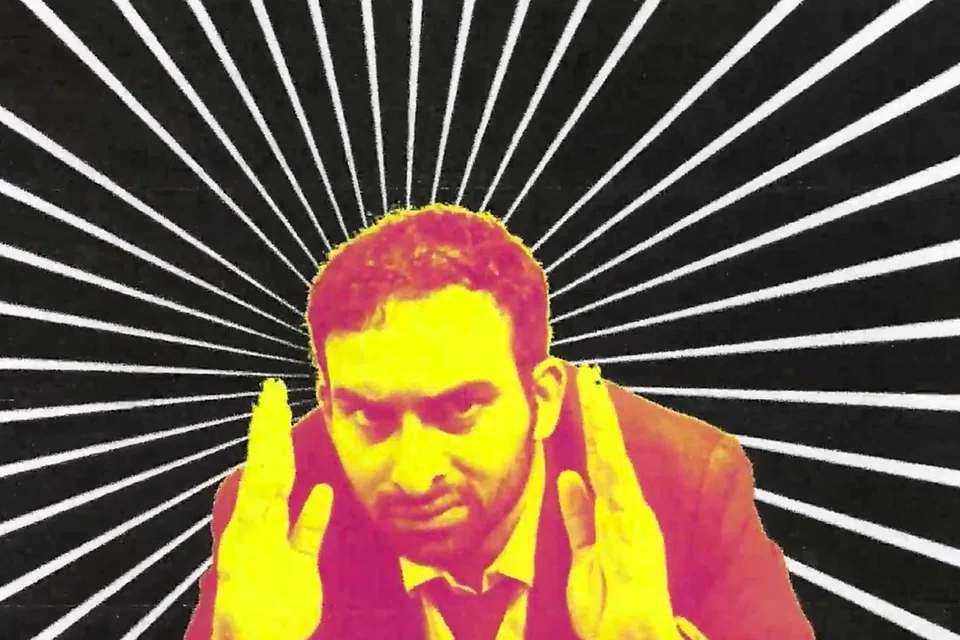
Director Megan Lim En’s Coast to Coast is a 15-minute absurdist comedy where actor Mr Lekheraj Sekhar, who goes by Raj, plays the lead role of a disgruntled worker tasked with repairing a printer.
The menial task takes him on a whimsical journey across the island, where he encounters a strawberry man and a strawberry car, and experiences a printer ink psychedelic dream.
The film is in the section’s first programme, There’s Gotta Be More, which aims to highlight the fatigue of a typical 9-to-5 routine, the aim for the BTO life, and whether there’s more to the rigamarole.
Ms Lim, 27, said that her joys in making films come from the process and working with friends, with most of the cast and crew being her friends.
“You miss out the process of working together and trial-and-error if everything is replaced by a generative sort of process. That fun element is actually crucial to the filmmaking process, which I think sometimes – as it gets bigger in scale and gets even more industrial, where everyone is trying to figure out how to execute it perfectly – gets lost,” she said.
Mr Raj, 27, said that he was ultimately able to just play himself in the role, just in a more alternate reality.
“I think in a lot of ways, the idea of being disillusioned by a job that’s giving you really menial tasks is something that I’ve experienced in my past jobs.
“I think my character knew deep down inside throughout the entire journey he’s searching for some kind of respite from this, or some kind of meaning,” he said.
What Remains At Dawn
Director Nicholas Tan’s What Remains At Dawn is a documentary that explores the family of a Malaysian man, Pannir Selvam Pranthaman, on death row in Singapore, and what remains after he is executed at dawn.
Pannir, a 38-year-old Malaysian man, was convicted of drug trafficking and given the death penalty under the Misuse of Drugs Act in 2017. He was scheduled to be executed in May 2019 and February 2025; however, his lawyers successfully obtained a stay order both times.
Pannir and his family were then notified on Oct 4, 2025, that he was scheduled to be hanged on Oct 8, 2025. He did not receive a stay order and was hanged in Changi Prison.
We follow sisters Angelia and Sangkari as they scramble to fight for their brother’s stay order over a weekend. Excerpts of Pannir’s poetry are interlaced with scenes of Singapore’s iconic landmarks and motifs, showing the mundanity of how, even though a family experiences an enormous loss, the world keeps turning.
The film will premiere a few weeks from Pannir’s first death anniversary and is also in the running for the festival’s Audience Choice Awards.
Mr Tan, 26, also inserts himself as a third profile in the film, almost representing an audience member reacting and pondering what we see. The execution announcement came as a shock to Mr Tan himself, as he initially hoped he would have been able to show the previous idea of the film to Pannir.
“I decided to use my voice only in the editing process. It didn’t feel right to hide myself, the director, instead of extracting from Angelia and Sangkari’s point of view that is commonsensical. Their brother is being executed after all. Through my position, a change in perspective can be voiced,” said Mr Tan.
On what he hopes audiences will take away from watching, the film’s producer Mr Daryl Cheong, a Singaporean filmmaker himself, said: “Fundamentally, I think we need to put a human face to the death penalty. Too often, it becomes a statistic that we can easily brush past.”