The Marathi film Gypsy (2024), a poignant exploration of life on the margins, drew big attention at the recent Indian Film Festival 2026 in Singapore – not just for its story, but for the deeply personal journey of its director, Shashi Khandare.
Screened as part of a curated line-up of 21 films celebrating India’s linguistic and cultural diversity, the 117-minute drama stands out for its unflinching portrayal of nomadic communities and the quiet resilience of those often overlooked by mainstream society.
At the heart of Gypsy is Jotya, a young boy from an itinerant tribal family, played by Kabir Khandare. The film traces his daily struggle for survival – begging for stale food, navigating poverty, and yearning for something as simple as the smell of freshly cooked meals. But beyond the narrative lies a story, Shashi says, rooted in lived experience.
“This subject was very close to my heart,” Shashi told tabla! during his visit to Singapore. “I have seen this tribal community very closely in my village. I felt I owed something to them – to give back through my work.”
That sense of responsibility became the driving force behind Gypsy, which took nearly five years to develop. Shot in the harsh terrain of Solapur in Maharashtra, often under temperatures exceeding 42 deg C, the film was crafted with an emphasis on authenticity. Many scenes required the young lead actor to perform barefoot, reflecting the lived realities of the community portrayed.
Shahsi’s own journey into filmmaking mirrors the grit seen in his film. Coming from a modest background, he began as a stage actor before spending over a decade as an assistant director. It was during this period that he wrote the story of Gypsy, gradually shaping it into his debut feature.
“I was always involved in theatre and storytelling, but I never had the platform,” he said. “When I came to Pune and saw the openness of the industry, I decided to pursue filmmaking seriously.”
Interestingly, the film underwent a significant creative shift during its development. Initially conceived around a young gymnast girl, the project was reimagined when the original casting no longer fit the director’s vision.
Shashi then turned to his son, Kabir, whose natural screen presence inspired him to reshape the narrative.
“That changed everything,” he said. “I built the story around his rawness and perseverance.”
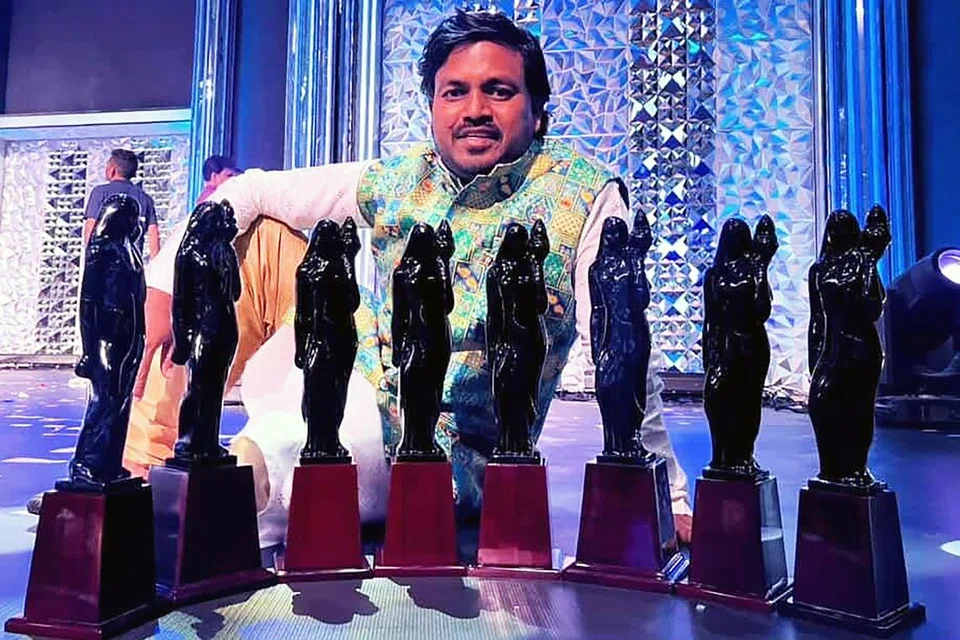
The decision proved transformative. Kabir’s performance earned him the National Film Award for Best Child Artist, while the film went on to win multiple honours, including Best Rural Film at the Maharashtra State Film Awards.
It also premiered at the Marché du Film at the Cannes Film Festival and was showcased at the International Film Festival of India.
Yet, for Shashi, the film’s success is secondary to its message.
“Marathi audiences are very mature. They look for meaning, not just entertainment,” he said. “My effort is always to give something beyond cinema – a social message that stays with people.”
That philosophy is evident in Gypsy, which subtly raises questions about poverty, illiteracy, and dignity without resorting to melodrama. By focusing on sensory experiences – hunger, smell, longing – the film invites viewers to engage with the emotional world of a child denied basic comforts.
Its inclusion in the Singapore festival, Shashi said, is both humbling and affirming.
“I’m really honoured that the film has reached audiences here,” he said, acknowledging the support of the Indian High Commission and local cultural groups. “It shows that stories from small communities can travel far.”