A new Bollywood film is reigniting old debates and deepening divides over one of India’s most iconic monuments.
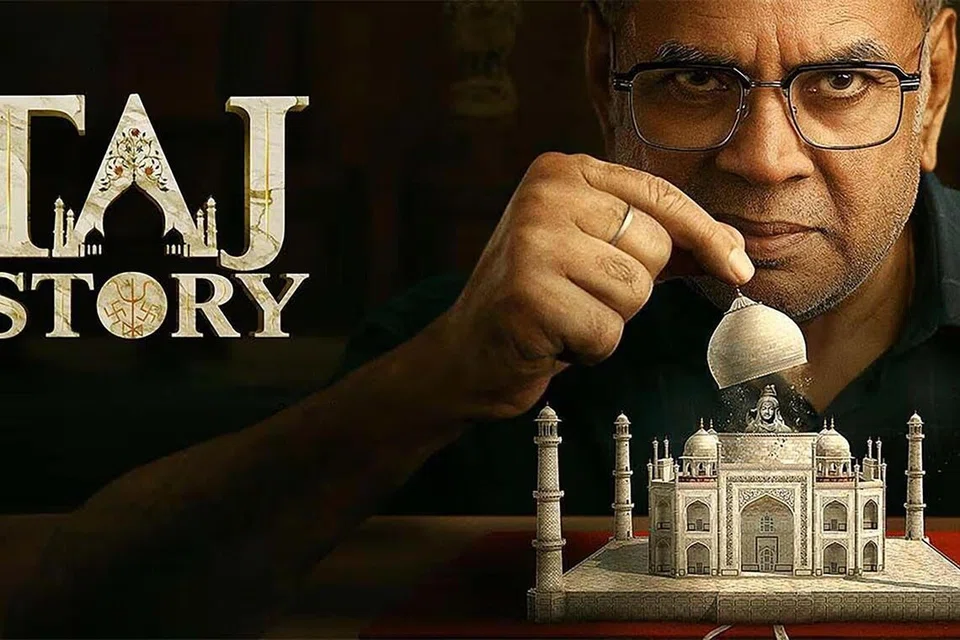
The Taj Story, a courtroom drama directed by Tushar Goel and released on Oct 31, questions the official Mughal-era origins of the Taj Mahal, reported CNN.
The film also promotes a controversial theory that it may have been a Hindu temple before being “repurposed” as a mausoleum.
At the heart of the film is tour guide Vishnu Das, played by veteran actor and former Bharatiya Janata Party lawmaker Paresh Rawal. Disillusioned after years of narrating the traditional tale of Emperor Shah Jahan’s love for Mumtaz Mahal, Das becomes obsessed with uncovering the monument’s “true” origins.
His doubts spiral into legal action and emotional appeals – including a call for a DNA test on the Taj – to determine if the structure hides a buried Hindu past.
While the film opens with a disclaimer that it is fictional, it mirrors persistent right-wing narratives, including the long-debunked “Tejo Mahalaya” theory that posits the Taj Mahal was originally a Shiva temple, noted the Mint.
The film’s poster even features Lord Shiva emerging from the dome, further stoking controversy.
Though the filmmakers insist The Taj Story is not political, critics see it as part of a growing trend of pseudo-historical films aligned with Hindu nationalist ideology.
Films like The Kashmir Files and The Kerala Story have faced similar backlash for portraying India’s Muslims in a negative light while being embraced by Hindu right-wing audiences.
Historians and critics have widely dismissed The Taj Story.
The Indian Express called it “a collage of conspiracy theories”, while The Week noted it failed both as entertainment and propaganda.
Historian Swapna Liddle emphasised that the Taj’s Mughal origins are well documented, pointing out that the Mughals were meticulous record-keepers.
Despite tepid box office performance – reportedly earning US$2 million on a US$1.3 million budget – the film has stirred public sentiment.
BJP lawmaker Ashwini Upadhyay hailed it as a tool to “uncover truth”, while some cinemagoers expressed surprise at learning “hidden history”.
The film arrives at a time when India’s ruling BJP is increasingly accused of rewriting history to favour a Hindu-centric narrative.