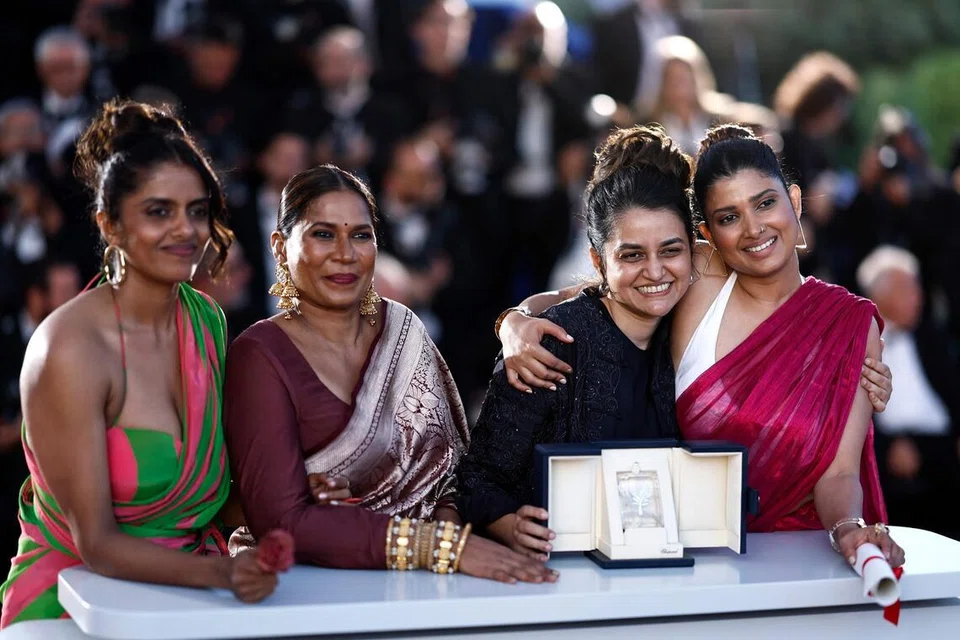

India’s giant movie industry is known for its macho, men-centric storylines, but a wave of women filmmakers is helping to break the mould.
“More and more women are writing their stories, turning them into films,” said writer-director Reema Kagti, who believes the trend brings a more “real and healthy perspective” to movies, with complex, outspoken women characters who are masters of their own story.
The world’s most populous nation churns out 1,800 to 2,000 films in more than 20 languages annually – and Hindi-language Bollywood is one of the largest segments, with more than 300 productions.
Yet the films have often failed to portray women authentically, choosing instead to box them into being passive housewives or mothers who bow to societal pressure.
But industry insiders point to a slate of women-directed movies earning international acclaim that have also scored well at the tough domestic box office.
Malayalam film All We Imagine as Light, a poetic tale about two nurses forging an intergenerational friendship, was the first Indian production to win the Grand Prix at the 2024 Cannes Film Festival.
Director Payal Kapadia shunned the one-dimensional portrayal of women on Indian screens which tends to mimic “unrealistic standards set by society”, she said, in favour of one that allows women to “just be ourselves, authentic and true to how we are in everyday life”.
India’s official entry for the 2025 Oscars was Kiran Rao’s Lost Ladies – Laapataa Ladies in Hindi – a comedy which challenges convictions surrounding marriage and womanhood, a sign of a shift – even if it missed the final shortlist.
It is not only arthouse films that are winning hearts.
Mainstream movies with strong women co-leads are filling up theatres as well.
Stree 2, a horror comedy featuring Bollywood star Shraddha Kapoor, smashed box office records last year, beating earnings by superstar Shah Rukh Khan’s action flick Jawan.
And Crew, a heist comedy about flight attendants, was widely seen as a win for women-centric movies.
“Women still face challenges in telling stories from their perspective”, said actor-producer Dia Mirza. “However, the increasing presence of female directors, producers and writers is paving the way for more inclusive narratives.”
Movies can also tackle the way regressive traditions manifest in the daily lives of Indian families.
Mrs., a Hindi film released in February, dives into the unseen labour of a newlywed housewife, her silenced aspirations and the societal conditioning she struggles with.
“Across social media, you can see people posting – that the majority of women in India go through this turmoil,” said Mumbai-based sociologist Lakshmi Lingam.
She points out that there was no backlash to the film.
“The voices of women saying, ‘Yes, this is true, and I can see myself there’ is very high,” she said. “So, there is that kind of ecosystem of women resonating with many of the ideas these women filmmakers are making.”
Konkona Sen Sharma, an actor-director who is a champion of women-oriented cinema, is cautiously optimistic about the role women will play in the future.
Women are increasingly present in the film industry, but “we still don’t have enough women in positions of power,” she said.
AFP