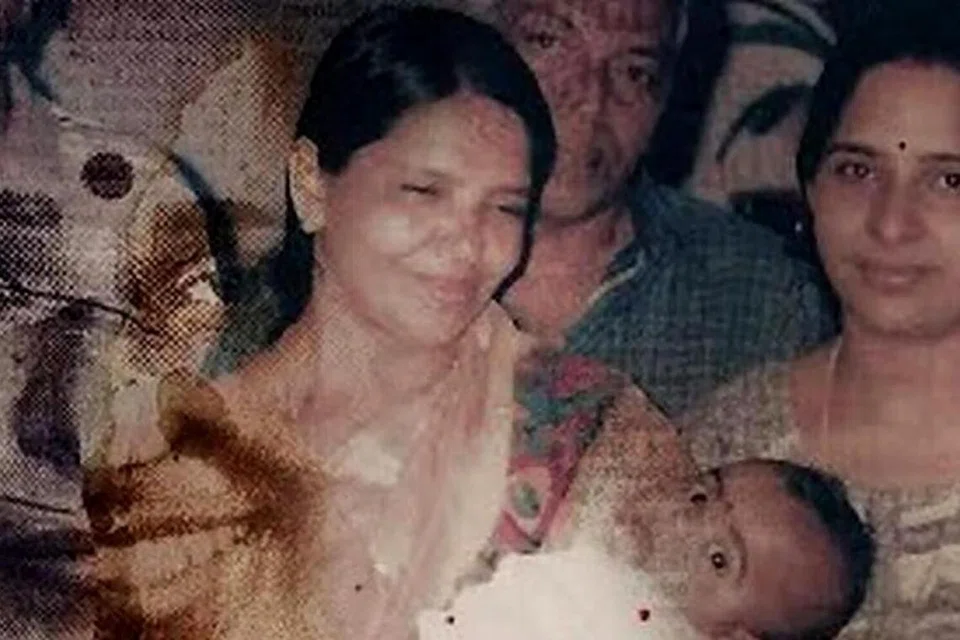

Netflix’s latest crime docuseries Curry & Cyanide – The Jolly Joseph Case is making waves among Netflix viewers.
Directed by Christo Tomy and produced by India Today Originals, it currently ranks No. 3 in India and No. 7 in Singapore.
The series revisits the horrific cyanide killings in Kerala’s Koodathayi, where a woman, Jolly Joseph, allegedly poisoned and killed six people, including her family members and a two-year-old girl.
The incidents came to light in 2019, when Jolly was arrested for allegedly committing the crimes over 14 years.
In a case that shook India, the middle-aged Jolly is said to have poisoned and killed both her in-laws, her first husband, the wife of her second husband and his daughter.
The 95-minute documentary holds the viewer’s attention from start to finish. It examines Jolly’s motive and how her murderous actions remained undetected for such a long time.
Throughout, viewers are given accounts and narratives from various people involved during and after the crimes – mainly retired cop K.G. Simon, who headed the investigation, Jolly’s son Remo, her brother-in-law Rojo, sister-in-law Renji and her advocate B.A. Aloor.
Tomy keeps the narrative well-paced and the storytelling gripping. There is never a dull moment, which is rare, given that several documentaries veer towards becoming dull after a point, largely because there is no fiction involved.
Death due to cyanide has found a way into popular culture and has been featured in several shows before, including the crime thriller web series Dahaad. But Curry & Cyanide is special because it shows that reality can be more troublesome – and indeed more disturbing – than fiction.
However, critics have pointed out that, while most of Netflix’s true-crime-based shows follow an episodic format, Curry and Cyanide is cramped into a feature-film duration.
Netflix has arguably been the frontrunner when it comes to delivering gripping content based on true crimes. Delhi Crime, House of Secrets: The Burari Deaths and The Hunt for Veerappan are some of its more popular series, which tapped the Indian audience’s collective interest in examining spine-chilling real-life crimes.
But its 95-minute restriction for Curry & Cyanide is strange considering the case traverses almost 20 years. As a result, the makers are unable to get into the minute details, which leaves many pondering over a number of questions, besides diluting the gruesomeness of the crimes.
Generally, what makes such shows popular is how they explore a criminal’s background and psyche.
Curry & Cyanide reveals that Jolly belongs to an agricultural family from the high ranges, who later gets married into the affluent Ponnamattam family.
It also says that she was an expert at deception, which is evident in how she forged her degree certificates – the starting point of all crimes to follow.
But the show should have had at least one credible version, probably from a childhood friend or family member, to help viewers understand Jolly and the root cause of her criminal tendencies.
Though Curry & Cyanide is accurate with the depiction of the pain endured by the remaining members of the Ponnamattam family, particularly Rojo and Renji, it fails to dig deep into Jolly’s psyche.
Getting Jolly on camera and speaking about her actions, like what had been done with the docuseries Dancing on the Grave, would have elevated Curry & Cyanide. The perspective of her second husband, Shaju, and the other accomplices are also missing.
But, given that the case is still ongoing, that would have been difficult to achieve.
Indo-Asian News Service