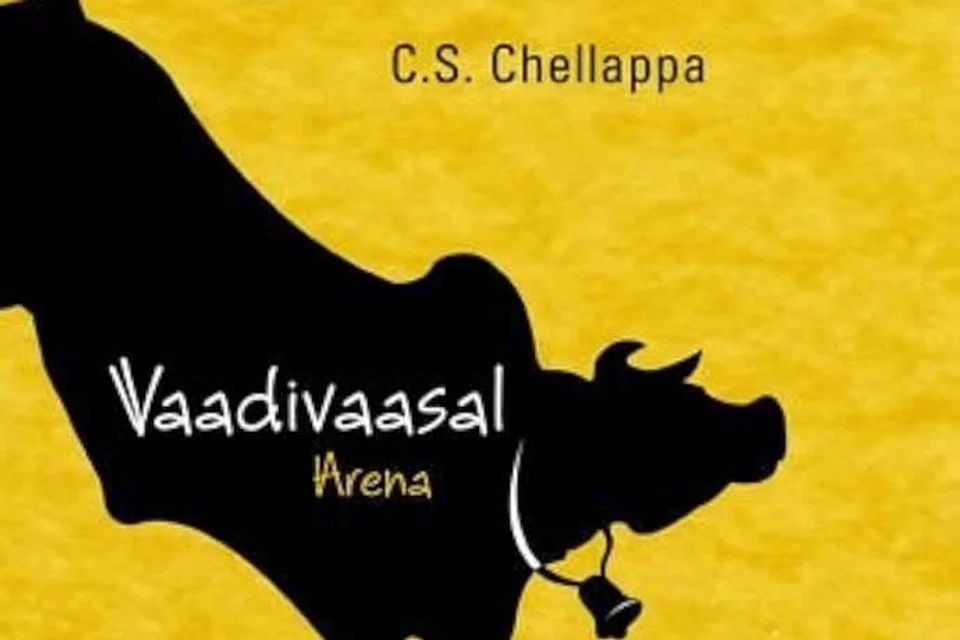

Set within the jallikattu ring, the intense bull-taming arena of South India, C.S. Chellappa’s Vaadivaasal, published in 1949, delivers a powerful tale of ego, pride, and class dynamics in under 100 pages.
The novella’s short length is exactly what makes it exciting. It is a quick read, yet the narrative feels just as swift and wild as a thrashing bull.
The story follows Picchi as he steps through the ‘vaadivaasal’ (the narrow gate through which the bulls enter the arena). He has one clear goal: tame Kaari, a legendary black bull owned by a powerful local landlord. Kaari is the same beast that killed Picchi’s father years ago, and Picchi wants to reclaim his family’s honour.
While it looks like a simple story about a sport, reading between the lines reveals a deeper conflict: feudal power against the lower class.
Originally written in Tamil, the English translation by N. Kalyan Raman (published by Oxford University Press in 2014 under the title Vaadivasal: Arena) captures the tense action well. However, if readers aren’t familiar with the sport, the heavy local terms can be disorienting.
Because the story stays strictly inside the dusty ring, it lacks character depth. The abrupt ending happens so fast it might leave readers feeling shortchanged, wishing for a fuller narrative rather than just a quick glimpse.
Vaadivaasal is a sharp, quick look at heritage and survival. If you want a powerful story you can easily finish in one sitting, this classic is well worth your time.
A highly acclaimed graphic novel adaptation written by Perumal Murugan with art by Appupen was published in Tamil in late 2024, with its English translation released in early 2025.