Javanese-Indian fusion dance ballet Prambanan, which will be staged at the Alliance Francaise theatre on Aug 25, takes a close look at the history, art and architecture of the two cultures that date back 1,500 years.
“It was created after two years of research,” said Ramkumar Vasudevan, the artistic director at dance group SYAMA, which was started in 2004 to promote classical music and dance among Singapore youth.
“The show stems from a broken portion of a stone, currently placed at the National Museum, found when Sir Stamford Raffles widened the port of Singapore to anchor his ship in 1843.
“It has a word ‘Kesariva’, written in kavi script, which possibly is a part of Rajakesarivarman, the name given to Chola kings, a Tamil dynasty originating from southern India, which at its height during the 9th century had an expansive maritime empire.
“This probably means a new identity for Singapore much before the days of Sang Nila Utama which was about 700 years ago. The Cholas extended their kingdom into Sri Lanka and had trade routes to China through the Sumatra and Java peninsula.”
The dance ballet takes inspiration from the Prambanan, a 9th-century Hindu temple in Yogyakarta, southern Java.
“In the Prambanan temple, we can see reliefs of many Hindu gods, demi-gods, apsaras, musical instruments and scenes from the Ramayana, especially sculptures of karanas of the 2nd century’s Natya Shastra. Our dance ballet presents these karanas,” said Ramkumar.
On the north side of this temple stands a statue of Hindu goddess Durga. However, locals say it is Roro Jonggrang, a slender maiden and the heroine of a famous folklore. So, what’s the story of Roro? We present it in the dance ballet.”
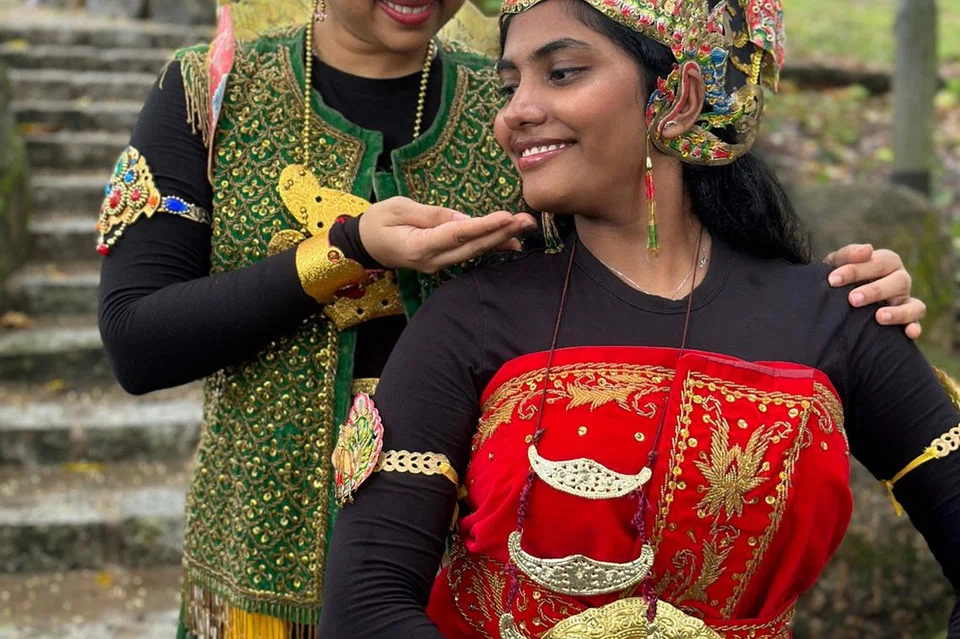
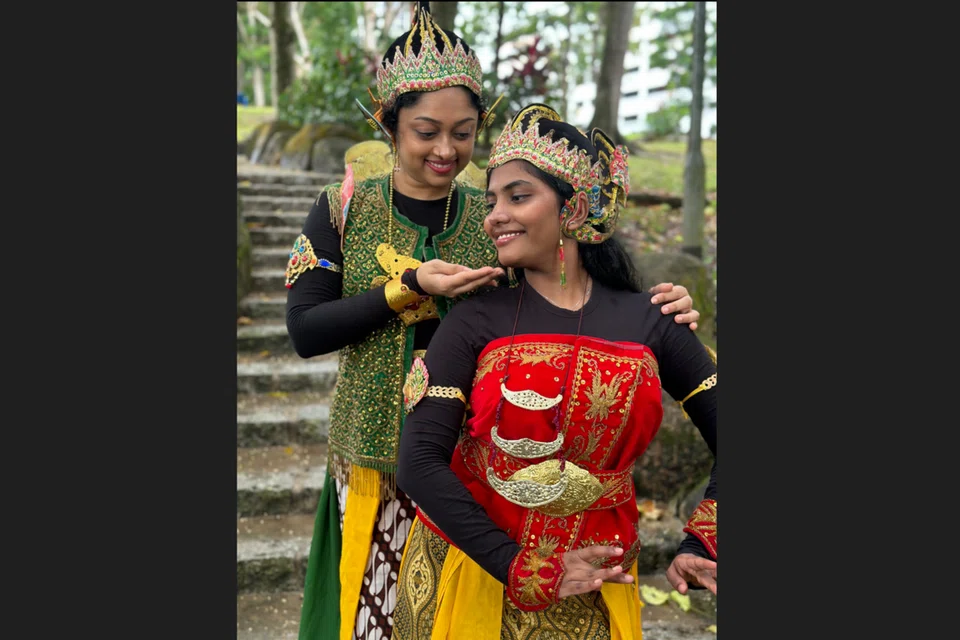
The dance ballet, performed by eight Indonesian and eight Indian dancers, is an art fusion. Indonesian costumes are used for the Indian dances, and the Indian dances are in abinaya mode as it tells a story and is aimed at the common man.
Featured are also Javanese traditional dances such as tari pendet, tari serimpi, kecek and kuda kepang, which is a dying art.
Ramkumar, also an accomplished veena player, has composed seven songs sung by local singers and accompanied by flute, veena and mridangam.
Sriganesh has penned the Tamil songs, while Dr Sujatha Mohan from India and Swarna Varsha Gurumoorthy from Singapore have choreographed the Indian dances.
V.K. Santosh Kumar