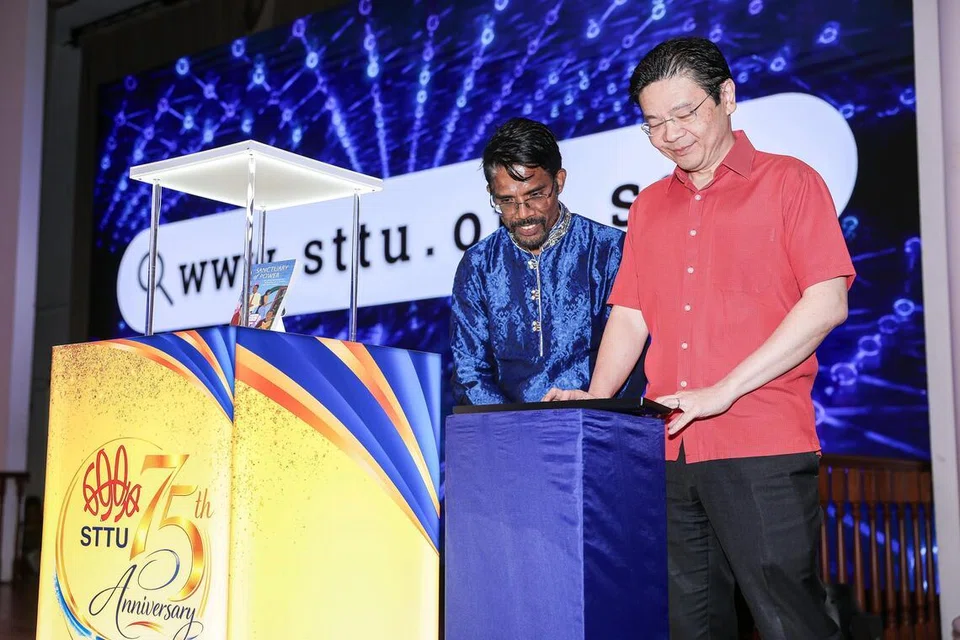

For the past 75 years, the Singapore Tamil Teachers’ Union (STTU) has stood as a fortress and a pillar of support for Tamil teachers in Singapore, and will continue to be so.
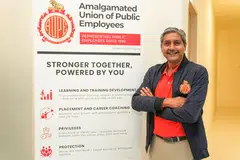
“I view this major milestone as the starting point for a prosperous future,” said Mr Danapal Kumar, the President of the union, on July 17 at the Singapore Tamil Teachers’ union’s (STTU) 75th Anniversary Dinner held at Orchid Country Club.
He stated that the union will continue to engage in various initiatives for the professional growth and development of Tamil teachers in the coming years as well.
Mr Danapal noted that the union has a crucial responsibility in ensuring that Tamil remains a living and growing language in Singapore. He also affirmed that the union will always support initiatives organised for the education of Tamil students.
“Recently, when a few National University of Singapore students created a learning platform called ‘Eduville’ to foster an interest in Tamil among younger students, we offered our support. Such efforts are helpful not only for students but also for teachers,” he noted.
Plans and Dreams
“Tamil teachers aspiring to be school leaders continues to be a challenge and STTU is committed to work on supporting young Tamil teachers through mentoring by retired school leaders,” Danapal explained.
He also shared that various measures are being taken to address the shortage of local Tamil teachers. The union continues to work closely with the Ministry of Education (MOE)’s Human Resources department to attract more Tamil teachers.
“Many people hold the misconception that growth opportunities are limited in a Tamil teaching career. This has been our biggest challenge,” he said.
To tackle this challenge, he added that sharing sessions and seminars are being organised in collaboration with various community leaders to raise awareness.
Mr Danapal considers seeing a greater number of students speak Tamil fluently in the future as the ultimate measure of the union’s success.
“If the welfare and skills of teachers improve, the quality of students will also rise. Therefore, we place our main focus on nurturing teachers,” he added.
National Vision
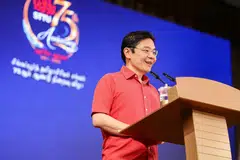
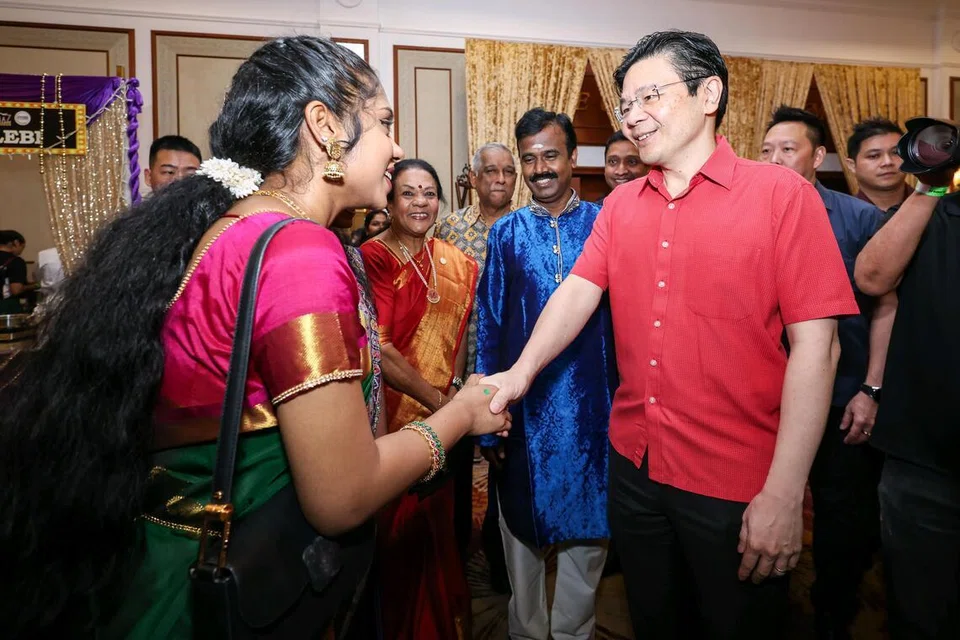
Prime Minister Lawrence Wong highlighted that the entire community must come together to keep Tamil and our mother tongues alive on July 17.
He noted that language teachers plant the seeds of interest in languages among students, while organisations like the STTU foster the language by supporting those teachers.
PM Wong said that if everyone in society plays their part effectively, Tamil will continue to flourish in Singapore.
“Our mother tongues connect us to our roots, values, and culture. They also help us deeply understand our identity,” he added.
PM Wong explained that preserving mother tongues reflects Singapore’s unique identity as a multiracial nation, which is why mother tongue learning forms the cornerstone of Singapore’s education system. However, he also pointed out that learning mother tongues has become more challenging in modern times.
“Due to English-speaking situations being more prevalent now, learning mother tongues has become a challenge for students. In this environment, the work of Tamil teachers is crucial. By teaching language nuances alongside cultural stories and values, they pass down their culture and heritage to every generation,” he said.
Mr Wong commended teachers for continuing to carry out this challenging work through innovative ways. He noted that STTU has been a strong pillar of support for teachers who work tirelessly to foster a passion for the Tamil language in students.
Wishes from Community Leaders
Chief Executive Officer of SINDA, Mr Anbarasu Rajendran, believes that the union will help Tamil teachers with the growing impact of artificial intelligence in teaching and learning.
Dr A. Veeramani, Advisor to the Singapore Tamil Youth Club, noted that the union’s successful operation over the past 75 years is commendable.
“It is important that all Tamil teachers join the union and serve. They should step forward to serve the Tamil language that sustains them,” he said.
Mr Naseer Ghani, Chairman of the Tamil Language Council, stated that it is heartening to see many young teachers currently holding leadership positions within the union. He expressed happiness over the union’s upward trajectory under young leadership and requested that STTU continue to use its experience and resources to foster the Tamil language in Singapore.
Registrar of the National University of Singapore and Chairman of the Indian Heritage Centre, Mr R. Rajaram, believes that the future role of today’s teachers extends beyond just teaching the language to sowing the seeds of Tamil-based thought, culture, identity, and social unity in the next generation.
Voices of Young Tamil Teachers
While many young teachers appreciate the union’s current efforts, they are also eagerly anticipating new initiatives.
Ms Kajol Revi, 23, a teacher at Victoria School, believes that teaching resources present a key challenge for young teachers.
“When we first step into the teaching profession, we do not have many teaching resources at our disposal. It would be wonderful if the union could make arrangements for senior teachers to share resources with us,” she requested.
Ms Sivasanmuga Priya, 23, a teacher at Yuan Ching Secondary School, feels that all teachers would benefit if efforts were made to foster collaboration among teachers from diverse backgrounds.
“Every teacher may possess different skill sets. It would be greatly beneficial if everyone comes together and shares their expertise,” she said.
Ms Shruthika Kumar, 22, a teacher at Yishun Town Secondary School, views helping youths realise that there are good career growth opportunities in Tamil teaching as the union’s future benchmark for success.
“While students are still studying in secondary schools and junior colleges, the union could organise focus group discussions for them to cultivate an interest in a Tamil teaching career,” she suggested.
In response, STTU assured that it will move forward, keeping all these ideas and feedback in mind.
Specialities of the Anniversary
In conjunction with the anniversary, PM Wong launched a special commemorative book prepared by STTU as well as its revamped website.
The book was published in English so that the history of Singapore’s Tamil teachers could reach everyone, not just the Tamil community. Mr Danapal, stated that the book will be translated into Tamil and launched at the World Tamil Teachers’ Conference scheduled for December this year.
During the event, the Singapore Indian Education Trust and STTU signed a Memorandum of Understanding to support students studying Tamil at higher education institutions.
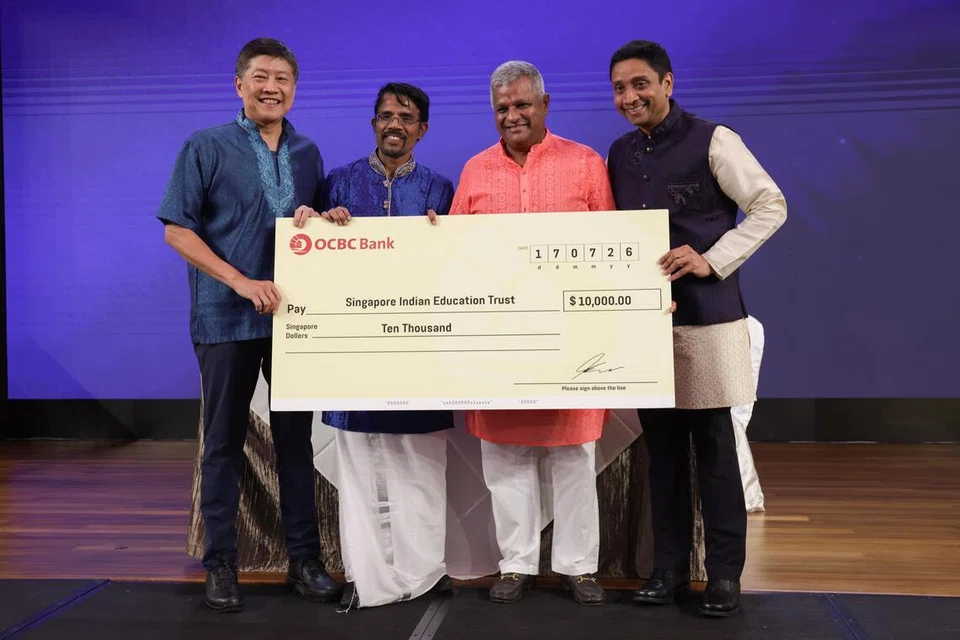
In attendance were Mr Dinesh Vasu Dash, Minister of State for Ministry of Community, Culture and Youth, and Ministry for Manpower, and Chairman of the Tamil Promotion Committee; Mr Vikram Nair, Member of Parliament (MP) and Advisor to STTU; Senior Parliamentary Secretary, Ministry of Education and Ministry of National Development Mr Syed Harun Alhabsyi; Secretary-General of the National Trades Union Congress Mr Ng Chee Meng and MP Mr Hamid Razak.
STTU’s Rich History
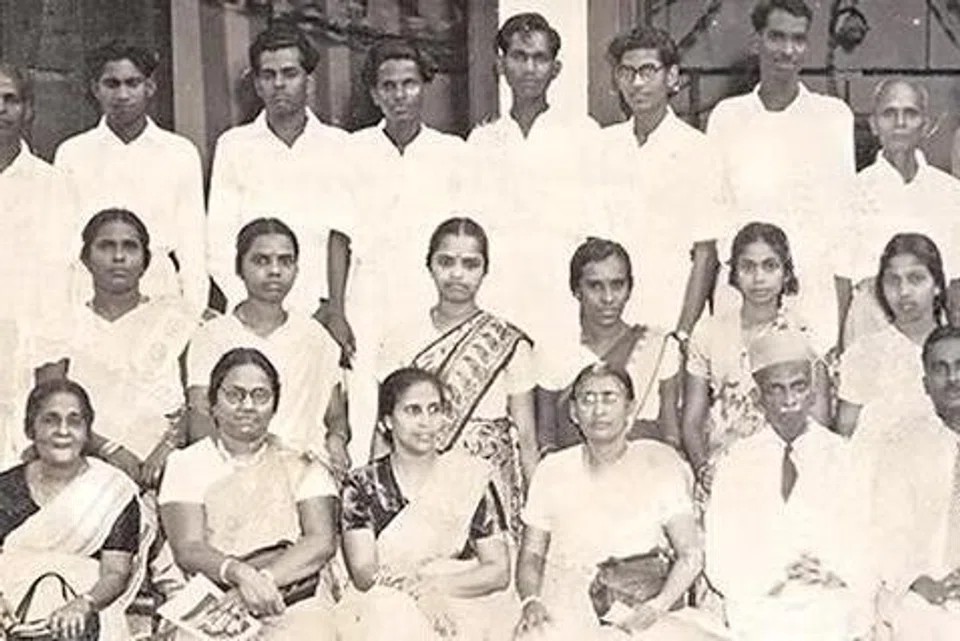
Formed in August 1951 with just sixty members, the union has been safeguarding both the Tamil language and the teachers who uphold it for 75 years.
Operating with a dual focus, prioritising the welfare and professional development of Tamil teachers on one hand, and enhancing Tamil language education through educational policies on the other, the union has achieved much and faced many challenges throughout its long history.
From its first president, Mr M. Jesudasan, to its current president, Mr Danapal, many leaders have worked hand in hand with teachers to achieve the union’s objectives.
Fight for Equal Rights
Prominent among the union’s achievements is its fight for the rights of Tamil teachers.
In 1956, STTU’s voice was recognised when it campaigned to secure salaries for Tamil teachers which were on par with those of teachers working in English-medium schools.
At a time when English teachers who knew Tamil were appointed to positions such as examination officers and superintendents at the MOE, the ministry fulfilled the union’s request in 1976 to appoint Tamil teachers themselves as education officers.
Under the leadership of Mr C. Samikannu, who served as the STTU’s president from 2002 to 2020, a push was made for Tamil teachers to hold key positions within MOE.
Local Tamil Degree Education
After the University of Malaya moved to Malaysia, teachers in Singapore had to travel to India to pursue degree studies in Tamil.
Following persistent recommendations by the union to Tharman Shanmugaratnam, who was then the Minister for Education, a degree program in Tamil was launched at the Singapore University of Social Sciences in 2005.
Following this milestone, the union put forward a request that Tamil teachers, like teachers of other languages, be provided with teacher training integrated with a degree qualification.
Thus, in 2014, a degree-level Tamil teacher training program was introduced at the National Institute of Education, Nanyang Technological University.
When there was an initial shortage of professors, classes were conducted by bringing in part-time professors from India and utilising local teachers who held doctoral degrees.
World Tamil Teachers’ Conference
With a desire to improve Tamil teaching globally, STTU organised the first World Tamil Teachers’ Conference in 1992.
Through this initiative, the union laid the foundation for the “World Tamil Teachers’ Council” and paved the way for its headquarters to be established in Singapore.
“Because Singapore’s teaching and learning methods are world-class, countries around the world always look forward to Singapore’s contributions,” says Mr Samikannu, who has served as the President of the World Tamil Teachers’ Council since its inception.
The conference is held once every two years, and the 16th World Tamil Teachers’ Conference is scheduled to take place in Kuala Lumpur in December this year.
Dedicated Address
Acquiring its own premises strengthened the union’s financial security.
STTU’s first office was opened in 1986 at Serangoon Plaza, where Centrium Square currently stands.
Later, a three-story building valued at S$1.2 million was purchased on Race Course Road and inaugurated in 2010 under the name Tamil Aasiriyar Maaligai (Tamil Teachers’ Mansion).
Since the monthly maintenance expenses proved to be a burden, the building was sold with the approval of members for S$4.2 million, generating a significant profit.
Using those funds, the union purchased its current operational office at Sim Lim Tower, as well as a shophouse opposite the Sri Srinivasa Perumal Temple for income generation.
Recognition for Teachers
Since 2002, the Most Inspiring Tamil Teachers’ Awards have been presented annually in collaboration with MOE and Tamil Murasu.
Additionally, since 2012, STTU has been presenting Lifetime Achievement Awards to honour the contributions of retired teachers.
“The union’s work will continue in the future to ensure that Tamil remains a living language in Singapore,” Mr Danapal affirmed.