Doctor of the heartland
In the real world, Dr Hamid Razak is an orthopaedic surgeon and long-time Jurong resident known for championing social and healthcare-related causes within his community.
In the reel world, the MP for West Coast-Jurong West GRC went viral during the recent General Election for rallying Tamil cinema fans with references to both Thalapathy Vijay and Thala Ajith in his campaign speeches.
From the corridor of Nan Hua High School in Clementi, he opened his Nomination Day speech on April 23 in Tamil with “en nenjil kudirrukum makkalai”, which translates to “the people who live in my heart”, an expression of endearment popularised by actor Vijay, to address his supporters.
“It was never my intention to mimic any artiste,” Dr Hamid said.
He simply wanted to spur the crowd whose mood was dampened by the rain, and uttered those words impromptu. Only later did he realise the virality of that spontaneous moment when it trended on social media.
“I didn’t want people to think I was rallying only Vijay fans so I decided to neutralise it by making some references to Ajith movies in my rally speech,” he explained.
Good Bad Ugly, Citizen, Viswasam and Vidaamuyarchi – titles of Ajith’s movies – were strategically woven into Dr Hamid’s Tamil speech during the PAP’s rally at Jurong West Stadium on April 27.
When asked which actor he is a bigger fan of, he astutely replied: “Sensitive question. I enjoy both actors’ movies.
“And I hope to move on from this,” he added, slightly bashful about the online attention his campaign speeches attracted.
However, the added attention helped to cast a spotlight on causes Dr Hamid, 40, is passionate about such as health literacy, migrant worker healthcare and greater support for “no buffer” households.
Health literacy is the ability to understand and use health information to make informed decisions about one’s well-being. “We have a world-class health system, but some people aren’t using it properly,” he said.
Residents tend to fall on two ends of the spectrum. Some neglect their health and dismiss serious conditions like high blood pressure, while others overuse healthcare services, seeking medical attention for issues that could be self-managed, Dr Hamid observed.
“Its ongoing work where with every engagement we try to educate residents,” he said.
Likewise, migrant workers tend to have poor health literacy due to language barriers. “On a monthly basis, we visit dormitories with migrant workers who volunteer to do the translations.
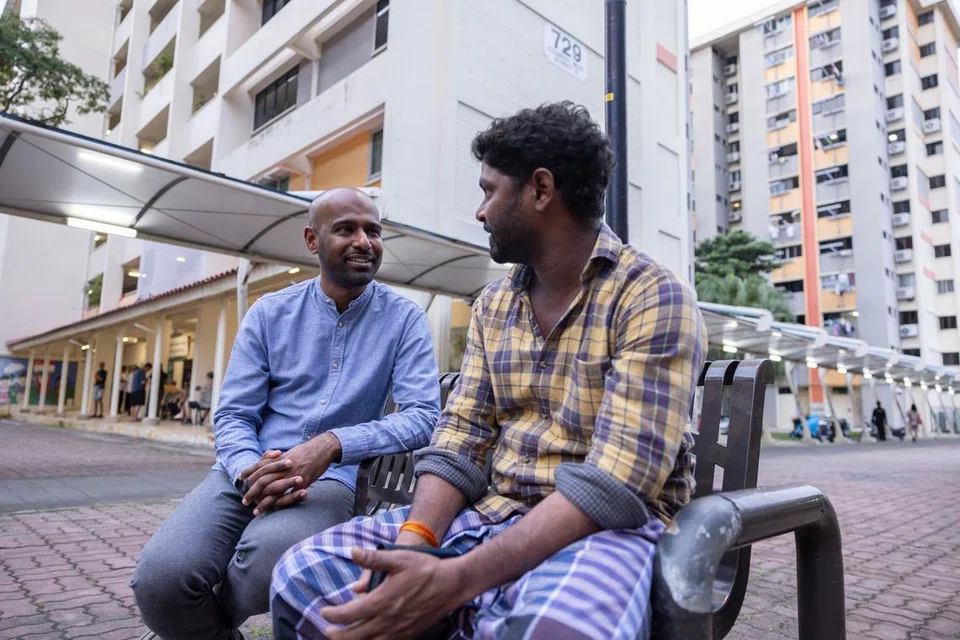
“They speak Bengali, Mandarin, Tamil and Hindi so they talk to us doctors who clarify their doubts and then refer them to the primary care doctors to look after the workers.”
Another overlooked group Dr Hamid focuses on is lower-middle income or “no buffer” households – families who manage to get by financially, but could face serious trouble in the event of a setback like job loss or a critical illness.
Early identification of such households, improving health literacy among elderly family members and encouraging breadwinners to upskill to earn better incomes are some ways to prevent financial crises.
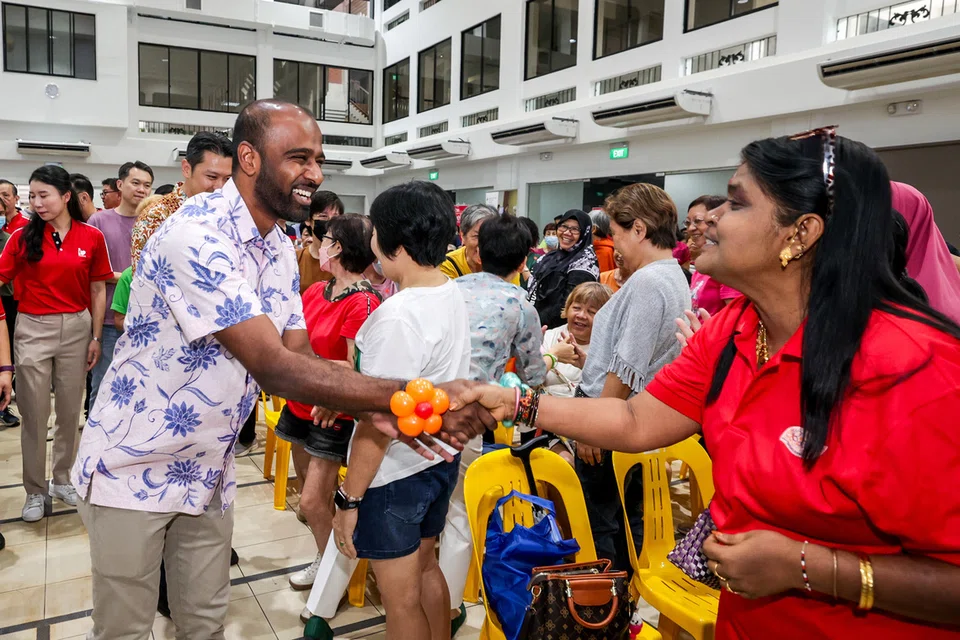
House visits are essential to these efforts and are also how Dr Hamid’s political journey began.
He was asked to join the grassroots movement during a house visit by an MP in 2007, when he was a medical student living with his parents in Taman Jurong.
“I just gave my details and I got a call two weeks later from the volunteers. From then on, I was exposed to the community, volunteerism and more,” he said.
Knocking on doors and talking to residents gives him a good understanding of their underlying problems. “If we are taking a reactive approach, we will just be solving problems and not preventing problems. We have to be proactive.”
His approach to community service is shaped by his medical background, a path he pursued, inspired by a childhood fascination with biology and how the body works.
“There was no family pressure, but my grandfather would always tell me in passing that he would love for someone in his family to be a doctor. That was probably on my subconscious mind,” said Dr Hamid, who works in private practice.
After studying at Anglo-Chinese School (Independent) and Raffles Junior College, he went on to study medicine at the National University of Singapore.
He considered specialising in cardiology but eventually chose orthopaedic surgery for its engineering-based, problem-solving approach and its focus on sports injuries – a natural fit for a recreational footballer and ardent Liverpool fan like Dr Hamid.
“Whenever we have community sports fiestas where football is featured, I will always volunteer to kick around,” he said.
Dr Hamid may have gone viral in the reel world, but in the real world, it’s his proactive, door-to-door commitment in the heartland that truly defines him.

Jurong boy at heart
Dr Hamid has a strong rapport with the residents in his constituency as he has been a Jurong resident for the past 30 years.
He had his fair share of fun as a child, playing football with his neighbourhood friends in the court next to Rulang Primary School in Jurong West, using the rooms in Taman Jurong Community Centre to study and hanging out at Jurong Entertainment Centre, which has since closed down.
“It used to have a Shaw Cinema, a bowling alley and a Long John Silver’s, so my secondary schoolmates and I used to eat at Long John Silver’s after school, then go bowling and occasionally catch a movie there.
“I still keep in touch with my friends and, when we meet up every year, we always eat at Long John Silver’s for old times’ sake. We know each of our orders. Mine is the two piece chicken with extra crumbs, emphasis on the extra crumbs of course,” Dr Hamid quipped.
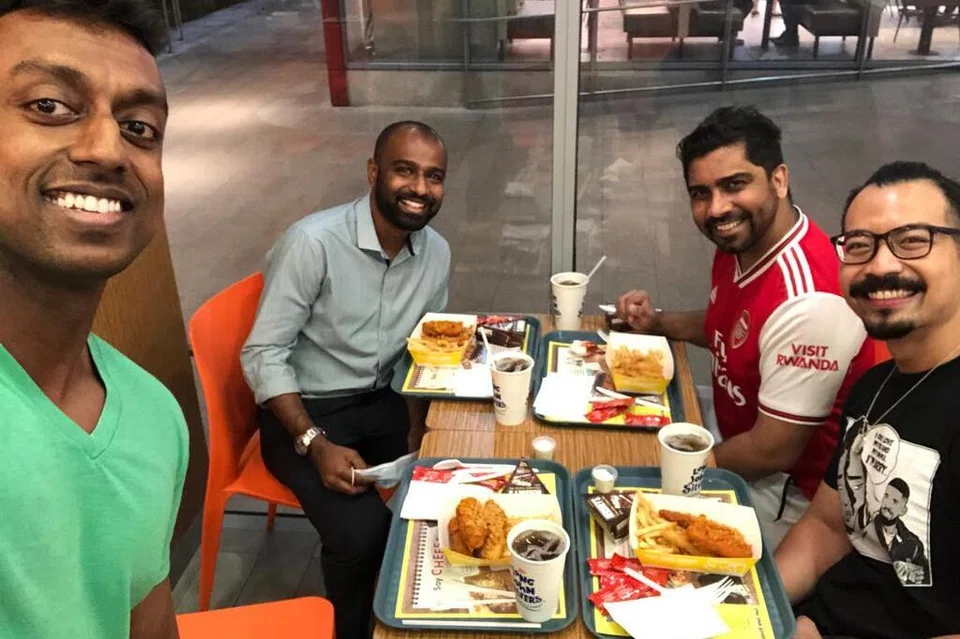
“I know I’m supposed to be a doctor and supposed to be promoting good health, but it’s only once in a while you know?” he said.
Dr Hamid also shares a close bond with his family. His wife is a teacher and they have three children. His retired father spent over 40 years with the Immigration Checkpoints Authority and his mother is an admin officer at a preschool. He has two younger sisters.
Busy as he is, he tries to meet for a family meal at least once a week at his parents’ house in Taman Jurong – the neighbourhood he calls home.