
When their children were first diagnosed with Down syndrome, both the Shet and Pillay families were overwhelmed by fear, uncertainty and questions about the future.
Today, years later, those fears have given way to something gentler and stronger: confidence, acceptance and pride.
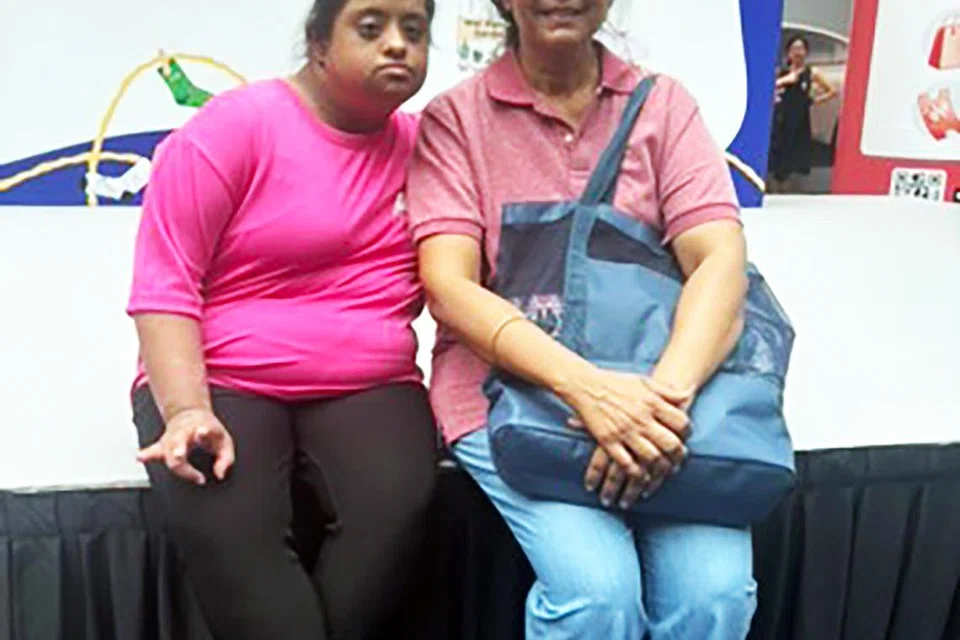
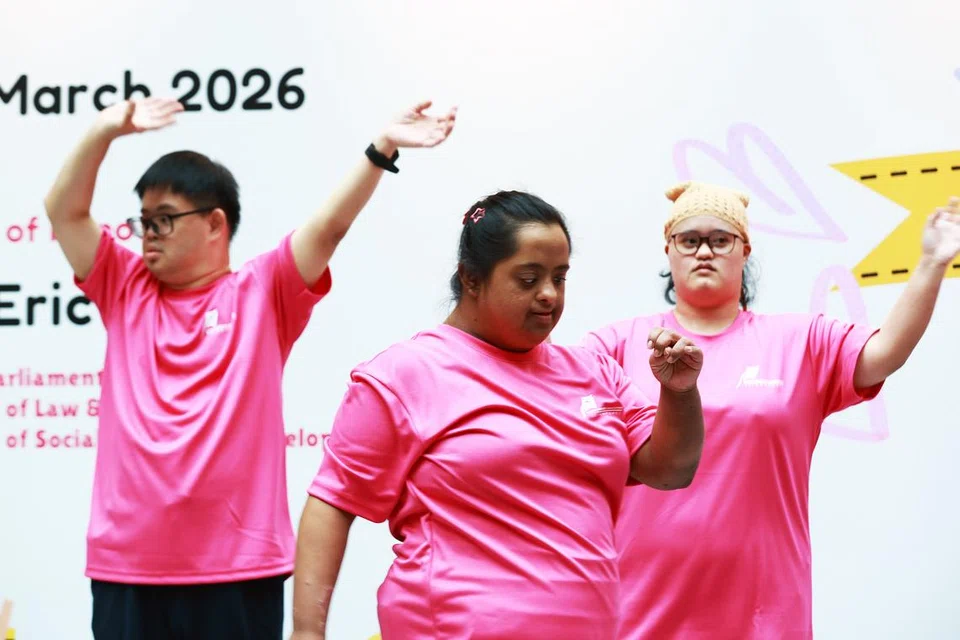
As World Down Syndrome Day was marked on March 21, the journeys of 10-year-old Thasmay Shet and 37-year-old Danya Pillai offered a moving reminder that with early support, patient guidance and the nurturing environment provided by the Down Syndrome Association (DSA), children and adults with Down syndrome can grow in ways that are deeply affirming – not as lives defined by limitation, but as lives filled with character, routine, friendship, independence and joy.
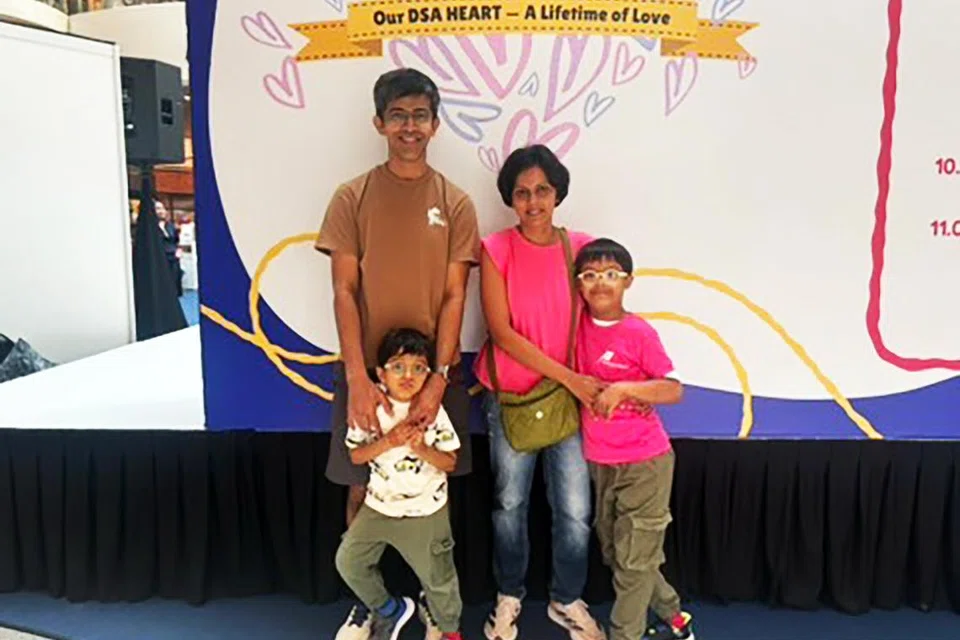
For Thasmay’s parents, Gautham Shet, 44, and Namrata Shet, 41, the early days were emotionally difficult. Their son, born in March 2016 in Karnataka, India, was diagnosed with Down Syndrome soon after birth.
“We were a bit shocked,” said Mr Shet, who works in cybersecurity at a telecom company. “We started thinking how we would manage, what his future would be, what we had to do next.”
Mrs Shet, a homemaker, recalled that the first challenge was simply accepting the diagnosis.
“It was really challenging,” she said. “For the first month, it was like, why is my kid like that? First, we had to accept that. That is the major thing.”
The couple, originally from coastal Karnataka and now living in Singapore with Thasmay and their younger son Thashvin, 5, began with basic therapy in India, including physiotherapy and occupational therapy. But they said guidance then was limited and fragmented.
When they moved to Singapore in 2023, they reached out to DSA after getting a contact through a Down Syndrome association in India. That proved to be a turning point.
At DSA, Thasmay joined enrichment activities including speech and drama, reading-based programmes and holiday outings. More than the activities themselves, his parents said, the association gave them direction and community.
“Most of the time parents like us are looking for guidance,” said Mr Shet. “What to do next, where he should be for his level, at his age. That is where DSA is very helpful.”
The changes in Thasmay have been heartening. He attends Genesis School in West Coast and loves going there. He has become more independent in daily tasks such as bathing, brushing his teeth, using the toilet and buttoning his shirt. He is also growing in confidence.
“He doesn’t mind being on stage now,” said Mrs Shet with a smile.
His parents say that in many ways, he has grown just like any other child – with likes, dislikes, routines, school excitement and a love for dancing. He is enthusiastic, sociable and increasingly aware of the world around him. He can do simple mathematics and is making steady progress academically.
What touches them most is not a dramatic breakthrough, but the gradual building of everyday independence.
“In general, just take it one day at a time,” said Mr Shet, offering advice to other parents. “When you start looking too much into the future, you imagine so many things. Having an association really helps you and guides you.”
If Thasmay’s story is about early growth, Danya Pillai’s story is about the quiet dignity of adulthood.
Danya, 37, works two days a week at Holiday Inn at Farrer Park, helping in the kitchen and clearing tables. On other days, the Singaporean attends DSA’s Joyful Living programme and activities by MINDS.
She travels on her own by MRT, changing two trains between Bukit Panjang and Bishan or Little India, something her family once could hardly have imagined.
Her mother, Lathika Pillay, 63, said that Danya has been with DSA since she was about four.
For years, the family navigated different support systems, including special education and other programmes. But Mrs Pillai said DSA remained important because of its specialised focus on Down syndrome.
“I felt that DSA understands her better because they are more specialised in Down Syndrome children,” she said.
That understanding has helped Danya blossom. She now has opinions of her own, preferences, confidence and social ease.
“When she was younger, she didn’t have opinions of her own,” said Mrs Pillai. “But now she wants to choose her own things. She has likes and dislikes. She is becoming a little bit more like us.”
Danya loves dancing and singing, and her favourite song is Alicia Keys’ Girl on Fire. She keeps herself active with Zumba and treadmill exercise at home, in part because adults with Down Syndrome can be more vulnerable to weight and cholesterol issues. Her parents have made sure she has both structure and purpose.
“The primary aim is that we do not want Danya to be at home all the time,” said Mrs Pillay. “She needs to be involved, and I think she likes it as well.”
At DSA’s Joyful Living programme, Danya takes part in baking, art, craft, daily living activities, money management and community-based tasks such as buying lunch. These experiences have strengthened her confidence and helped her navigate life with greater ease.
Mr Immanuel Mark, a training officer at DSA who works on the adult side of the association, said Danya has become noticeably more comfortable and socially engaged.
“She is able to vocalise her feelings and adhere to instructions,” he said. “When I conduct my lessons with her, there is two-way communication. She can tell me how she is feeling, she understands the subject, and she does the activities quite well.”
Over the past few months, he said, she has become more outgoing.
“Initially, she was a very quiet person, but now she will interact, socialise and even help the other learners who are a bit slower,” he said. “She will try to help them by getting a chair for them or finding them a place to sit.”
That instinct to help others is one of the clearest signs of maturity – and one of the strongest arguments for viewing people with Down Syndrome not through their diagnosis, but through their humanity.
Ms Rema R, a special education teacher at DSA, said the association’s work with school-age children is designed not only to support academics, but also to help them grow alongside their peers in the real world.
Her support includes classroom help, one-to-one English and mathematics support, and guidance for parents on strategies they can use at home.
“It’s not so much only about academics,” she said. “It is to give them an opportunity to grow together with mainstream people and at the same time address what their needs are.”
Early intervention, she added, is especially important, and DSA’s children’s development services place great emphasis on those foundational years.
At a broader level, DSA chairperson Jonathan Seow said the association’s mission is to journey with families through every stage of life.
“What we really try to do is journey with families across the entire spectrum of the life of the child with Down Syndrome,” he said. “From the early stage, we advocate for young children, infants and toddlers, and provide services to help them navigate early intervention.”
As children grow older, he said, DSA supports school integration, whether in special education or mainstream settings. Then, as they move into their teenage and adult years, the association continues to provide enrichment and development programmes.
DSA now has about 700 members and operates two centres, with programmes tailored across age groups.
Mr Seow said a key part of DSA’s role is helping new parents through that first difficult period after diagnosis.
“Understandably, they go through a period of adjustment,” he said. “That’s where DSA really wants to step in, educate them about what Down Syndrome is, what they can look forward to, and equally, what some of the challenges may be.”
In 2026, as DSA marks 30 years, its work can be seen not just in programmes and services, but in the lives of people like Thasmay and Danya.
One is a cheerful schoolboy who loves to dance, go to school and do things on his own. The other is an adult woman who travels independently, works, exercises, sings and helps others in class.
In their own ways, both are growing much like any other person – learning, adapting, making friends, discovering confidence and finding their place in the world.
And for their parents, that is what matters most. Not perfection. Not comparison. But progress, dignity and the chance to live full, meaningful lives.