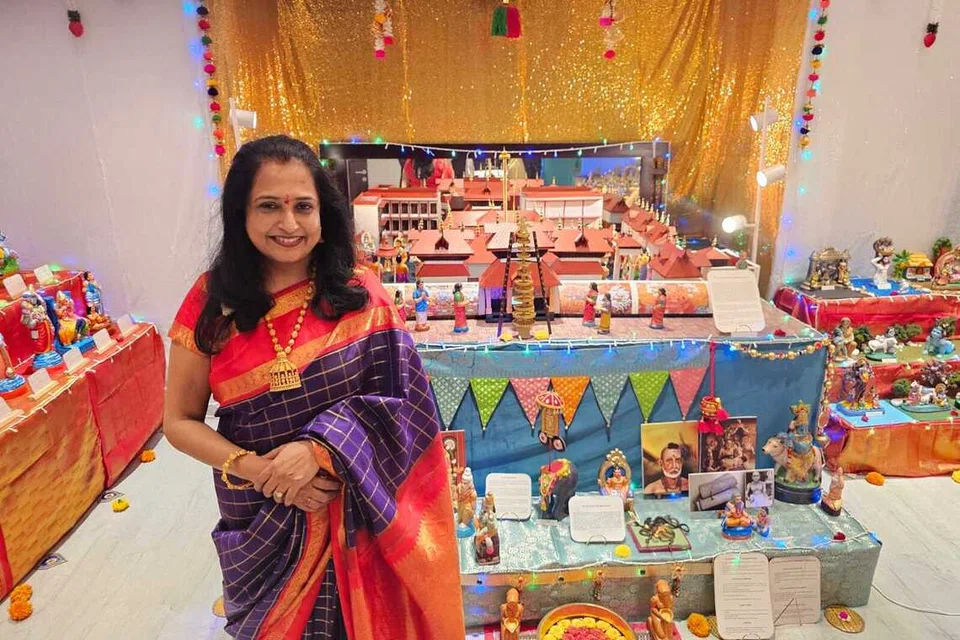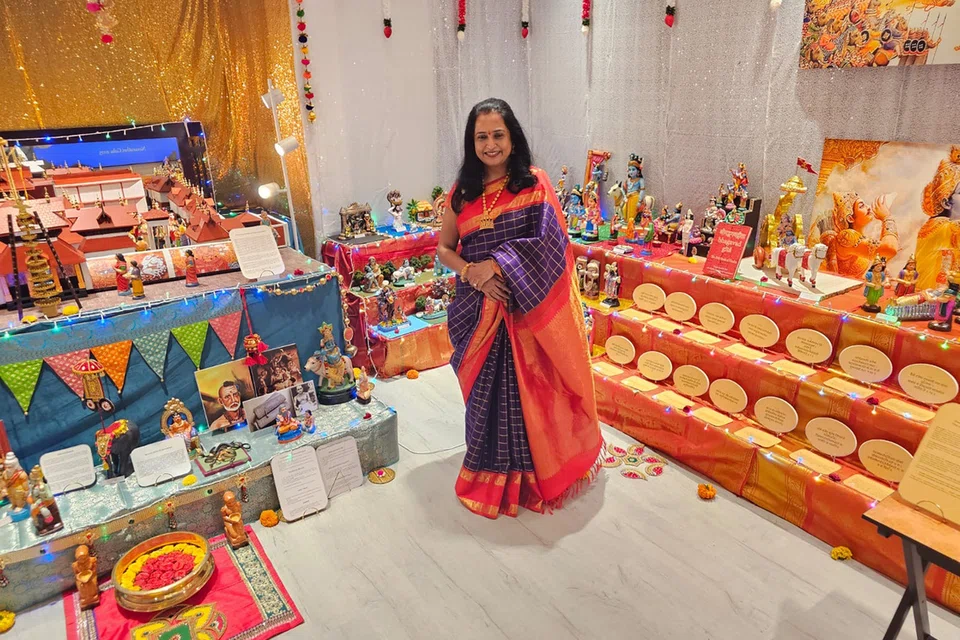
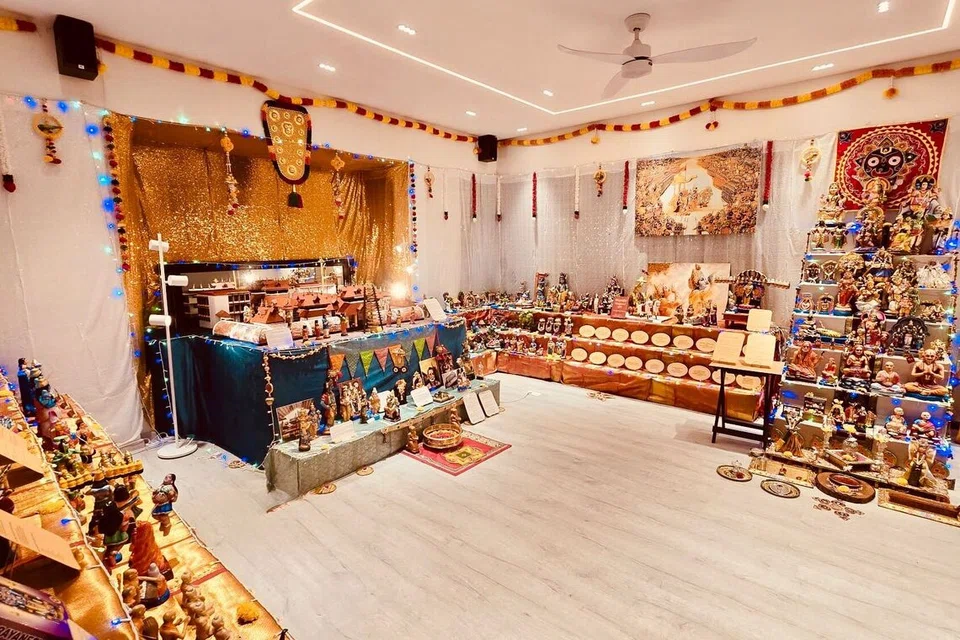
Every year, Mrs Sujatha Krishnan transforms an entire floor of her three-storey home in Jalan Puteri Jula Juli into a magnificent tribute to tradition – one of Singapore’s most elaborate Golu displays.
For nearly two decades, her Navaratri Golu has drawn hundreds of visitors who come not just to admire the intricate artistry but to immerse themselves in stories of faith and philosophy.
Golu, a hallmark of South Indian Navaratri celebrations, features tiered displays of dolls and figurines that narrate mythological tales, folk traditions, and scenes from daily life.
Beyond its beauty, it symbolises the triumph of good over evil and preserves centuries-old cultural heritage.
This year, Mrs Sujatha’s theme – “From Guruvayur to Gita: The Path of Bhakti and Gnana” – explores the journey of devotion and knowledge towards the divine.
“The idea is to show that one can walk the path of devotion, coupled with understanding, to reach the ultimate truth,” she said.
At the entrance, visitors are greeted by a resplendent idol of Lord Guruvayurappan seated on a peacock, setting the tone for a deeply spiritual experience.
A handcrafted model of the Guruvayur Temple, made from recycled foam boards, gives guests a bird’s-eye view of the famed Kerala shrine – complete with the Dhwajasthambam and mural-lined walls.
Inside, Mrs Sujatha has recreated scenes from the Narayaneeyam, illustrating stories of creation, the Dasha Avataras, and the life and leelas of Krishna.
A highlight this year is the Gitopadesam tableau – a handcrafted diorama depicting Lord Krishna’s cosmic Vishwaroopam on the battlefield of Kurukshetra, with thermocol horses and a chariot fashioned from foam boards.
Alongside these are seven traditional Golu steps adorned with dolls of Shakti and Vishnu, each placed strategically to complement the theme.
Mrs Sujatha begins conceptualising her Golu six months in advance – researching stories, crafting temple models, and painting Madhubani-style Krishna leelas.
“Many of the displays are handmade,” she shared. “I reuse materials from previous years and only buy new dolls when needed. The goal is not extravagance but meaning.”
What began as a way to teach her children Hindu traditions has evolved into a community celebration. “I realised I was learning just as much as they were. My friends and visitors often tell me they discover new stories and ideas through my displays,” Mrs Sujatha reflected.
Over 200 visitors attended this year’s Golu, guided through the stories by a docent from the Indian Heritage Centre.
“Sujatha’s Golu beautifully chronicled the life of Krishna and Melpathur Narayana Bhattathiri,” said Mrs Ranjani Rangan, a community leader and executive director of two Fintech companies. “Her handmade Guruvayur temple was extraordinary – she worked late nights to perfect every detail. The artistry and devotion are inspiring.”
Beyond her devotion, Mrs Sujatha’s Golu is also an artistic marvel. Each year’s theme is distinct – past displays have explored Hindu festivals, sacred rivers, Acharyas of Vedanta, and even the 14 lokas of Hindu cosmology.
Her dedication has earned her recognition in local and international Golu competitions.
Mrs Geetha Padmanabhan, a chartered accountant who has seen several golu presentations over the years, said Mrs Sujatha’s golu “is consistently awe inspiring”.
“Her golu is typically done on a grand scale and in such detail,” said Mrs Geetha. “She chooses a theme and goes all out to showcase Indian culture and Hindu scriptures.”
A former HR professional, Mrs Sujatha left the corporate world to care for her family and channel her creativity into cultural service. She now volunteers with Mountbatten CC, contributing to community festivals.
For Mrs Sujatha, the Golu is not just decoration – it’s devotion in action. “Through my humble efforts, I hope to preserve these stories for the next generation,” she says. “Art, knowledge, and tradition – that’s what my Golu stands for.”