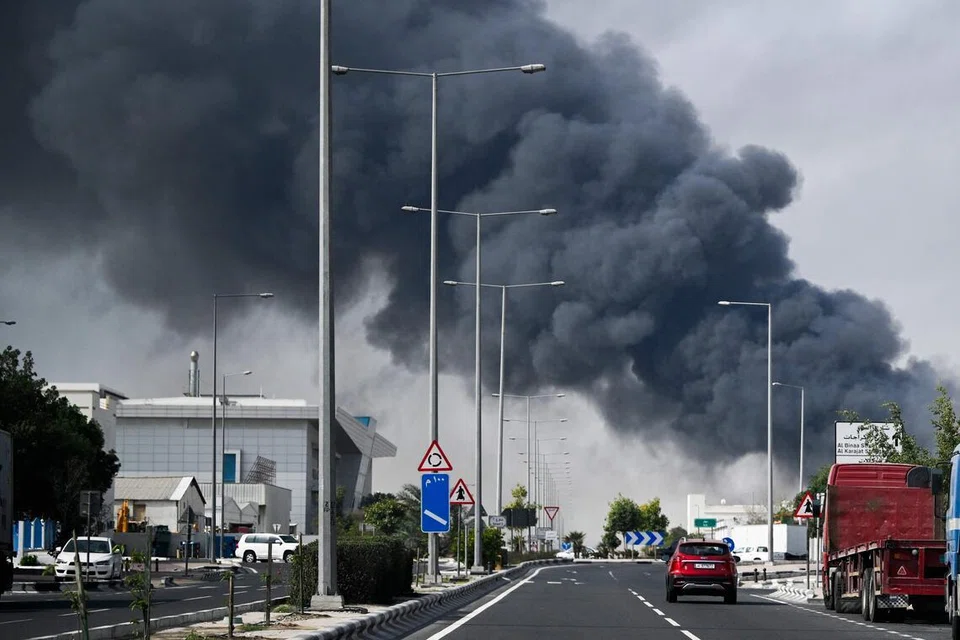

In recent days, families have gathered at Singapore’s Changi Airport to welcome loved ones returning from the Middle East, some in tears after days of uncertainty. But while scenes of relief at the airport have dominated headlines, another group of expatriates in the Gulf have made a different decision – to stay there.
The region is home to a large community of professionals, including Singaporeans and Indian nationals who moved there for work and have built lives rooted in the Middle East. For many of them, leaving was not the obvious choice.
For Mr Akaash Ganesh, 34, a Singaporean who moved to Qatar in January this year, the first news of the war came while he was asleep.
“I was at home in Qatar and actually asleep when the conflict first broke out,” he said. A message from a colleague woke him, but it took a few moments before the reality of what he was reading sank in.
Having relocated only in January, he initially struggled to gauge how serious the situation might be locally. He spent the first hours reading official updates and speaking with friends who had lived in Qatar longer. Their reassurance and the relative calm on the ground gradually eased his fears.
Elsewhere in the Gulf, the crisis unfolded more dramatically for Mr Osho Adilshah, 28, an Indian national who lives in Abu Dhabi.
Mr Adilshah was travelling to a meeting when a colleague called to say the UAE was under attack. Within minutes, residents received emergency warning messages and siren alerts advising them to seek shelter.
“It was the first time I had ever received such a warning, a missile alert advising everyone to move indoors,” he said.
Explosions soon followed in the sky above the city. Meetings were cancelled as offices and schools shut down, and people rushed home to their families. Roads quickly became gridlocked as residents tried to return home.
Mr Adilshah noted some residents attempted to book flights immediately, while others even tried travelling by road to neighbouring countries in hopes of departing from there. For many people, however, leaving was not feasible.
Over time, both men said confidence in local authorities and defence systems began to grow.
In the UAE, missile interception systems neutralised most incoming threats. While residents remained wary of falling debris after interceptions, emergency alerts and safety procedures gradually became part of everyday life.
When sirens sounded, office workers moved to designated assembly points until authorities confirmed it was safe to resume activities.
In Qatar, Mr Akaash said the government’s response helped reassure residents. “Authorities were transparent with updates, which helped maintain my confidence,” he noted.
Despite the regional tensions, both men said daily life has continued with heightened alert. In Abu Dhabi, offices and schools closed briefly during the first phase of the attacks, and many residents rushed to stock up on groceries, but activities gradually resumed once the situation stabilised.
Even now, Mr Adilshah said alerts occasionally interrupt the workday. “I have already received three siren alerts today,” he said at the time of the interview with tabla!. “But people are still continuing their daily lives as normally as possible.”
Mr Akaash reflected that life in Qatar has also remained relatively stable. “In countries like Qatar that are not directly involved in the conflict, daily life can still feel quite normal. I feel extremely privileged and lucky to be able to say this - at this very moment, there are others in the region directly impacted,” he added.
The conflict has also affected their work. Mr Akaash, who works in the offshore energy sector, said disruptions across the region have affected the oil and gas industry and altered his daily responsibilities.
However, he added that the inconvenience feels minor compared with the impact of the war on people directly involved.
In Abu Dhabi, Mr Adilshah noted work schedules have also shifted. With the crisis coinciding with Ramadan, already shortened working hours have been reduced further.
For both men, the experience has reshaped how they think about safety and preparedness, highlighting the importance of clear communication, reliable institutions, and staying informed during times of crisis.