
Like many immigrant groups in Singapore during the early 20th century, the North Indian Hindu diaspora sought a place of worship that they could call their own.
They hailed from provinces across various North Indian states, such as Uttar Pradesh, Bihar, Punjab, Bengal, Sindh, Marwar, Surat, and Gujarat, in need of a spiritual space that offered a tangible connection to home.
Their prayers were answered on April 24, 1969, with the establishment of the Siddh Peeth Shree Lakshminarayan Temple (SLNT) at 5 Chander Road.
The temple’s name is a combination of the two main deities: Lakshmi and Narayan (Vishnu). Lakshmi is the goddess of wealth and the consort of Vishnu, the deity responsible for preserving and protecting the universe.
According to the temple’s website, the foundation stone for SLNT was laid in 1960. It took around nine years, with the support of and donations from almost 10,000 North Indian Hindus, to complete construction on the temple.
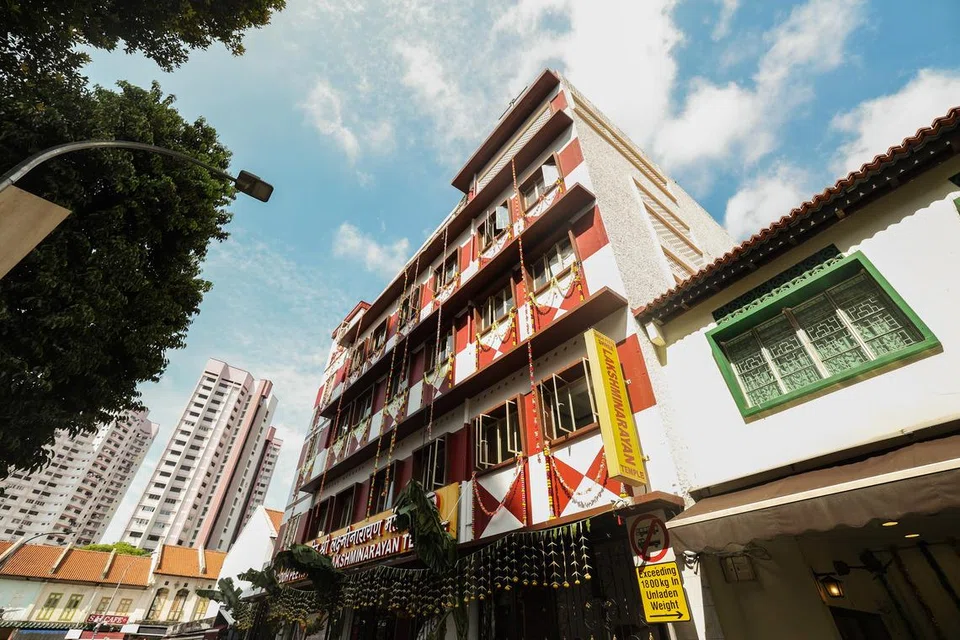
Located in the heart of Little India, the five-storey SLNT building is hard to miss thanks to its distinctive red-and-white triangular patterns on its facade.
The three iconic yellow spires (shikharas) atop the temple symbolically represent the Hindu Sanatan Dharma and are positioned in direct alignment with the deities housed in the prayer hall on the first floor.
The temple was eventually gazetted as a heritage site for conservation by the Urban Redevelopment Authority in July 1989.
The conservation status is a testament to SLNT’s contributions to Little India’s rich historical and cultural heritage. It also recognises the fundamental role the temple plays in bringing together an otherwise disparate North Indian Hindu community.
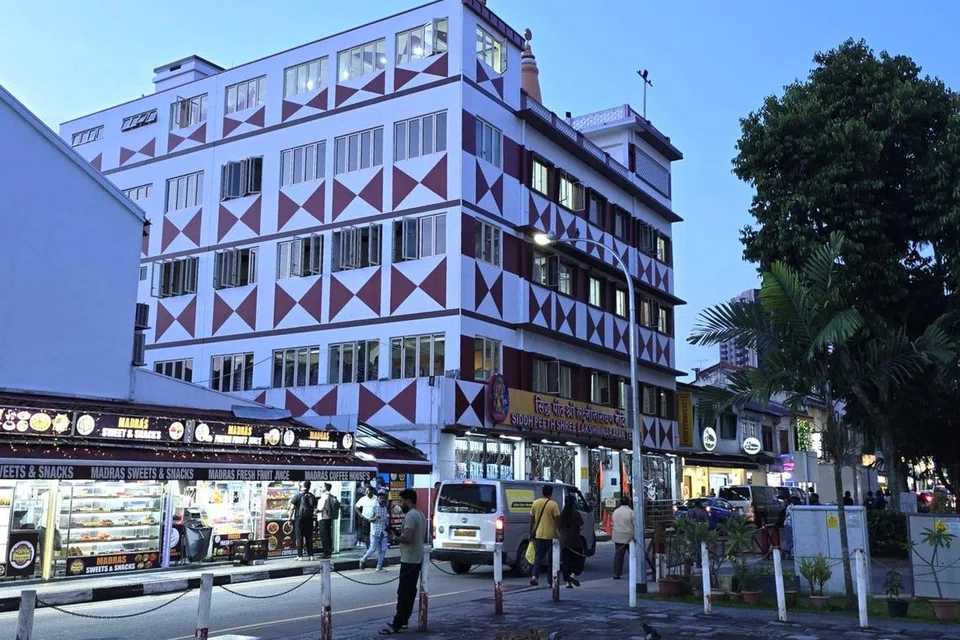
The temple’s accessible location also makes it a central node for interaction between expats and locals alike to discuss matters related to Hindu spirituality, unity, and harmony.
Prior to SLNT’s establishment, all community festivals were organised by the North Indian Hindu Association and held at various venues.
Hence, the temple makes a concerted effort to observe all major Hindu festivals practised by different Indian cultural groups, including Holi (Festival of Colours), Lohri (Winter Solstice), Raksha Bandhan (Sibling Day), and Janmasthmi (Krishna’s Birthday).
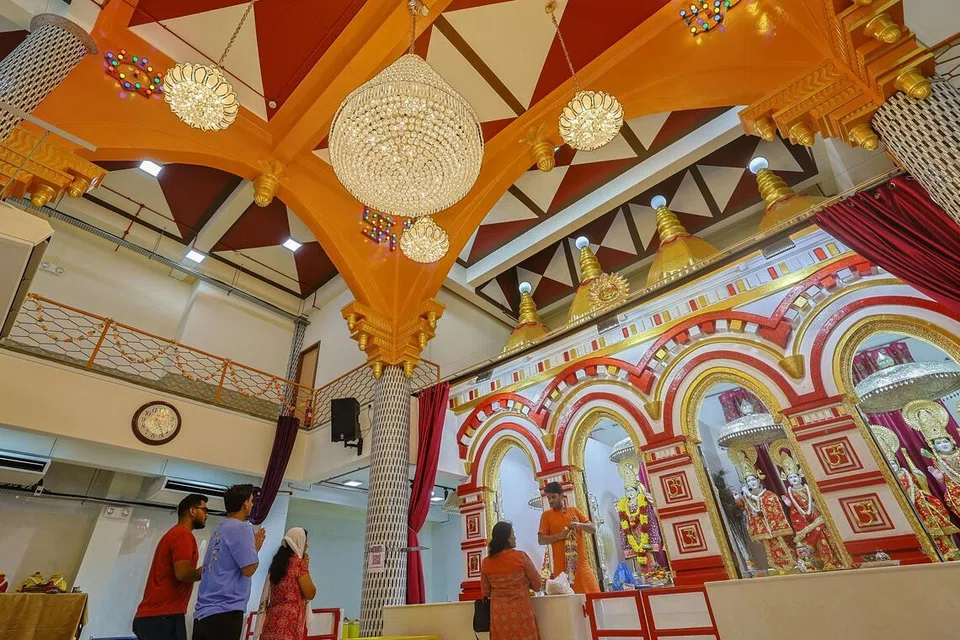
The temple’s committee has incorporated other secular festivals into its events calendar, such as Youth Day, Mother’s Day, Father’s Day, Children’s Day, and Racial Harmony Day, to keep pace with the demands of the younger generation of devotees.
SLNT has also more actively engaged in activities organised by the Hindu Endowments Board and Inter-Racial and Religious Confidence Circles in recent times.
These interactions are central to the temple’s commitment to fostering harmony within Singapore’s multicultural and multi-religious society.
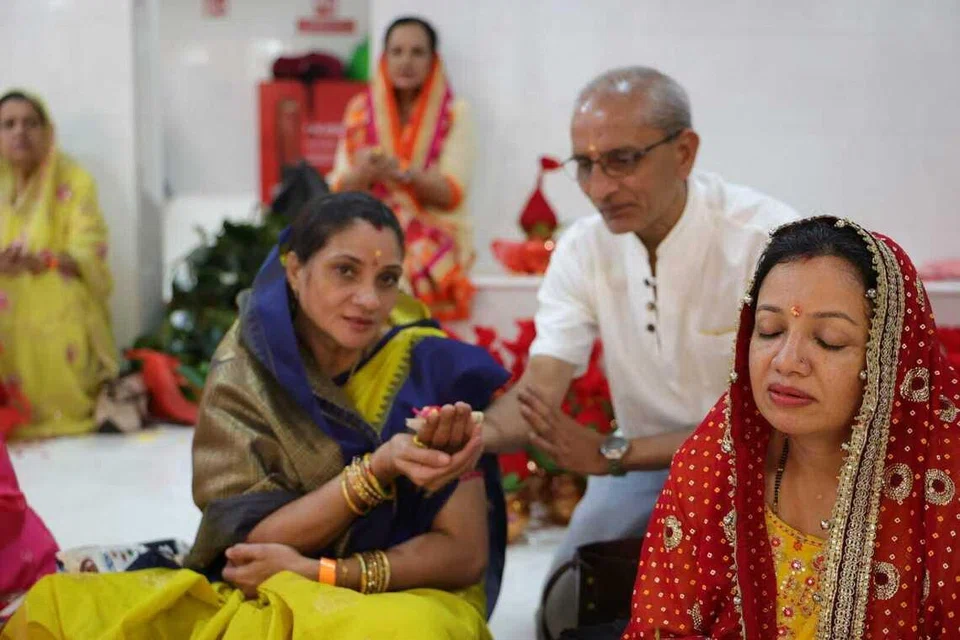
As the North Indian population in Singapore has increased over the years, so too has the number and diversity of devotees at SLNT. The larger congregation means space is a major constraint for the temple.
However, SLNT has to maintain the building’s general facade due to its conservation status, which limits the types of upgrading and development works the temple can undertake to meet the growing needs of the congregation.
On Feb 25, SLNT performed its first consecration ceremony after 56 years of establishment.
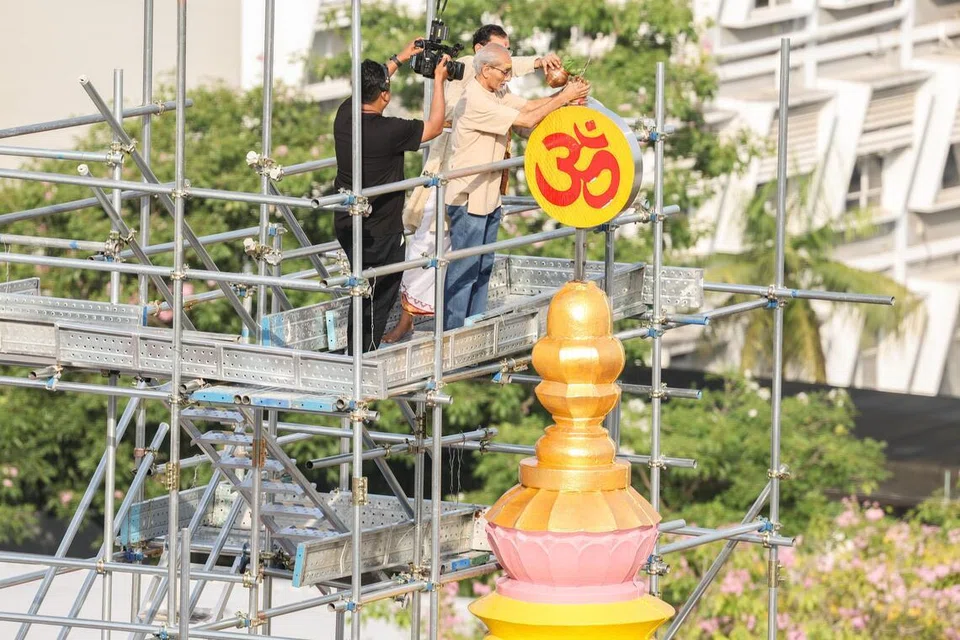
The event also commemorates the completion of recent renovations to expand occupational capacity, and restoration work by the temple, which cost close to S$3 million, courtesy of sizable donations from devotees and community members.
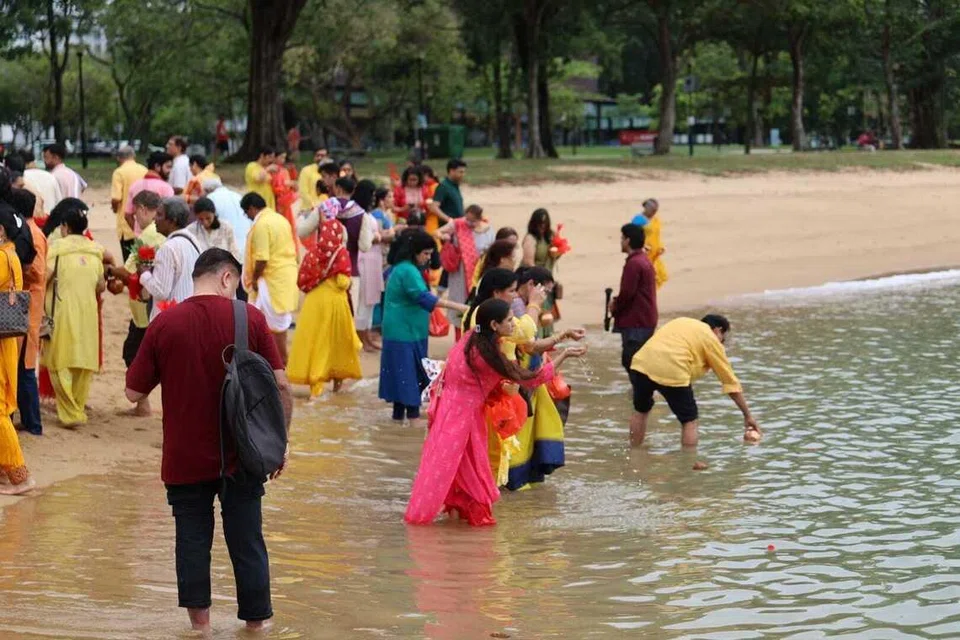
On Feb 20, several SLNT devotees collected 81 vessels’ worth of seawater from East Coast beach. The seawater was then purified with holy water from the sacred Ganges River in India and through prayers performed by seven esteemed priests from Varanasi.
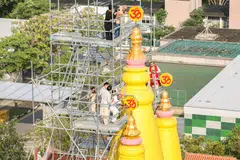
The collected holy water was then poured over the three yellow spires during the consecration ceremony to purify, spiritualise, and energise the temple, noted SLNT president Prof Balram Chowbay.