By day, he worked on India’s space programme. By evening, he built a cultural movement that would eventually take Indian music, dance, theatre and cinema across the world.
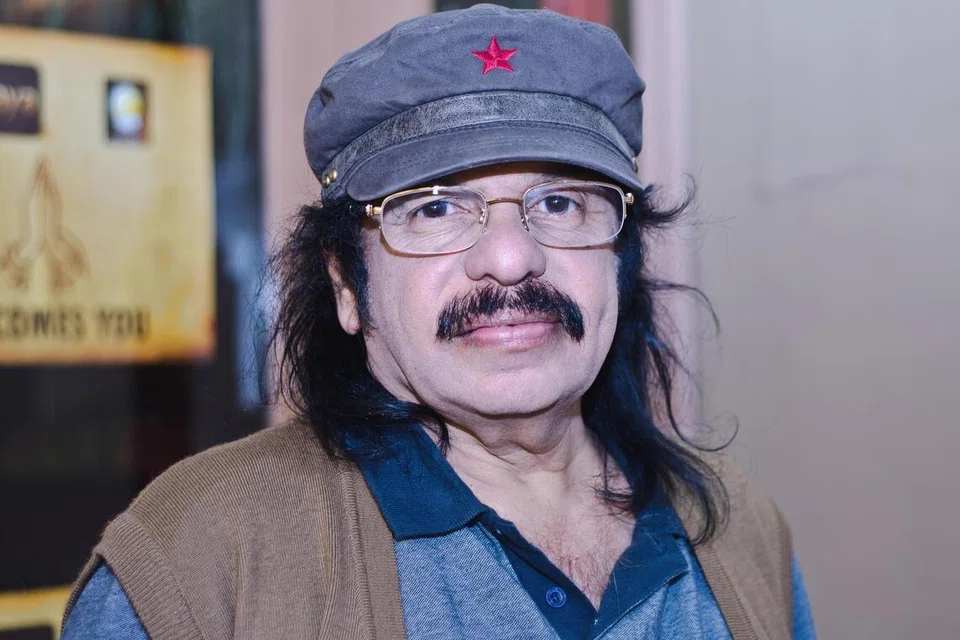
Mr Soorya Krishnamoorthy, who died in Thiruvananthapuram on Sept 23 following complications from pneumonia and a liver-related illness, belonged to that rare breed for whom science and art were not opposing worlds.
Born Nataraja Krishnamoorthy on April 11, 1951, he graduated in electrical engineering from TKM College of Engineering in 1972 and joined the Indian Space Research Organisation (ISRO).
Over the next 27 years, he worked as a scientist-engineer at the Vikram Sarabhai Space Centre on the SLV-3 rocket programme, including under Mr A.P.J. Abdul Kalam, who later became India’s President.
Their relationship extended beyond rockets.
Mr Kalam loved Carnatic music and played the veena, and Mr Krishnamoorthy would sometimes take him on his scooter to concerts in Thiruvananthapuram.
Mr Krishnamoorthy also recalled learning from Mr Kalam the dignity of labour. Mr Kalam would personally carry files rather than routinely ask junior staff to do it – a lesson in humility and equality that Mr Krishnamoorthy carried into his cultural life.
While working at ISRO, he founded the Soorya Stage and Film Society in 1977.
What began in Thiruvananthapuram grew into an extraordinary cultural movement. Its annual Soorya Festival eventually stretched beyond 100 days, bringing together leading names and emerging talent in classical music, dance, theatre and cinema.
The movement eventually developed chapters across 38 countries, with Singapore becoming one of its important international centres.
The Soorya Singapore chapter was established in 2005 through Mr Krishnamoorthy’s collaboration with arts organiser and community volunteer M. Krishnakumar and his wife Chitra, who shared his passion for the arts.
Created as a voluntary, not-for-profit organisation, the Singapore chapter embraced his “Art with a Heart” philosophy.
It brought leading Indian classical dancers, musicians and theatre practitioners to Singapore, while also providing a platform for home-grown performers. Its activities extended beyond performances to cross-cultural programmes and charity initiatives supporting causes including hospitals, people with disabilities and migrant workers.
Mr Krishnamoorthy visited Singapore regularly to oversee productions and engage with the arts community.
Despite being the driving force behind a global cultural movement, he preferred to remain in the background during these visits, allowing the artistes and their work to occupy centre stage – an approach that reflected the humility for which he was remembered.
Back in Kerala, Mr Krishnamoorthy also changed how cultural events were organised. He insisted that programmes begin punctually and brought the precision of a scientist to stage production, pioneering light-and-sound presentations in Malayalam theatre.
Yet, perhaps his greatest achievement was making art accessible.
He resisted treating culture purely as a commercial commodity. Established performers and unknown artistes could share the same platform, with talent and commitment taking precedence over celebrity.
That philosophy reached its most tangible expression with Ganesham.
In 2018, disturbed by the difficulty young artistes faced in finding affordable performance spaces, Mr Krishnamoorthy transformed part of his family property in Thycaud, Thiruvananthapuram, into a 400-seat black box theatre.
Equipped with professional lighting and sound, an art gallery, accommodation for artistes and film projection facilities, Ganesham was offered to artistes free of charge.
Even its acoustics reflected the engineer in him: The venue was designed to minimise sound escaping into the residential neighbourhood.
The complex also housed his remarkable collection of more than 2,000 Ganesha idols gathered from around the world.
Mr Krishnamoorthy was a playwright and author too. Among his best-known works was the courtroom drama Melvilasom, later adapted into a Malayalam film. He served as chairman of the Kerala Sangeetha Nataka Akademi and held a leadership role at the Kerala State Film Development Corporation.
His honours included the National Award for Stage Craft and Direction in 1996 and the Kerala Prabha Award in 2023.
He took voluntary retirement from ISRO in 1999, finally surrendering his working life completely to the arts.
Perhaps the most fitting tribute came after his death.
The 49th Soorya Festival began as scheduled on Oct 1, barely days after the passing of the man who created it, following arrangements he had already put in place.
The scientist was gone. The playwright was gone. The cultural organiser whose vision had travelled from Thiruvananthapuram to Singapore and dozens of countries was gone.
But the stage lights came on exactly on time.
For Mr Soorya Krishnamoorthy, there could hardly have been a more appropriate final curtain.