
Atomionic’s sensors work through quantum science, which is the science of how matter and energy work at the smallest of scales.
When people hear the word “quantum”, they may think of cinematic multiverses, and for the truly unacquainted, they may not think of anything at all. But quantum science is a part of our daily lives; used for smartphones, solar panels, and X-rays.
At Atomionics, they use quantum sensing to provide an X-ray of the Earth, though through a different process. The atoms are cooled down till they are 129 million times colder than ice cream, sensitising them to the point where they feel the gravitational pull of the moon.
“One of the key phenomena we use to understand sensing is the Raman Effect,” said the co-founder and chief technology officer, Dr Ravi Kumar.
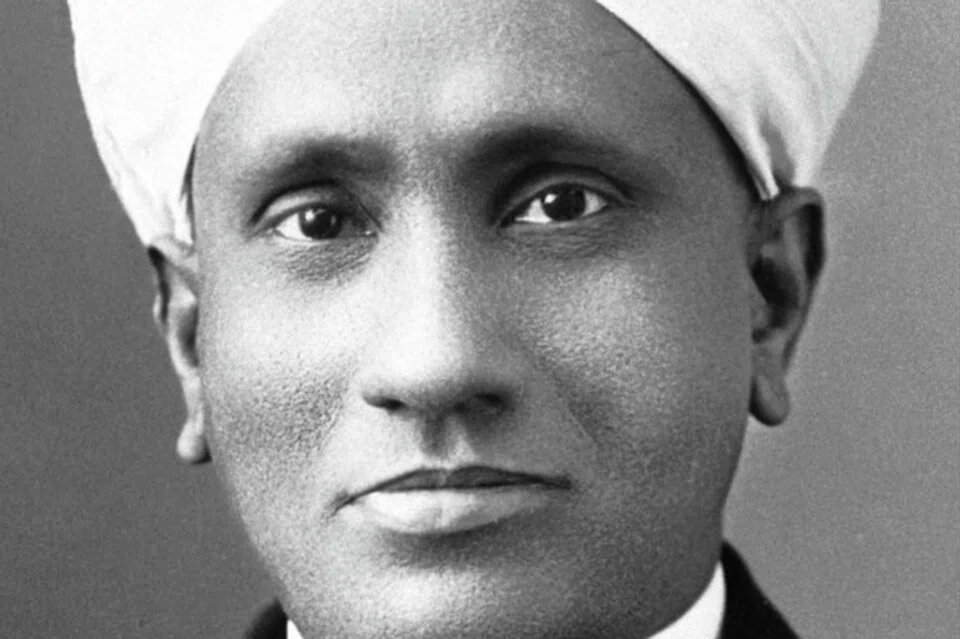
The Raman Effect was discovered by Indian scientist C.V. Raman, earning him the Nobel Prize in Physics in 1930. India’s National Science Day is celebrated on Feb 28, as that was the day he made the discovery.
Light is known to either be reflected, absorbed or scattered when it hits molecules. The Raman Effect is the phenomenon of light changing its energy after scattering because of interactions with the molecules it hits. This happens only to one in a hundred million light energy particles, or photons, that hit the molecule.
For example, when you shine a light through a glass of water, most of the light will scatter out of the glass with the same energy. There will be a small amount of light that has a slightly different wavelength or colour, as it has either taken or lost energy through interacting with the water and glass molecules.
This is applied in Atomionics’ gravimeter GRAVIO by changing the energy states of the atoms. After the atoms have been cooled down, the lasers, through their light, split the atoms into two different energy states, recombine them, and then split them again until this process forms an interference pattern, which is what gives the gravity reading. These readings are then inferred and visualised into a three-dimensional map of the subsurface scanned by the company’s AI Geologist ORE-O.