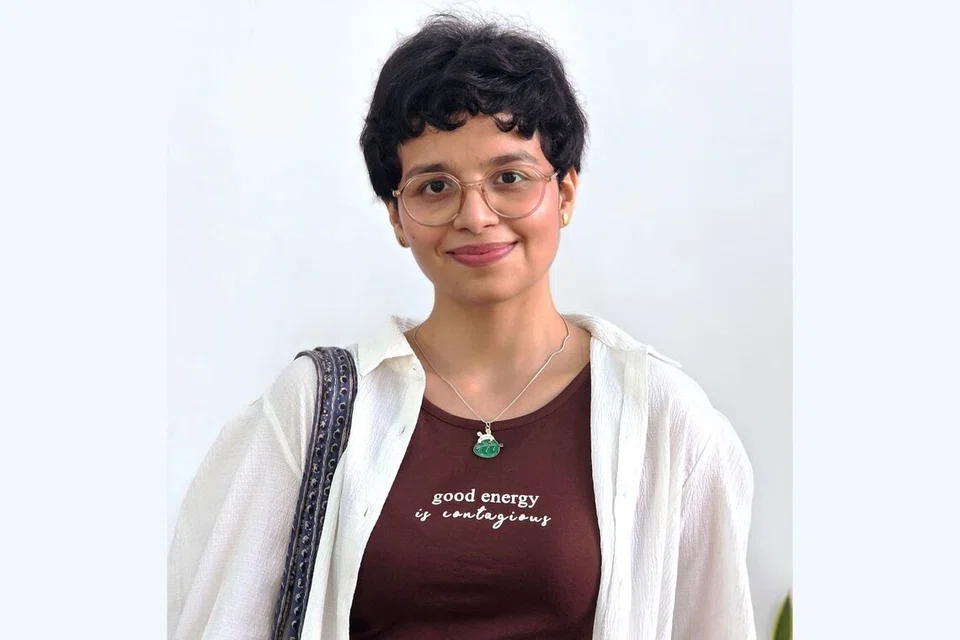
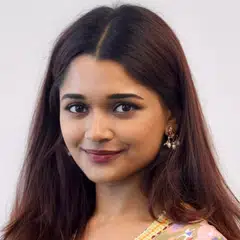
“Don’t judge a book by its cover”, the familiar saying goes. But for book cover illustrator Divya Gaur, a part of her secretly hopes you do.
Having spent over three years at Penguin India, she knows how much rides on that first glance – whether it is a potential reader perusing the shelves of a bookshop, scrolling online or in a publicist’s pitch deck. “That is why covers are made so early,” she said in a recent interview.
She juggles around ten projects at a time, many of which will not hit shelves for another year, well before the manuscript has even undergone any editing.
This means, more often than not, time is not on her side. Hence, instead of reading entire manuscripts, she relies on her supervisors’ briefs to understand the essence of the story and, after rounds of illustrations and revisions, distils the story into a singular image – one that convinces potential readers to take a closer look.
One of her recent launches was Dr Anitha Pillai’s ‘What the tongue remembers’.
Yet, time spent on other people’s books has never satiated her own appetite for creation. Ms Divya, who turns 30 this year, produces work at a pace her family despairs of.
For starters, her sketchbook travels with her, in case inspiration strikes. And gleaning from how empathically she speaks of the art of noticing, it becomes clear there is no dearth of inspiration in her life. Be it her five-year-old niece’s innocuous doodles or stop-motion film Wildwood that took 16 years to make.
The prospect of art that was painstakingly brought to life is also, to Ms Divya, a protest against the artificial intelligence wave that has been crashing into the visual art industry, threatening to render many artists obsolete.
While initially approaching AI as a tool artists would eventually have to learn to navigate the new world order, she has since become increasingly sceptical of its place in artistic practice.
“Art is supposed to be imperfect, we are imperfect,” she said, sharing that her gripe with AI is that it lack individuality and emotional resonance, which makes art meaningful in the first place.
She stated her vested faith in handmade work, particularly labour-intensive forms of creation, making a boomerang comeback as AI-fatigue becomes more ubiquitous.
One such form that holds appeal for Ms Divya is the pop-up book, which she created as the final project in her Masters programme. Titled Hatkoti Days, the hand-painted and handmade pop-up book stands as a testament to the patience and physical labour the craft demands.
The project took months of research and experimentation, followed by another laborious month of production.
She stated that this relationship between art, effort and human expression informs her understanding of the political potential of art.
Finding unity through art also led her to create a Sketch Clubhouse, an art community that convenes every Saturday to sketch, share ideas and connect.
As protests erupted across India earlier this year, she dedicated one of these sessions to be a form of catharsis, giving artists space to channel their frustrations and respond creatively to the metaphorical wildfires setting off around them.
“Sometimes we cannot do much about our circumstances, and art is all we are left with,” she said.
Looking ahead, she hopes to effect more change through her work. With dreams of establishing her own independent publishing house, she aims to give lesser-known artists and first-time authors a platform to share their work.
“For me, it’s not about how big the name is but what they are trying to say. If that reflects my ideas and views, that’s what I’m looking for,” she said.
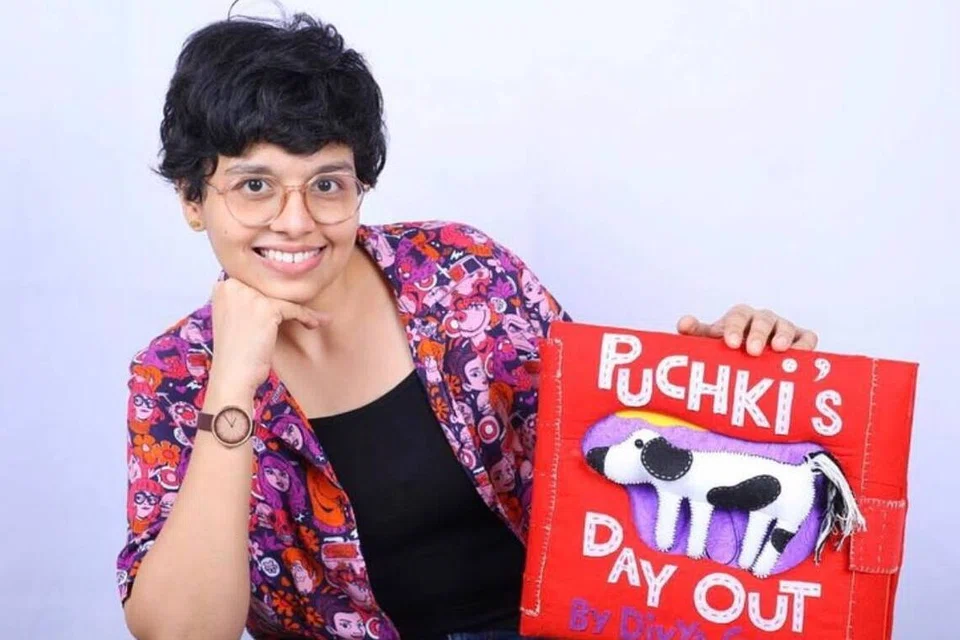
This innate sense of appreciation for the unsung hero is an attribute that has taken her work to international stages. Another of her pop-up books, Puchki’s Day Out, created for visually impaired children, won the National Tactile Book Competition 2025. It was subsequently selected as one of India’s official entries for the International edition of the competition in Prague.
While challenging days remain part and parcel of the journey, Ms Divya said that she returns to the impulse that guided her through her career so far – to be curious and keep creating. “If not this, then what else would I do?” she said.