
Recruitment firm Amethyst Partners founder Yumnam Sanajaoba is starting a non-profit organisation – Manipur Southeast Asia Economic Development Association – to improve connectivity and opportunities in Northeast India.
Mr Sanajaoba, 46 – who hails from Manipur and has been working in Singapore for the past 20 years - has mostly worked in the finance and investment sectors, leading him to set up Amethyst Partners in 2018.
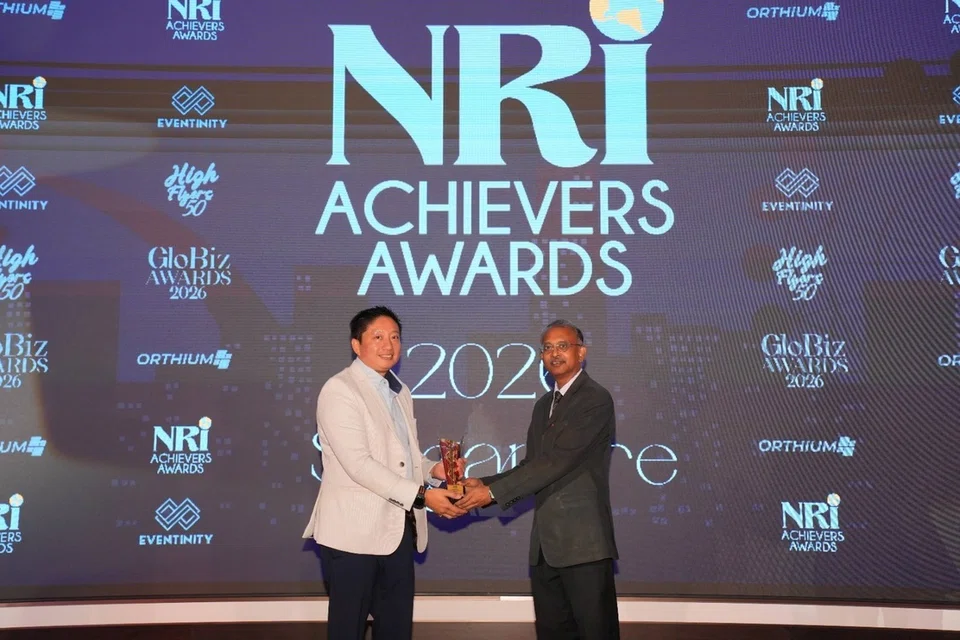
In July 2026, he received the NRI (Non-Resident Indian) Achievers Award for Global Business Leadership with Impact on Northeast India for his international accomplishments and commitment to setting up opportunities for the region.
Besides setting up portfolios and businesses in Manipur, he has also hosted several knowledge-sharing events over the past year, such as a Manipur ASEAN Bali Investment Convention.
Through collaborations with government agencies and bureaucratic support, he began his work on the Manipur Southeast Asia Economic Development Association. His vision for the company is to increase knowledge transfer and opportunities between the regions.
“Eventually, we will include all of the Northeast, but for now we are focused on companies in Manipur. Those from other states who have their business in Manipur are welcome to join,” he said.
So far, the company has received approval from the Accounting and Corporate Regulatory Authority of Singapore, and is currently looking for its Singapore team.
Manipur has been going through an ethnic conflict since 2023, which has displaced nearly 70,000 people and killed over 300. Mr Sanajaoba said his business in the state was affected due to internet blackouts and transport blocks, but he continued to support his staff there and continue the projects.
“It’s a very sad story, and one should never forget the victims, which is one of the reasons why I’ve been more vocal. The only way people from there can rise is by making sure everyone is financially stable,” he said.
Journey to Singapore
In early 2000, Mr Sanajaoba chanced upon a poster for a Singapore polytechnic sharing session in India. After attending, he was convinced by the promises of meritocracy and high quality Singapore had to offer and began his five-year plan to get here.
The plan was to finish his education by getting both his Bachelor’s and Master’s degrees, while rigorously researching ways to enter the island.
“I found a few cousins who were studying in Singapore, but I didn’t know them very well. Back then, you couldn’t call because it was too expensive, so I had to wait for them to come back during the holidays,” he said.
He arrived in 2006, when he started working in a printing press, where he got his footing on how Singapore’s business entity works and how meticulous the processes here are.
“For those who studied or lived here, they had their friends already. When I landed here, I had no one except my security guard. He used to advise me on a lot of stuff: how to manoeuvre between Johor Bahru and Singapore. He even introduced me to this delivery guy who helped me extend my visa,” he said.
Even without a formal chartered accountancy background, Mr Sanajaoba gained most of his connections and education from organising events for firms in the finance sector.
This networking prowess is something he hopes to pass on to future generations and through his recruitment firm.
“In the parameters of professionalism in the funds industry, the most sophisticated and snobbish are those from elite schools, like Oxford or MIT. Imagine someone from Manipur University advising them on private equity funds or what they should do in their career after graduating from those colleges, and they listen to you?
“That winning component in your mind, no money can buy,” he said.