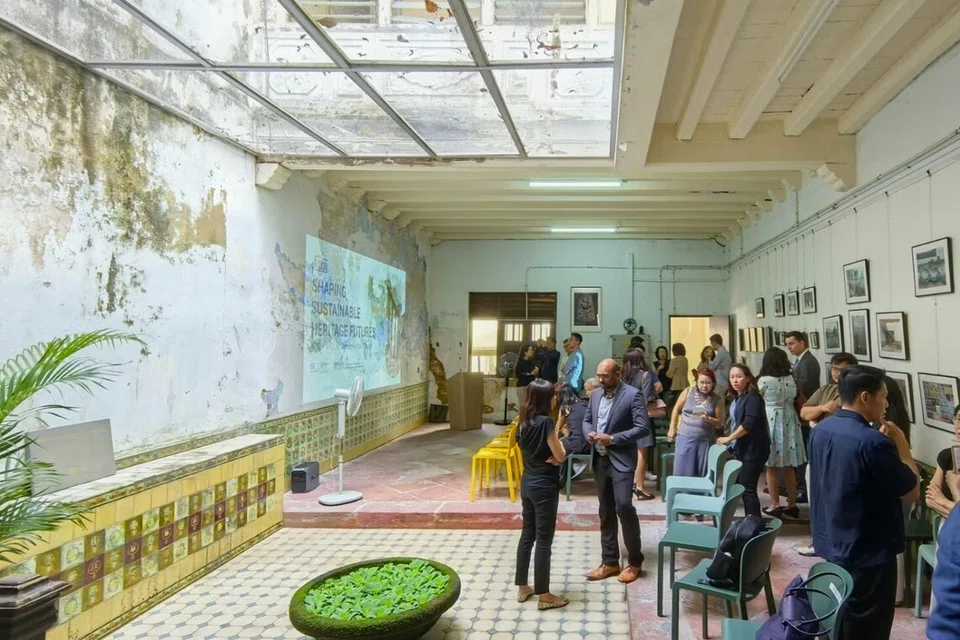

A conserved shophouse located on 141 Neil Road now houses National University of Singapore’s (NUS) ArCLab – a living laboratory for architectural conservation.
Dr Nikhil Joshi – the lab’s principal investigator and a senior lecturer at the Department of Architecture – spoke with much fervour about how ArCLab is emblematic of growth and conservation in Singapore.
“NUS-ArCLab is a place where research, teaching, professional practice and hands-on skills development could come together within an actual historical building,” he told tabla!.
The lab was established to fortify practical conservation knowledge, especially in traditional materials and craftsmanship, while also exploring how new technologies and environmental strategies could be sensitively woven into historic structures.
That dual mandate now forms the structure of ArCLab’s research programme, which spans traditional building materials, conservation science, digital documentation and adaptive reuse.
Currently, the lab’s flagship undertaking is the sustainable upgrading of its own home – a project Dr Joshi describes as “particularly exciting because the building becomes both the subject of conservation and the research instrument.”
This preoccupation seeks to demonstrate that a conserved building can achieve high levels of environmental performance without sacrificing what makes it historically significant.
To do so, the team is digging into traditional roof construction, thermal performance, and environmental monitoring among many other aspects of conservation efforts.
One example is the lab’s research into traditional clay roof tiles. “We are examining how roof assemblies, lime mortar bedding, ventilation, and breathable layers can influence thermal performances,” Dr Joshi noted.
The building has since also become a platform for craft skills transmission, hosting workshops in lime, timber, decorative tiles and Jian Nian, which is a traditional Chinese ‘cut and paste’ mosaic and sculpture craft historically used to decorate temple roofs and mansions.
For Dr Joshi, this real-world application of scientific research and traditional knowledge is “one of the most important aspects of ArCLab.”
The lab is also increasingly positioning conservation within larger conversations about climate resilience and sustainable urban development.
As principal investigator, Dr Joshi’s role stretches across the academic and strategic terrain, but he said that what matters most to him is that the research does not stay theoretical.
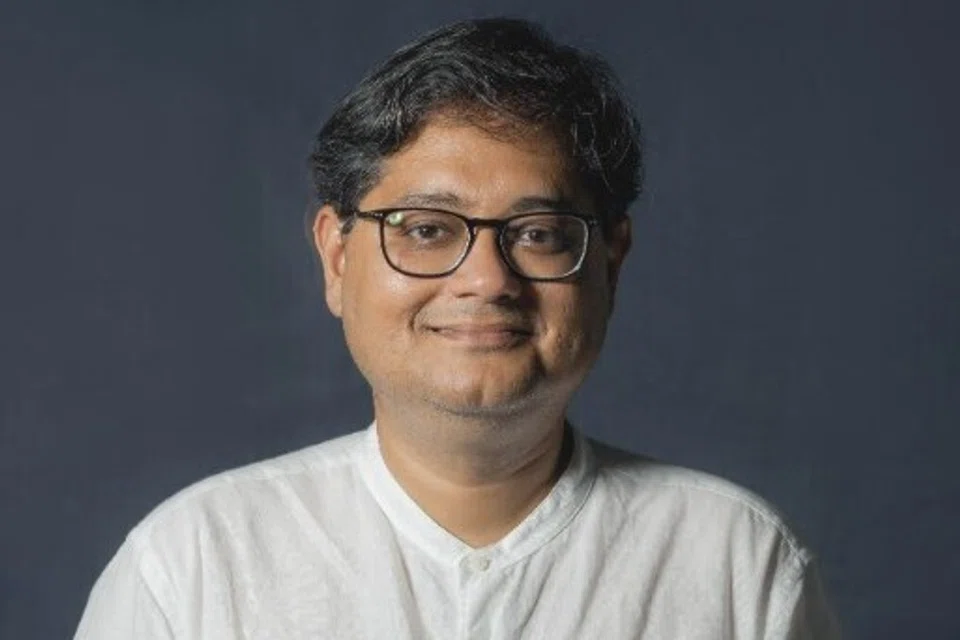
“I’m particularly interested in projects where we can test conservation approaches directly on historical buildings, evaluate their performance, document the results and then feed that knowledge back into teaching,” he explained.
Recruiting across disciplines
Dr Joshi told tabla! that ArCLab casts a wide net when recruiting, as conservation efforts are “inherently interdisciplinary.”
Sole technical grounding, however, does not suffice. He noted that curiosity and a willingness to operate across disciplines are also crucial.
Above all, he values people who grasp that “heritage conservation is not simply about preserving old fabric. It requires understanding why a place matters, how it performs, how people use it, and how it can remain relevant under changing environmental and societal conditions.”
Looking ahead, Dr Joshi hopes for ArCLab to grow into a regional centre with a particular focus on tropical and Asian contexts, and for the lab to function as “an open platform for collaboration and knowledge exchange across Singapore, Asia and internationally.”
Historic buildings offer a rare vantage point for understanding how societies have adapted to climate, materials and cultural needs over time.
Singapore, in that sense, is a compelling place to do this work, sitting at the intersection of rapid development and growing need for recognition of heritage.
“Innovation in conservation often comes from understanding traditional knowledge deeply enough to reinterpret it intelligently for contemporary needs,” Dr Joshi said.