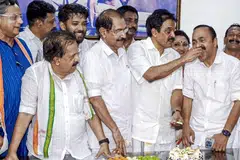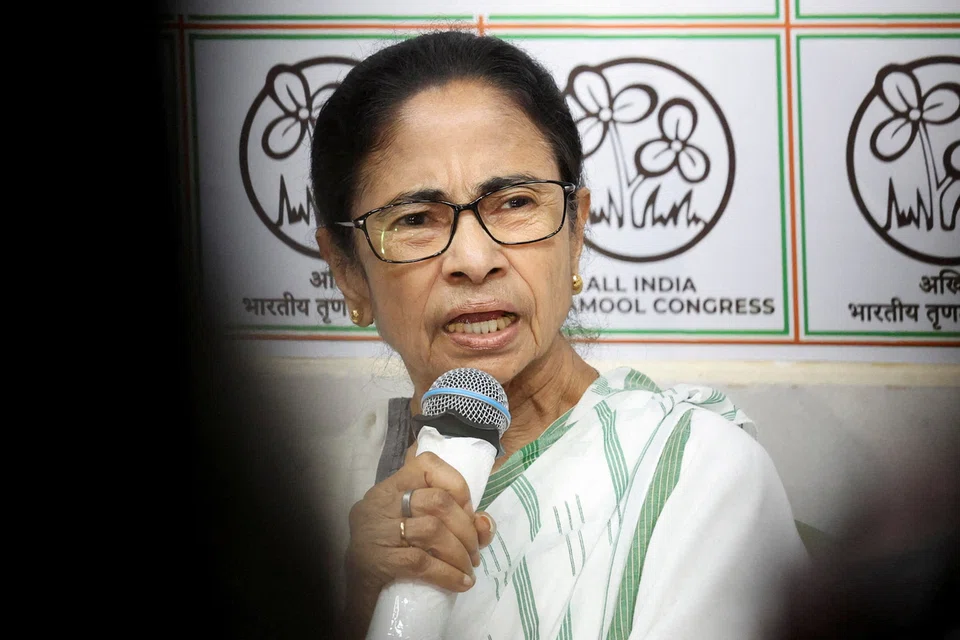

Crowds cheered when a landslide victory in the West Bengal Assembly elections evicted an established party from power.
That was in 2011, when Ms Mamata Banerjee and her All India Trinamool Congress (TMC) won 184 seats, overtaking the Left Front after its 34-year rule.
History repeated on May 4, but this time it was Ms Mamata and her party who were unseated from power, as the Bharatiya Janata Party (BJP) swept the West Bengal Assembly elections with 207 out of 294 seats.
The latest results produced varying reactions with riots of celebration and anger.
On May 6, bulldozers were reportedly employed by BJP workers to destroy meat shops in Kolkata. Later, the personal assistant of likely chief minister Suvendu Adhikari was shot dead, and several other workers from both parties were also killed.
Ms Mamata has also refused to step down as chief minister, claiming that the results were unjust.
Bengalis living in Singapore too had different sentiments.
Former Straits Times columnist Asad Latif, who has been living in Singapore since 1984, was optimistic about the outcome.
The 68-year-old said: “The way I see it, Bengal has had a fresh start. There will be development, so long as they do not impose things that could disrupt Bengali culture.”
As for Bengalis living here, he felt they mainly discuss culture. “That’s how we’ve been able to stay united all these years,” said Mr Asad.
Ms Sahana Ghosh, assistant professor at the NUS Department of Sociology and Anthropology, was not shocked by Ms Mamata’s loss; instead, she was shocked by its scale. “This was more of a vote against the TMC rather than a vote for the BJP,” said Ms Sahana.
Three events, according to Ms Sahana and Mr Asad, caused Ms Mamata’s loss.
The Special Intensive Revision (SIR) in April, when weeks before the election, 2.7 million voters were disenfranchised.
The revision involved removing duplicate and illegible voters, several of whom disputed the move. However, their appeals could not be heard in time by the Supreme Court, and they will now likely be eligible to vote only in the next election.
Ms Mamata alleged that these deletions were done deliberately by the Election Commission, in cahoots with the BJP, which runs the Central government.
The TMC was also affected by the charges of corruption against its senior leaders. For instance, a public school teacher recruitment scam in 2022 left tens of thousands of teachers without a job after the High Court found that they were recruited without professional merit.
The R.G. Kar Hospital rape case in 2024, when civic volunteer Sanjay Roy raped and murdered a trainee doctor inside the state-run hospital, also hit Ms Mamata’s party badly.
Citizens were outraged at the TMC’s mishandling of the case, including alleged attempts to cover up evidence and delay justice. The victim’s mother, Ratna Debnath, fuelled by vengeance, joined the BJP and won from Panihati constituency.
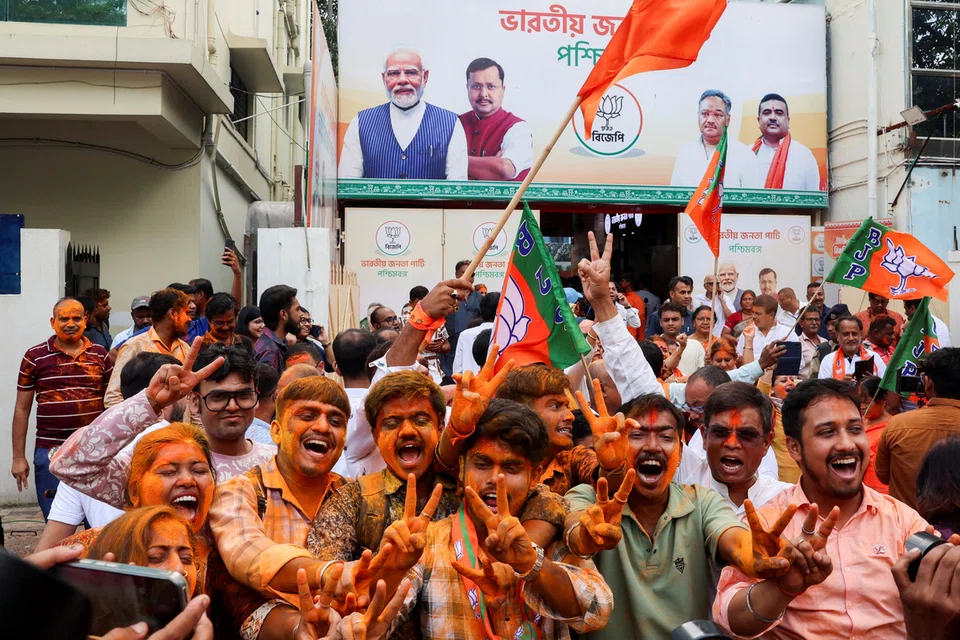
Mr Arnab Dutta, a permanent resident who has lived in Singapore for the past 13 years, and his community of friends believe a change of government is needed in West Bengal.
“We believe it will be a different Bengal when we go back,” said the tech architect at Visa. “We hope that there will be jobs and better infrastructure.
“We are going to celebrate, and we welcome the change.”