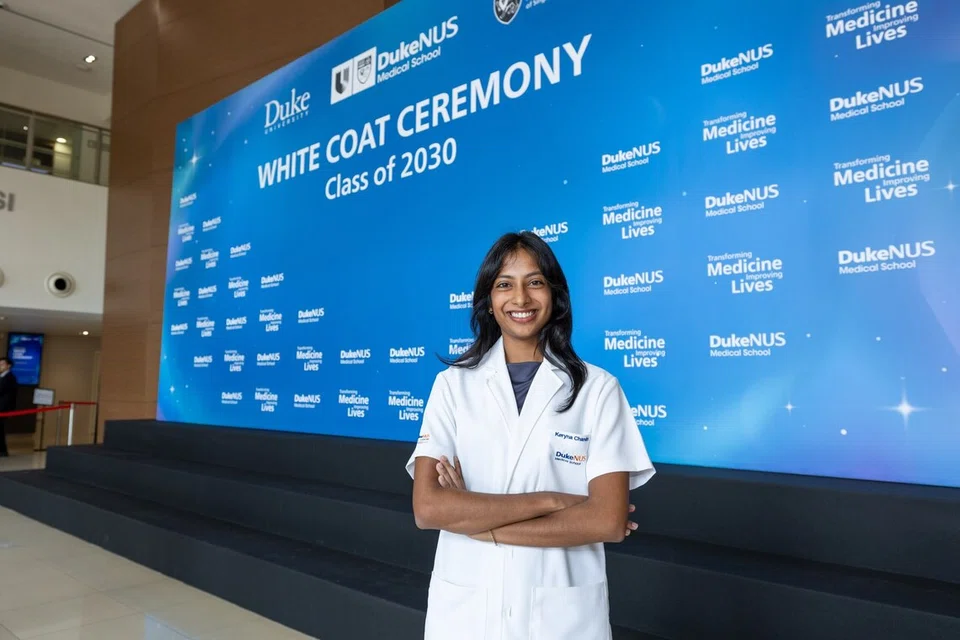

A month into medical school at Duke-NUS, Keryna Chandra, 26, is finding her footing in a discipline that is new to her, but one that fortifies her commitment to serving those in need.
“It’s definitely intense and challenging, but I’m still enjoying learning. It’s pretty new to me, so it’s just exciting to be working my brain in a different way,” she told tabla!.
Before embarking on her medical career, Ms Keryna studied anthropology at Yale-NUS.
Her time outside of her academic pursuits was split between the arts, as a theatre practitioner who formally trained at the School of the Arts, and advancing inclusion for children and young people with disabilities.
Her work with the disabled community took root before university when she volunteered with Superhero Me – an inclusive arts organisation that nurtures the practice of art among children with special needs – an affecting experience that elicited her lasting attachment to the community.
“Generally, I am led by a sense of curiosity and service. Those are values that have guided some of my decisions over the years that led me to where I am today,” she told tabla!.
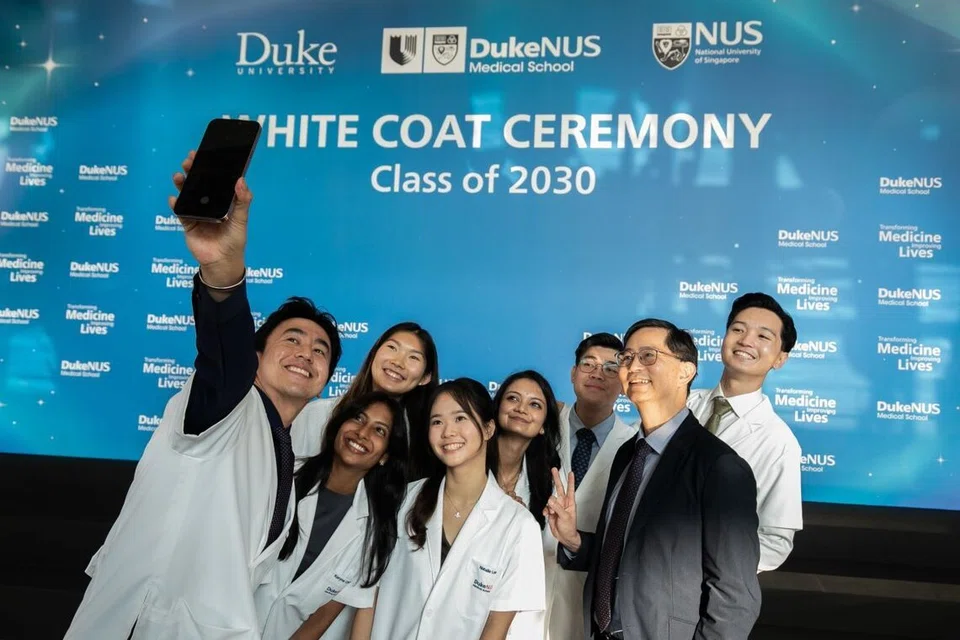
Her undergraduate years at Yale-NUS followed, where she struggled, at first, to commit to a singular discipline.
Eventually she settled on anthropology, which she said appealed to her for its balance in academic theory and connect to realities of human life. Consequently, under the guidance of professors attuned to social justice, she was pushed to look closely at populations on the margins.
The discipline was a natural fit for the questions she was preeminently concerned with.
During her undergraduate years, Ms Keryna researched disability architecture and the experiences of people with visual impairment navigating the world – forming her early attempts at understanding disability through different lenses, long before she considered medicine.
That interest became practice when she went on to work at Rainbow Centre, a special education school, where she ran a volunteer initiative called the Good Life Befrienders Programme.
She described the programme as an “ambitious” one, as two volunteers are matched with one youth with disability, fostering a relationship akin to friendship rather than a conventional recipient-and-volunteer dynamic.
The youth are given agency to decide how they wish to spend their time, rather than having activities imposed upon them.
Through this, “I got to know the youths with disabilities and their families really well,” she said, but the closer she got, she realised that there was a disconnect between her motivations and her duties.
“Part of me realised that to make the impact I want to, I do need to be able to provide specialised care” – whether medical, allied health, or social work, “being on the front lines, working directly with people with disabilities and their families was important to me,” she told tabla!.
In that aspect, medicine is a mere continuation of a greater education with which she hopes to close the gaps in disability services in mainstream healthcare.
Her parents, both doctors, watched her prepare for the MCAT – the standardised examination required for entry into medical school – with growing confidence in her commitment, even though her path into medicine, by way of anthropology, was not one they themselves had taken.
“The first responsibility of a doctor is to be someone who can deliver competent and excellent clinical care,” she said, but she hopes not to lose sight of the person in front of her, even under resource and time constraints.
“I hope that I will remain reflective and be able to catch myself and work on my weaknesses,” she said, “to be someone who will journey with a patient, to build relationships, to be someone who is trustworthy.”
Beyond individual care, she hopes to stay observant of the systemic gaps that are only visible from the ground and be someone who acts on them whether through direct patient care, research, or policy.