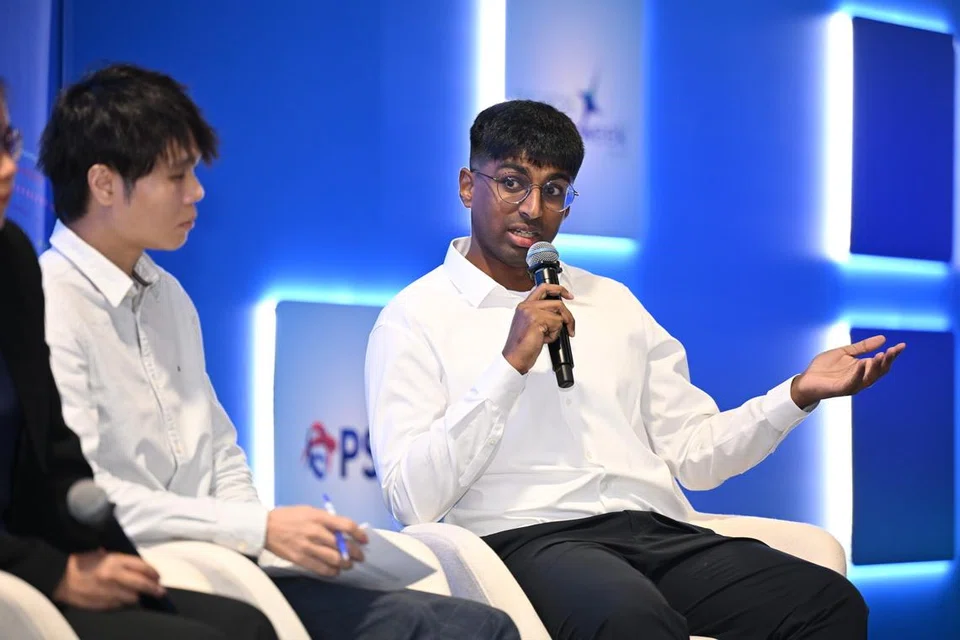

While many young job seekers find their calling at crowded school career fairs, 28-year-old junior engineer Katiravan Suparmaniam discovered his passion through casual, everyday conversations in his own living room.
During his junior college years, Mr Katiravan would listen to his older brother describe the daily realities of working as an electrical engineer at Sembawang Shipyard. These candid stories of shipyard repairs, interactions with ship crews, and navigating piracy zones captivated him.
Tales of seafarers manoeuvring around live military exercises and calmly handling sudden vessel blackouts in the middle of the ocean painted a picture of a uniquely resilient work culture.
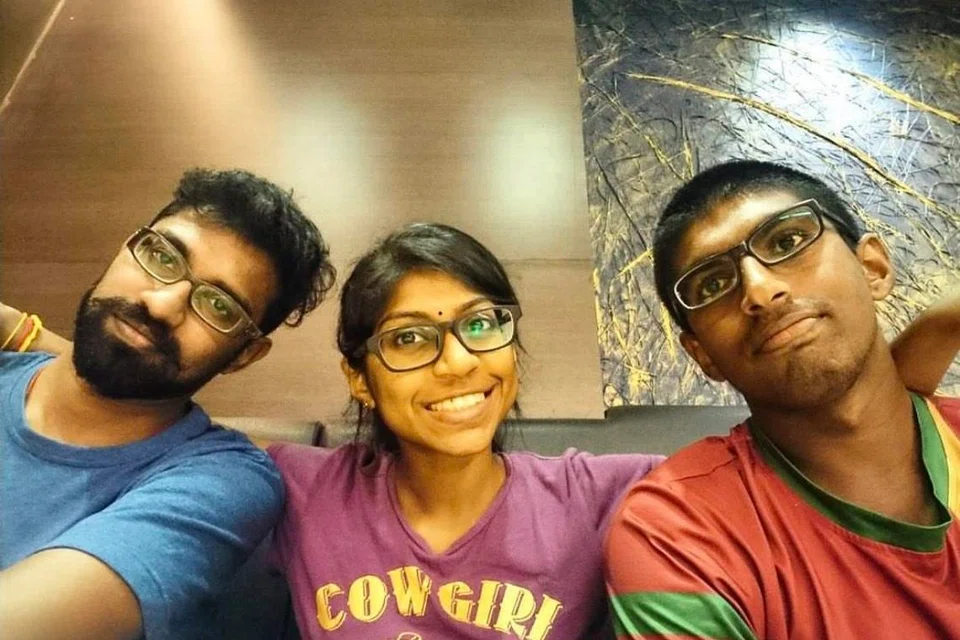
Interestingly, this drive for maritime and logistics innovation runs in the family. His 38-year-old brother, Karthigeyan Suparmaniam, now works as a senior electrical engineer on floating production, storage, and offloading vessels, while his 33-year-old sister, Kartene Suparmaniam, builds automation systems for major shipping lines at a logistics company.
Mr Katiravan said he was drawn to the practical, hands-on nature of the work. “It felt less political, less like a regular nine-to-five office job,” he recalled.
With an initial goal of becoming a seafarer, Mr Katiravan pursued a degree in mechanical engineering at Nanyang Technological University, specialising in Naval architecture and marine engineering. However, his career trajectory shifted during his time as a Maritime Youth Ambassador for the Maritime and Port Authority of Singapore (MPA).
Attending various industry conferences opened his eyes to the broader scope of the maritime ecosystem, particularly the complex technical and sustainability challenges being tackled onshore.
Pivoting away from a sea-based career, Mr Katiravan joined Berge Bulk’s Management Associate in 2023.
Headquartered in Singapore, Berge Bulk is a leading independent international dry bulk shipowner. The company operates a massive fleet that transports commodities globally with a focus on decarbonisation and safe, sustainable operations.
After completing his department rotations, he transitioned to his current role as a junior engineer in the Innovation Performance Management department. Today, he is part of a growing demographic of young professionals taking up specialised, shore-based roles in Singapore’s evolving maritime sector.
Mr Katiravan’s daily responsibilities focus heavily on vessel efficiency, retrofits, and decarbonisation initiatives, a role that demands relentless, on-the-job problem-solving.
“At times, we want a solution that even the industry hasn’t created yet,” he said.
He credits his company and senior colleagues for fostering a collaborative environment, one that encourages the team to test and develop groundbreaking solutions rather than relying on strict top-down directives.
Today, the brothers frequently exchange technical advice, effectively bridging Mr Katiravan’s mechanical background with Mr Karthigeyan’s electrical expertise.
Mr Katiravan recently shared these onshore career experiences at MPA’s Singapore Maritime Week 2026 held for the 20th time from April 20 to 24 at the Suntec Convention & Exhibition Centre.
On April 23, he was featured at the Talent Pavilion, a programme aimed at students and job seekers exploring maritime careers, and participated as a panellist at a workforce conference discussing industry digitalisation and decarbonisation.
As the industry evolves, Mr Katiravan is quick to point out that maritime careers are increasingly overlapping with the tech sector. He notes a rising demand for expertise in artificial intelligence, platform engineering, and data analytics to optimise vessel operations and architecture.
“With the rise of AI, I strongly believe that an individual’s role will go well beyond what they are traditionally meant to do,” he said. “Your scope expands to optimising the very work you’ve been doing, allowing you to achieve more in less time. That is how I see the industry moving forward.”