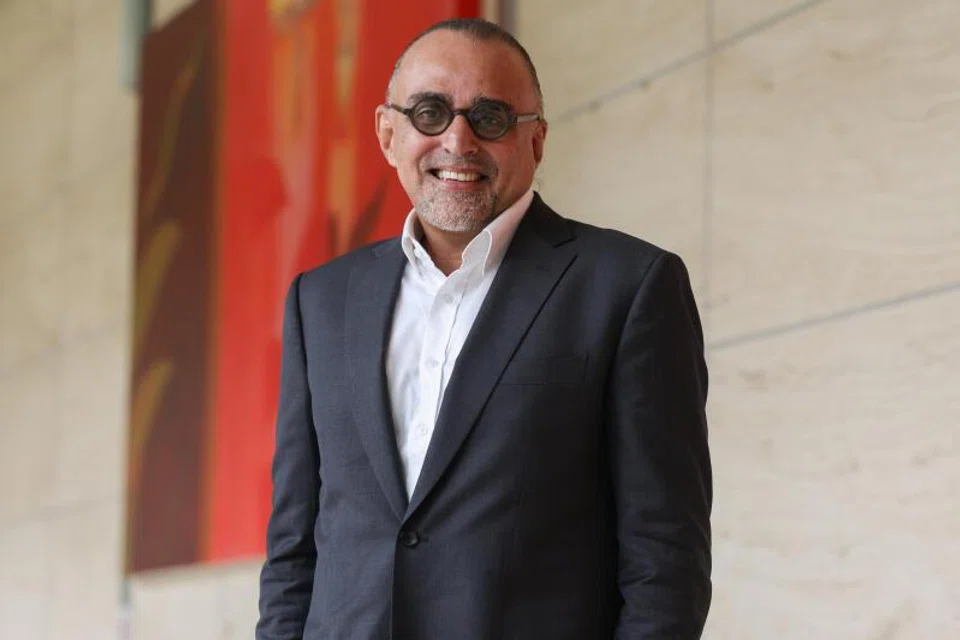

Once a month, Jaspal Sidhu blocks out a slot in his calendar for an unusual ritual – coffee with a stranger. Sometimes the meeting comes through LinkedIn, sometimes from a chance encounter, or sometimes as a consequence of his own curiosity. On one occasion, it was a cleaner at a hawker centre whom he had observed for days before approaching.
“I try to meet somebody from any and every industry. When you talk to people, it makes you think,” he said.
For Mr Jaspal, these conversations are a way of seeing the world from angles he might otherwise miss. This instinct to step outside comfort zones, he told tabla!, has shaped his worldview and the education empire he has built.
Long before founding Singapore Intercultural Schools (SIS), Mr Jaspal’s understanding of opportunity was shaped by a far more intimate image – his father standing outside a bank in Singapore, opening doors for customers each day. The job was modest, but it funded the education of his three sons.
Years later, when Mr Jaspal asked why his father had remained in that role for so long, the answer was a difficult one to hear. “I didn’t have the confidence to go in and ask…and nobody from the inside came out to ask me,” his father had told him.
The idea that people can live their entire lives beside doors they never feel entitled to open became central to how Mr Jaspal thinks about education and accessibility.
He followed a conventional path at first, attending Raffles Institution before graduating from the National University of Singapore with a degree in civil and structural engineering. But when he entered the workforce in the early 1980s, Singapore was in recession. Jobs were scarce, and frustration set in.
“I would leave the house pretending I had a job, sitting at East Coast Park looking out at the ocean, thinking ‘now what?’” he said, overcome with anger at his predicament.
Looking back, he recognised that period of anger as formative. “If you are in an environment that doesn’t suit you, stop complaining. Go find a new environment,” he said.
That decision took him to Indonesia, into an environment far removed from anything he had known. His first assignment placed him deep in the jungles of Sumatra, overseeing operations at a remote coal mine. Within months, a near-fatal accident changed everything.
“They found me buried in mud 38 kilometres away from the shore with a damaged spine,” he recalled.
The injury left him with chronic back pain, but it also forced a shift in perspective. As he travelled across Indonesia in the years that followed, he encountered communities far from urban centres – places where infrastructure was limited and public services strained.
Yet in these environments, he noticed something unexpected, particularly in schools: even where resources were scarce, great teachers could still inspire curiosity and learning. During his recovery, he often found himself looking out from his hospital window, drawn by the sound of children laughing and chattering. Curious, he watched as a teacher kept her students engaged, their joy unmistakable despite the simplicity of their surroundings.
Pivot Towards Education
His entry into education came later. When his children enrolled at the Jakarta Intercultural School, he became fixated on the price tag attached to education there. Applying an engineer’s mindset, he began breaking down the school’s physical and operational components.
“I de-engineered the school, I measured everything and realised why one year’s tuition was $40,000 – all the schools were overdesigned,” he said, eliciting a eureka moment that he later named the ‘Half Fees Model’.
Rather than making incremental adjustments, he made the radical move of cutting fees in half. “When you discount 10 or 20 per cent, you’re still in the same market. But when you hammer down by 50 per cent, you unlock a different market altogether,” he said.
The response was immediate. Families who had long assumed international education was out of reach suddenly saw a path forward. This idea evolved into the Singapore Intercultural School network, which eventually formed a broader ecosystem of schools across Indonesia, serving students at multiple price points.
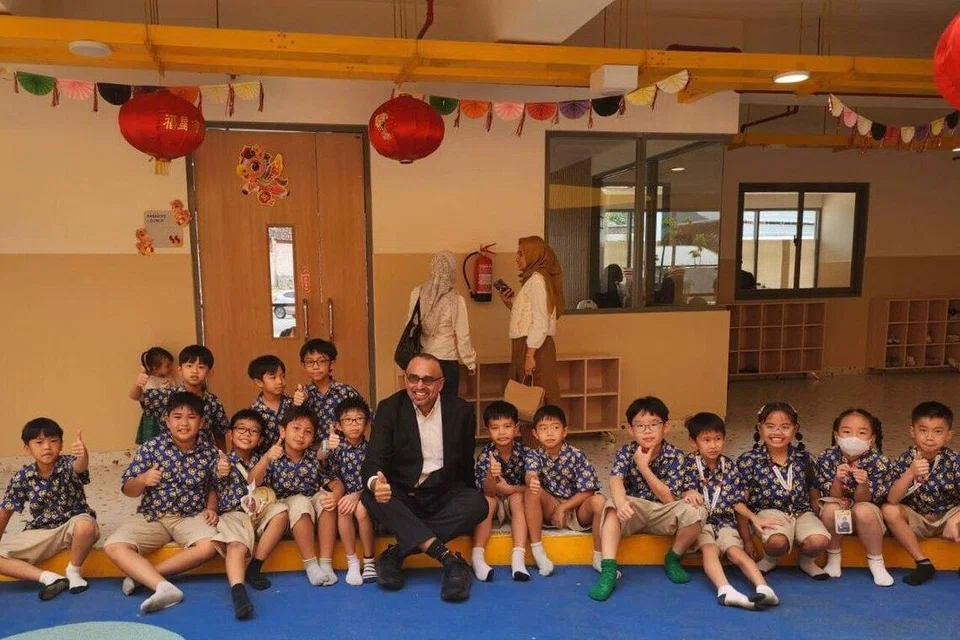
As the network grew, Mr Jaspal faced a fundamental challenge of maintaining quality while dramatically lowering costs and ensuring the fair treatment of his employees. His solution was to rethink what truly matters in education. Drawing on insights from global organisations, he embraced a principle that would define his approach: “Hire for attitude, train for skills.”
This led to the development of the “EFFECTOR Model,” a research-based teacher development framework co-created with Deloitte Singapore, to train teachers to be “earnest, funny, enthusiastic, consistent, timely, open-minded and research-oriented,” he noted.
Over time, he came to see that smaller cities, often overlooked by premium education providers, were rich in precisely these qualities. “The smaller the city, the better the attitude. The DNA is there,” he remarked.
Technology then became the connective tissue, linking schools across regions and allowing teachers to collaborate regardless of location. A teacher in a remote town could access the same ideas, resources, and conversations as one in a major city.
Despite building one of the largest international school networks in Indonesia, Mr Jaspal remains deeply conscious of hierarchy and its influence on human behaviour. He often recalls realising, uncomfortably, that he had never truly spoken to the most junior staff in his own organisation.
That moment prompted changes in how he leads – greater transparency, open feedback systems, and deliberate efforts to surface voices that might otherwise go unheard. This includes measuring the staff’s happiness index as well as ensuring consistent feedback loops.
During the COVID-19 pandemic, this philosophy was put to the test. He told his employees: “I promise you, no one will get retrenched. Only one person will take a pay cut – me.”
He backed that promise with tangible support for employees, while expecting them to rise to the occasion and deliver their best. The result, fortunately, showed high performance and loyalty across the organisation.
For all his success, Mr Jaspal resists the idea of legacy as something tied to recognition or permanence.
Instead, his focus is on building models that can endure and expand without him. His ambition remains to drive down the cost of quality education far enough that even families at the margins can access it.
“I want the son of a doorman to be able to go to my school,” he said.