
For Maharaja Sawai Padmanabh Singh of Jaipur, Singapore offers valuable lessons in how a modern city can develop without losing its architectural heritage.
The 28-year-old titular Maharaja, who was in Singapore with his sister Princess Gauravi Kumari for Cartier and Valiram’s Deepavali celebration at Jiak Kim House on Nov 5, was particularly impressed by the Republic’s urban planning, sustainable tourism and integration of historic buildings into contemporary city life.
Speaking exclusively to tabla! at the event, he said Singapore and Jaipur, two internationally recognised tourism destinations, had much to learn from each other.
“It is incredibly commendable to see what you have managed to achieve over here in Singapore,” he said.
He singled out Singapore’s approach to sustainability and city planning, noting that urban design was also central to Jaipur’s founding nearly 300 years ago.
“Jaipur, which is going to be 300 years very soon, has an incredibly rich history of craftsmanship, of artisans, of architecture,” he said.
The two destinations, he suggested, could exchange expertise in heritage conservation, tourism development and cultural promotion while encouraging more visitors to explore each other’s attractions.
Maharaja Padmanabh, who oversees heritage institutions including Jaipur’s City Palace and Jaigarh Fort, said Singapore’s combination of colonial-era buildings and modern architecture was particularly inspiring.
“I think that is really a theme that is very close to me personally, and I’d like to be able to adopt that a little bit better for our city of Jaipur as well,” he said.
A keen international polo player and heritage conservation advocate, Maharaja Padmanabh has been working to position Jaipur as a destination where history, contemporary art, sport and luxury tourism coexist.
His initiatives include restoring historic properties, developing museum experiences, promoting polo tourism and establishing cultural platforms such as the Jaipur Centre for Art and Jaigarh Heritage Festival.
He has also opened parts of Jaipur’s royal heritage to visitors, including the Gudliya Suite at City Palace, through a hospitality initiative supporting women’s empowerment.
Princess Gauravi is similarly committed to preserving Rajasthan’s cultural identity while making its traditional craftsmanship relevant to younger generations.
As general secretary of the Princess Diya Kumari Foundation, she supports initiatives involving women’s education, vocational training and sustainable livelihoods.
The foundation’s programmes have benefited more than 10,000 women and girls across Rajasthan.
Through ventures including The PDKF Store and The Palace Atelier, she has helped bring traditional embroidery, textiles and artisanal products into contemporary fashion and design.
Speaking to tabla!, Princess Gauravi said maintaining royal traditions was not something she viewed as a burden.
“We’ve grown up watching our parents and our grandparents carry these traditions forward,” she said.
“I don’t really see it as – yes, it’s a responsibility – but it’s part of our life, and we’re very happy to carry these traditions forward.”
She said the younger generation could embrace inherited customs without necessarily changing their essence.
“I think it’s more about making these traditions your own, and less about changing them to suit someone or some different generation.”
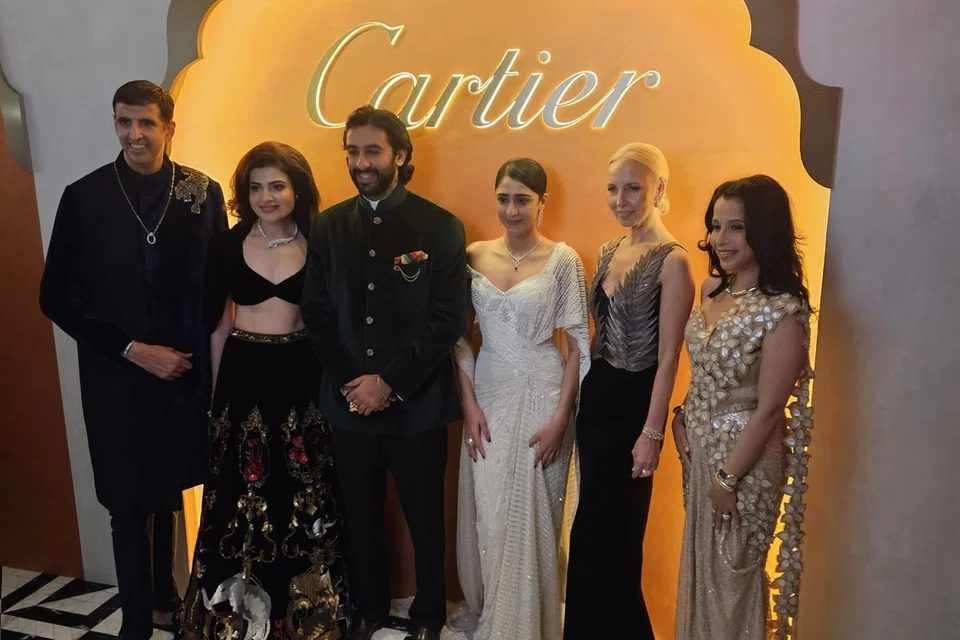
The siblings were among more than 150 distinguished guests at the Deepavali celebration hosted by French luxury jewellery house Cartier and its longstanding retail partner Valiram.
The restored 1920s Jiak Kim House warehouse along the Singapore River was transformed with marigolds, floral arrangements, golden lighting and illuminated installations.
Maharaja Padmanabh wore Panthere de Cartier jewellery, including a yellow-gold pocket gem, cufflinks and ring, while Gauravi complemented her embroidered gown with an emerald-and-diamond high-jewellery necklace.
Their presence reflected Cartier’s historic relationship with Indian royalty and craftsmanship, dating to Jacques Cartier’s visit to India in 1911.
The evening featured performances celebrating the triumph of light over darkness, percussion by Rodolphe Manoukian and Indian-inspired cuisine prepared by four chefs.
For Maharaja Padmanabh, whose visits to Singapore have generally been brief, the occasion reinforced his desire to explore the Republic more extensively.
“I would like to spend more than 24 hours,” he said, adding that he hoped future visits would allow him to experience more of Singapore.