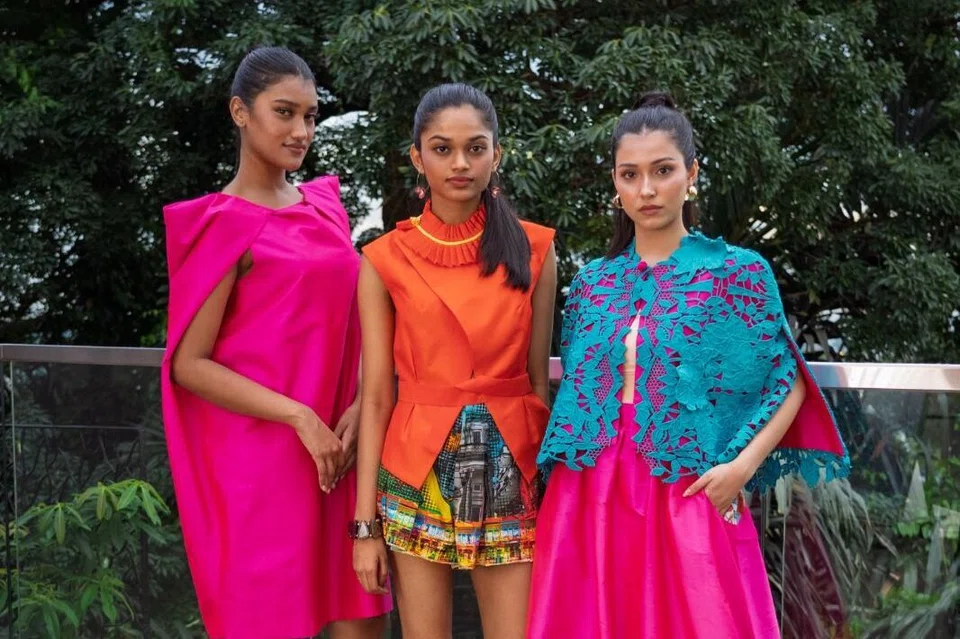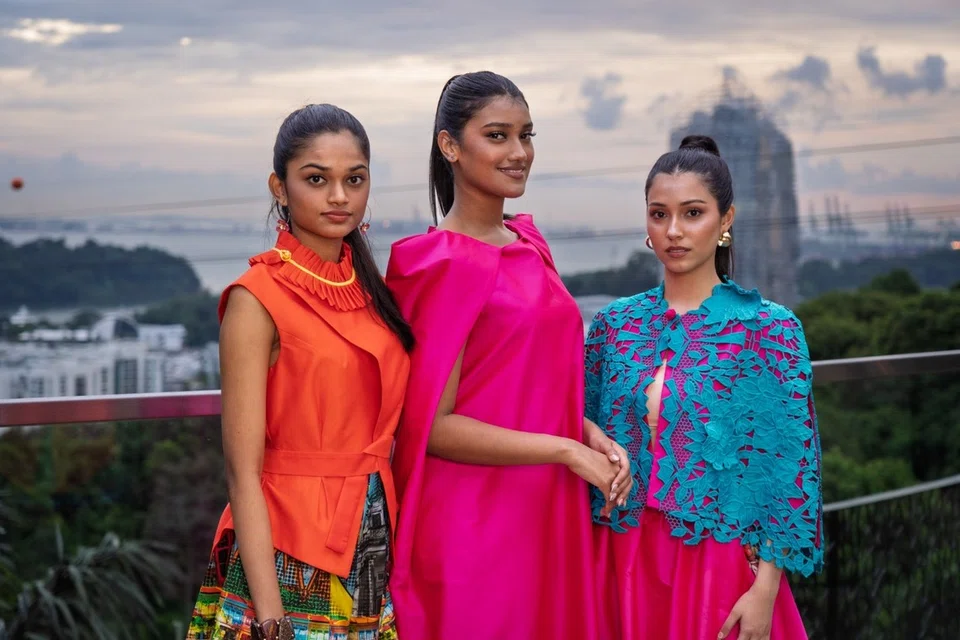

Miss Universe Singapore, a glittering showcase of poise and pageantry, is meant to mirror the city-state’s diversity – a celebration of the faces that make up Singapore.
However, much of online discourse has lamented Singapore’s mainstream ideal, which tends to favour a narrow template of what is considered ‘beautiful’. This prejudice isn’t always loud or deliberate, but rather, is woven into casual remarks and social media posts. Against this backdrop, Nikita Carter, Satya Nikitha, and Alexis Kaur are three Indian women participating in this year’s pageant, hoping to proudly represent their culture.
Addressing discrimination online
Ms Nikita, 22, a law student and private tutor, reflected on the subtle biases and microaggressions she has encountered: “So, when you grow up in Singapore, what I have always heard is ‘you’re very pretty for an Indian’. It’s a backhanded compliment that comes from ignorance.” She added, “It’s not a line meant to hurt, but rather a lack of educating themselves.”
When she was announced as a finalist for the pageant on Miss Universe Singapore’s Instagram, the celebration was quickly marred by a wave of racist comments under the post. “I learnt many new racial slurs from that comment section,” Ms Nikita quipped.
In the comment section, netizens dismissed her and her place in the competition. Yet instead of retreating, Ms Nikita took to TikTok to address the ignorance calmly, highlighting the urgent need for broader acceptance and education around diversity in beauty.
Ms Satya, 20, a student of Computer Science and Business at Nanyang Technological University, shared that as a South Asian woman, her skin tone and features have been points of insecurity. “But over time, I’ve grown to see beauty as confidence and kindness, not just looks,” she added.
Ms Alexis, 24, an IVF specialist nurse, empathised. “I went to an all-Chinese school. I was the only Indian in my cohort, so you definitely feel it. And I’m sure many Indian women out there feel the same way – being overlooked, not fitting the beauty standard.”
However, for Ms Alexis, cherishing her Sikh heritage, passed down through her father and grandmother, has provided a sense of grounding. “My grandmother taught me how to pray, how to embrace my Indian side. Every Deepavali, she’d make it a point to buy me a brand new Punjabi suit and even tailor them for me. She’s the root of our family.”
Personal challenges that fuelled success
Returning to the pageant after placing first runner-up in 2023, Ms Nikita shared how external scepticism about her competing again failed to deter her. “People are going to say whatever they want online, and I’m still going to do what I want. It doesn’t affect me.” Otherwise, “‘Fake it till you make it’ is my mantra,” she added.
While this year marks Ms Nikita’s return to the Miss Universe Singapore stage, Ms Satya is stepping into the world of pageantry for the first time, having stumbled across the competition on Instagram. “It’s a chance to grow and influence people,” she said, referring to what makes beauty pageants like Miss Universe relevant. The process, she said, has also been a lesson in self-acceptance. “When you’re on a stage like this, people take photos from every angle. I’ve always preferred my right side, but I’ve learned to embrace all of it.” That shift crystallised one afternoon on the train, when a young girl came up to her and said, “‘I’m so happy to see you compete’, someone like me on such a big platform.”
Balancing the high-stress world of healthcare and pageantry, Ms Alexis credited nursing for her emotional resilience: “Being a nurse taught me to control and regulate my emotions. High-stress situations are something I’m used to now. I always tell myself that it is okay to be nervous. Just don’t project it or be too hard on yourself.”
Building on her nursing background, Ms Alexis said she is passionate about raising awareness for the mental health challenges that healthcare workers, especially nurses, face.
“For a long time, healthcare workers have been silently bearing the emotional toll of our jobs, but it became even more apparent during the COVID-19 pandemic,” she explained. “During that period, people would look at me differently when I was out in public, assuming I was a carrier of the virus simply because I worked in a hospital. I understand the fear and uncertainty the public was feeling, but it was also disheartening. We need to be more conscious of how we treat each other, especially those who serve on the frontlines.”
What truly stood out is the sisterhood they cultivated through this experience. Speaking about Ms Satya, Ms Nikita said, “I see her as a little sister. I feel responsible for her because she’s younger and shy.” Ms Satya, in turn, expressed gratitude for Ms Nikita and her peers. “I’m extremely grateful for all the women I’ve met through this; each and every one of them has been extremely supportive.”