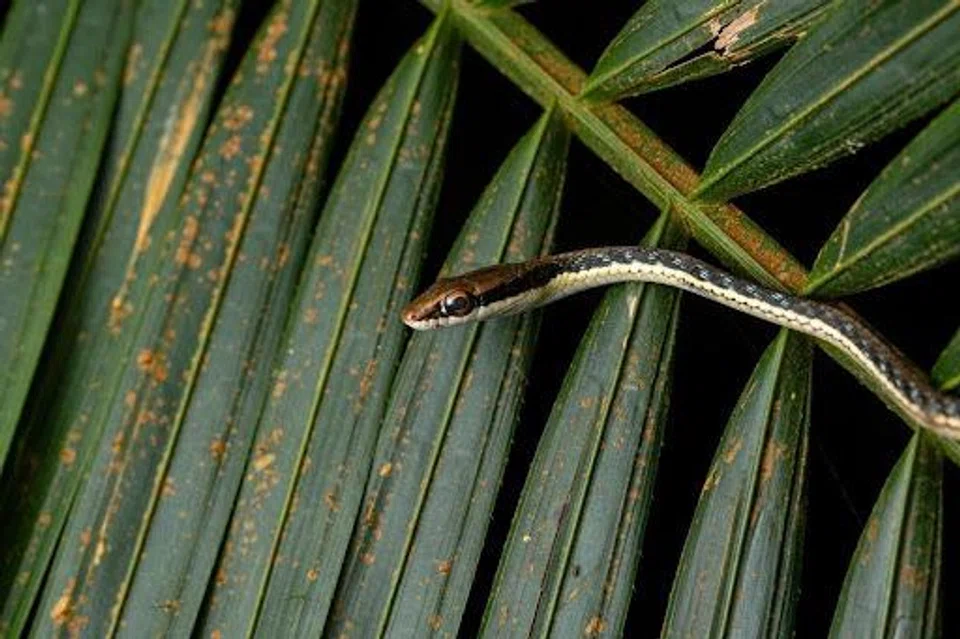
In 2018, while trekking through a Singaporean forest in the dead of night, Mr Shivaram Rasu spotted a large, brown snake in the distance.
Leaving his group behind, novice Mr Shivaram ran ahead to get a closer look at the snake, but quickly realised he was staring at a highly venomous King Cobra.
For most people, this encounter would trigger instant panic. But for the 31-year-old National University of Singapore (NUS) PhD student, it remains an unforgettable highlight. One he feels incredibly grateful to have experienced, having never seen another King Cobra in the wild since.
Hidden between the bright lights and concrete of Singapore’s skyline lies a world most locals prefer to avoid. A humid, mosquito-heavy realm ruled by snakes, frogs, and lizards.
However, for a dedicated group of youths like Shivaram, the Herpetological Society of Singapore (HSS), venturing into this darkness is more than just a hobby. They protect the hidden wildlife in our green spaces.
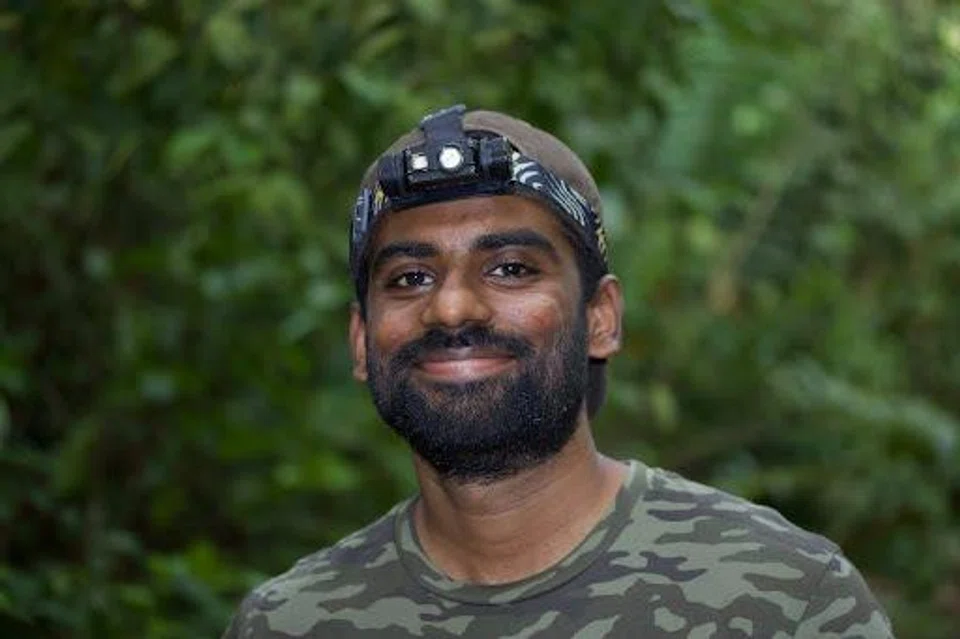
The roots of this society sprouted about 12 years ago. Sankar Ananthanarayanan, 32, now a PhD student at NUS, was serving his National Service when he and a few friends started an initiative to share their love for amphibians and reptiles.
However, putting that passion into practice is physically demanding. Mr Shivaram noted that, unlike temperate forests in other parts of the world, such as Europe or North America,
Singapore’s forests are intensely hot, humid, and teeming with mosquitoes. Proper gear, such as boots, headlamps, and adequate hydration, is absolutely essential for these nighttime surveys, he added.
The greatest hurdle is not navigating the humid forests but changing public perceptions. Helping the community overcome its innate fear of these creatures is exactly where Kamalakannan Raja, 32, steps in.
A full-time teaching assistant at NUS, he joined HSS following the Covid-19 circuit breaker to focus on science communication. Recognising that complex scientific data can be intimidating to the general public, Mr Kannan bridges the gap by translating raw field research into engaging, relatable stories.
For example, as the manager of HSS’s roadkill project, he simplifies urban wildlife issues by explaining that Old Upper Thomson Road serves as a crossing hotspot because of the greenery on both sides, and that partial road closures actively reduce roadkill by limiting vehicle traffic.
These storytelling efforts are making a tangible impact on the ground. Reflecting on his 5-year stint with HSS, Mr Kannan notes a distinct shift in the local community. “Five years ago, if a snake or lizard appeared, there was fear. People would immediately wonder if they should hit it, kill it, or call the police,” he said. “Now, people are starting to think it through. They ask what they should do, whether it’s actually dangerous, and who the right person to call is.”
Balancing a heavy academic workload with running the society has been demanding, but Mr Sankar reflects that the effort has been entirely worth it. He is proud of the society’s organic growth, noting how public walks are now enthusiastically led by a dedicated community of volunteers.
Despite 200 years of severe habitat degradation, Singapore’s wildlife has remarkably persisted, Mr Sankar pointed out. Thanks to the tireless efforts of these youths, trekking through the dark to study, share, and protect our cold-blooded neighbours. Singapore’s wildlife legacy is in good hands.